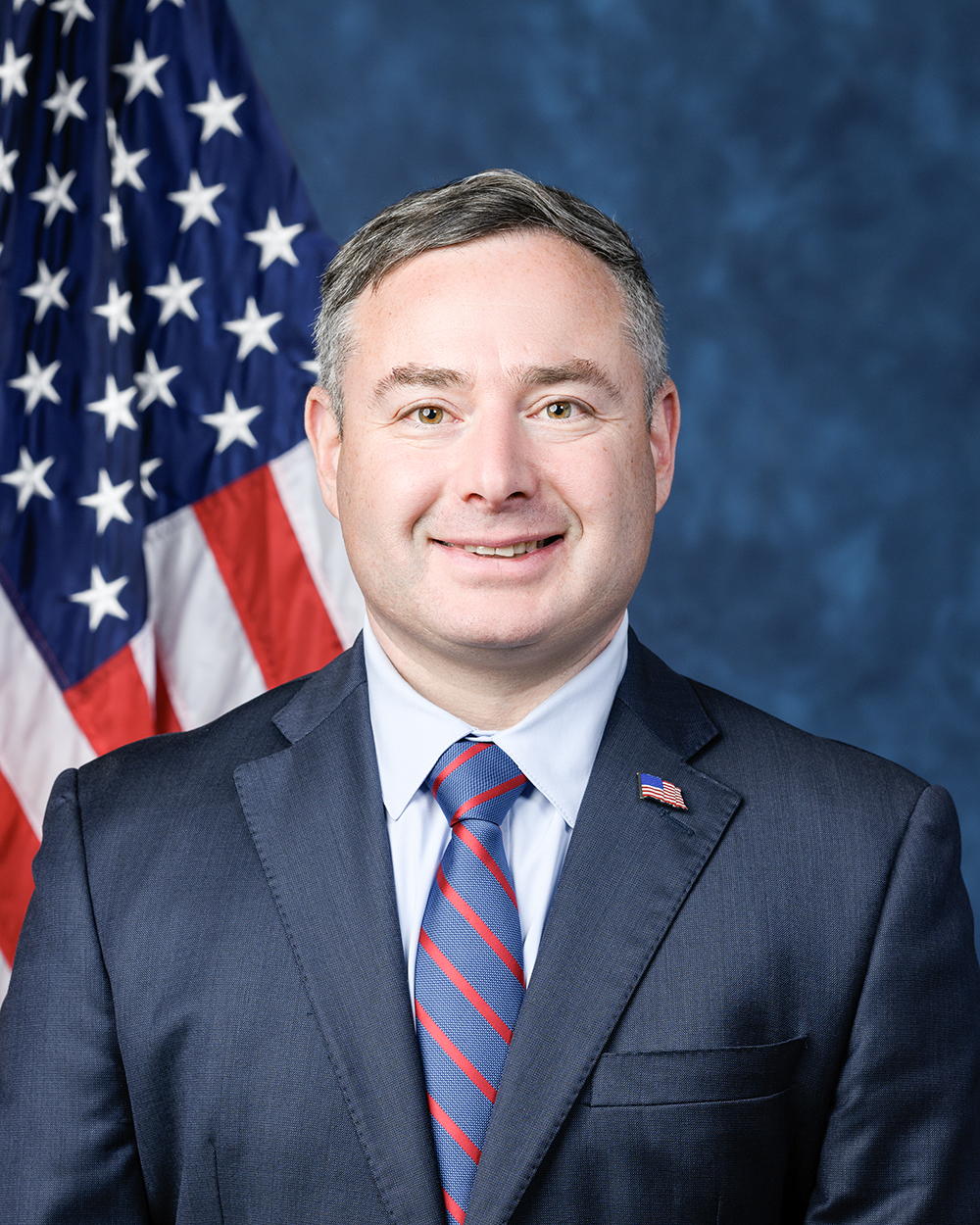
Photo of Eugene Simon Vindman
D United States House · District 7 · Virginia On the 2026 ballot

Rep. Eugene Simon Vindman

Compare
Total votes
669
all sessions
Attendance
99%
5 missed
Higher than 78% of chamber peers
With party
91%
of cast votes
Lower than 92% of chamber peers
Bipartisan score
5%
crosses aisle rarely
Higher than 91% of chamber peers
Sponsored
1,110
bills & resolutions
Higher than 98% of chamber peers
Committees
6
assignments
1,110 bills and resolutions

Sponsored bills

Total
1,110
Primary
73
Co-sponsor
1,037
This page
1,110
matching current filters
Co-sponsor HR 8981
In committee · South Carolina House · Co-sponsor
SCALE Biology Act

Maddy summaryThe SCALE Biology Act directs the National Institute of Standards and Technology to create a new biometrology laboratory program focused on engineering biology and biomanufacturing. This initiative aims to improve the accuracy and reliability of biological data while developing technical standards, safety guidelines, and measurement tools to support industry innovation and national security. The bill authorizes funding over several years to establish research facilities, train experts, and collaborate with universities and private companies to advance the field. Additionally, the legislation updates existing definitions related to biotechnology and biosafety to ensure clarity across federal programs.

In committee Jul 21, 2026 1 co-sponsor
Co-sponsor HR 7970
In committee · South Carolina House · Co-sponsor
STOP Nitazenes Act

Maddy summaryThis bill, known as the STOP Nitazenes Act, directs the federal government to permanently classify nitazenes and related synthetic opioids as Schedule I controlled substances, placing them in the same legal category as heroin and fentanyl. The legislation specifically targets a broad range of chemical compounds, including etonitazene and other variants, by defining them as 2-benzylbenzimidazole opioids and requiring the Attorney General to publish a list of qualifying substances. Under the bill, any nitazene substance temporarily scheduled under emergency provisions would be made permanently scheduled upon enactment, ensuring long-term federal control. The law also mandates that the Attorney General issue implementing rules within one year, allowing for immediate interim enforcement while providing opportunities for public comment before final regulations are established.

In committee Jul 21, 2026 1 co-sponsor
Co-sponsor HR 6529
In committee · South Carolina House · Co-sponsor
Protecting Families from AI Data Center Energy Costs Act

Maddy summaryHR 6529, the Protecting Families from AI Data Center Energy Costs Act, mandates the Federal Energy Regulatory Commission (FERC) to hold a technical conference within 90 days of enactment. The conference will include AI data centers, utilities, and ratepayer advocates to develop strategies protecting residential and small commercial customers from rising energy costs caused by large energy users. FERC must then submit a report with recommendations to Congress within 180 days. This procedural bill directly affects households and small businesses facing potential rate increases due to AI data center energy demands.

In committee Jul 21, 2026 1 co-sponsor
Co-sponsor HR 6238
Passed · South Carolina House · Co-sponsor
NIH IMPROVE Act

Maddy summaryThe NIH IMPROVE Act (HR 6238) establishes a new NIH research initiative focused on improving maternal health outcomes in the U.S. It directly affects pregnant and postpartum women, particularly those in communities experiencing health disparities linked to higher maternal mortality and severe maternal morbidity. The bill authorizes $73.4 million annually (2026-2031) for NIH to fund research targeting preventable causes of maternal deaths, reduce health disparities, and evaluate community-based interventions. Key provisions require NIH to advance evidence-based solutions through grants and studies on biological, behavioral, and regional factors affecting maternal health before, during, and after pregnancy.

Passed Jul 21, 2026 1 co-sponsor
Co-sponsor HR 5160
Passed · South Carolina House · Co-sponsor
Stem Cell Therapeutic and Research Reauthorization Act of 2025

Maddy summaryThis bill reauthorizes funding for the C.W. Bill Young Cell Transplantation Program, setting $31 million for fiscal year 2025 and $33 million annually for fiscal years 2027-2031. It also extends the deadline for the national cord blood inventory program from 2026 to 2031. The legislation directly affects stem cell research programs and cord blood banks by maintaining federal funding levels and prolonging the inventory program’s timeline. These provisions ensure continuity for existing research infrastructure and blood bank operations without introducing new policy changes.

Passed Jul 21, 2026 1 co-sponsor
Co-sponsor HR 4348
Passed · South Carolina House · Co-sponsor
To reauthorize the Kay Hagan Tick Act, and for other purposes.

Maddy summaryThis bill reauthorizes federal programs focused on preventing and responding to tick-borne diseases through 2026-2030, extending existing efforts beyond their previous expiration. It updates the National Strategy for Vector-Borne Diseases to emphasize identifying, reporting, preventing, and responding to these illnesses. The bill modifies two sections of the Public Health Service Act to continue funding for health departments working on vector-borne disease control. It directly affects public health programs and state/local health departments managing tick-borne disease prevention and response.

Passed Jul 21, 2026 1 co-sponsor
Co-sponsor HR 3747
Passed · South Carolina House · Co-sponsor
Accelerating Access to Dementia and Alzheimer’s Provider Training Act

Maddy summaryThe AADAPT Act reauthorizes and expands Project ECHO grants to improve Alzheimer’s and dementia care through technology-enabled training. It specifically funds grants for healthcare providers in rural, frontier, or medically underserved areas to enhance early diagnosis, quality care, and provider retention for dementia patients. The bill authorizes $1 million annually (2027-2032) for these dementia-focused training programs, requiring funds to supplement - not replace - existing resources. This directly supports primary care providers licensed to serve underserved communities, using collaborative online learning to address care gaps.

Passed Jul 21, 2026 1 co-sponsor
Co-sponsor HR 3168
In committee · South Carolina House · Co-sponsor
National Earthquake Hazards Reduction Program Reauthorization Act of 2025

Maddy summaryThis bill reauthorizes the National Earthquake Hazards Reduction Program through fiscal year 2030, providing $83.4 million annually with $30 million each year dedicated to completing the Advanced National Seismic System. It expands the program to include Tribal governments, updates standards to cover building design, evaluation, and post-earthquake recovery (such as minimizing downtime for critical infrastructure), and requires better coordination between federal agencies like the USGS, Federal Communications Commission, and FEMA for earthquake early warnings. The bill mandates that early warning alerts be broadcast in the predominant languages of affected regions and includes new provisions for tsunami response coordination and data sharing.

In committee Jul 21, 2026 1 co-sponsor
Co-sponsor HR 2821
Passed · South Carolina House · Co-sponsor
FDA Modernization Act 3.0

Maddy summaryHR 2821, the FDA Modernization Act 3.0, requires the FDA to update regulatory language within one year of enactment. It directs the agency to replace all references to "animal tests" with "nonclinical tests" in 22 specific sections of the Code of Federal Regulations related to drug development and approval processes. The bill also adds a definition for "nonclinical test" into relevant FDA regulations to align with prior legislative changes. This update applies directly to pharmaceutical manufacturers and FDA reviewers who follow these regulatory guidelines during drug development. The changes aim to modernize terminology without altering current testing requirements.

Passed Jul 21, 2026 1 co-sponsor
Co-sponsor HR 1493
Passed · South Carolina House · Co-sponsor
To reauthorize and make improvements to Federal programs relating to the prevention, detection, and treatment of traumatic brain injuries, and for other purposes.

Maddy summaryThis bill reauthorizes and improves federal programs focused on preventing, detecting, and treating traumatic brain injuries (TBIs), extending funding through 2030. It updates CDC surveillance to better track high-risk groups (like military personnel, first responders, and those in certain occupations) and requires public sharing of aggregated TBI data. States receiving grants must maintain non-Federal funding levels for TBI programs, with limited waivers allowed. The bill also mandates a congressional report on high-risk populations and a study examining long-term TBI effects, including links to dementia and mental health conditions.

Passed Jul 21, 2026 1 co-sponsor
Showing 71 to 80 of 1,110 bills
Previous 1 … 7 8 9 … 111 Next