Maddy summarySenate Resolution 119 recognizes the 202nd anniversary of Greece's independence (celebrated March 25, 2023) and celebrates the shared democratic values between Greece and the United States. The resolution highlights historical ties, including U.S. support during Greece's 1821 independence struggle, Greece's role in World War II, and its current status as a U.S. NATO ally. It also commends Greece's contributions to global security and its support for Ukraine's sovereignty following Russia's invasion. This procedural resolution serves as a symbolic gesture to strengthen bilateral relations without enacting new laws.
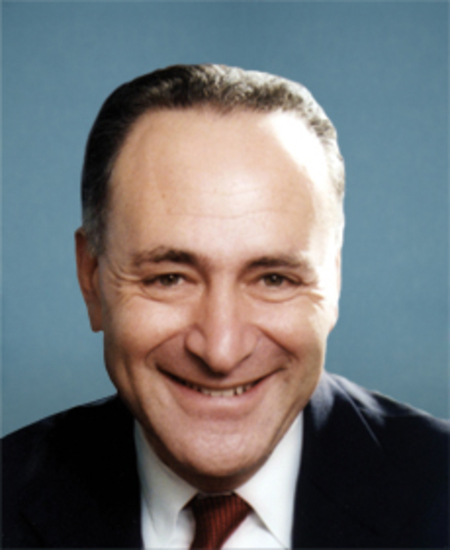
Sen. Charles E. Schumer
Sponsored bills
Maddy summaryThe Haiti Criminal Collusion Transparency Act of 2023 requires the U.S. government to produce an annual report for five years detailing connections between Haitian criminal gangs and Haitian political and economic leaders. The report must identify specific gangs, their activities, and leaders linked to them, including how these ties threaten Haitian civilians and U.S. interests in Haiti. It also mandates that the U.S. identify individuals for potential visa restrictions and sanctions under existing laws, impose those sanctions within 30 days of the report, and publish the list publicly. The law expires five years after enactment.
Maddy summarySRES 188 is a symbolic Senate resolution celebrating the 75th anniversary of Israel's founding on May 14, 2023. It formally recognizes Israel's establishment, reaffirms the U.S.-Israel partnership, and highlights shared democratic values, security cooperation, and diplomatic achievements like the Abraham Accords. The resolution has no policy impact or direct effect on individuals or legislation - it serves solely as a ceremonial expression of support. It was introduced by a bipartisan group of senators and passed without implementing new laws or funding.
Maddy summaryThis bill temporarily suspends the federal debt ceiling from enactment until December 31, 2024, allowing the government to borrow without restriction during this period. It directly affects the U.S. Treasury's ability to issue new debt to fund existing government obligations. The key mechanism is a temporary pause on the debt limit, with a special rule ensuring that debt issued before January 1, 2025, to cover commitments due before that date is counted toward the new limit. This avoids a potential default on existing financial obligations without changing the debt limit permanently.
Maddy summarySJRES 4 is a joint resolution that removes the 1972 deadline for states to ratify the Equal Rights Amendment (ERA), which was originally proposed in House Joint Resolution 208. It declares that the ERA is valid as part of the U.S. Constitution if ratified by three-fourths of states (38), regardless of the expired deadline. The resolution directly affects the ERA ratification process, making it possible for states to complete ratification without time constraints. As of 2023, 38 states had already ratified the ERA, and this resolution would finalize its inclusion in the Constitution if enacted.
Maddy summaryThe New York-New Jersey Watershed Protection Act establishes a federal grant program to fund local restoration projects protecting water quality and wildlife habitats across the New York-New Jersey Harbor watershed. It provides competitive matching grants (up to 90% federal funding for small/rural/disadvantaged communities) to state/local governments, nonprofits, and tribal entities for activities like habitat restoration, stormwater management, and climate resilience projects. The program requires coordination with existing regional plans (such as the Hudson River Estuary Program) and prioritizes projects benefiting communities facing environmental injustice. Funding is authorized at $20 million annually (2024-2029), with at least 75% dedicated to grants, and mandates annual progress reports to Congress.
Maddy summaryThe Child Care for Working Families Act establishes a new federal program to provide affordable, high-quality child care for working families with children under age 6. It requires states to implement a sliding fee scale (with no copayment for families earning up to 85% of state median income) and develop a tiered quality system for child care providers, with payment rates that support staff wages comparable to elementary educators. The bill prioritizes access for underserved populations including children with disabilities, children experiencing homelessness, children in foster care, and children from low-income families, while requiring states to improve child care quality and supply through dedicated funding streams. States must submit detailed plans demonstrating how they will meet these requirements to receive federal funding, which will be provided through a combination of direct child care assistance and quality improvement activities.
This resolution authorizes (1) Daniel Schwager, a former employee of the Office of the Secretary of the Senate, to provide relevant testimony in the case of United States v. Kelly , except concerning matters for which a privilege should be asserted; and (2) the Senate Legal Counsel to represent Mr. Schwager and any current or former officer or employee of his office in connection with this case.
This resolution authorizes (1) Daniel Schwager, a former employee of the Office of the Secretary of the Senate, to provide relevant testimony in the case of United States v. Powell , except concerning matters for which a privilege should be asserted; and (2) the Senate Legal Counsel to represent Mr. Schwager and any current or former officer or employee of his office in connection with this case.
Resident Physician Shortage Reduction Act of 2023 This bill increases the number of residency positions eligible for graduate medical education payments under Medicare for qualifying hospitals, including hospitals in rural areas and health professional shortage areas. Current law provides for an increase of up to 200 positions per fiscal year beginning in FY2023, with a total increase of 1,000 positions; each hospital may receive up to 25 additional positions. Current law also provides for an additional increase of up to 200 positions for FY2026, with at least 100 of these positions for psychiatry or related specialties; each hospital may receive up to 10 additional positions. The bill provides for an additional increase of 2,000 positions per fiscal year from FY2025-FY2031; during this period, each hospital may receive up to 75 additional positions in total under the bill and current law. The bill also requires the Government Accountability Office to report on strategies to increase the diversity of the health professional workforce, including with respect to representation from rural, low-income, and minority communities.