Maddy summaryThis House resolution marks the 50th anniversary of the Hyde Amendment and honors its original sponsor, Congressman Henry Hyde. It asserts that the amendment has prevented over 2.6 million abortions by restricting federal funding for elective procedures. The text emphasizes that this policy protects taxpayer conscience rights by ensuring public money is not used to finance abortions. Additionally, it encourages Americans to reflect on the history of the amendment and the total number of abortions performed since the Roe v. Wade decision.
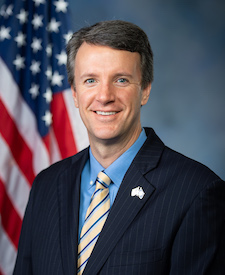
Rep. Ben Cline
Sponsored bills
Maddy summaryThis bill, known as the Ratepayer Protection Act, modifies federal energy laws to ensure that large industrial customers pay for the specific infrastructure upgrades needed to serve their high electricity demands. It directly affects non-residential facilities with a peak power usage of 100 megawatts or more, requiring utilities to charge these customers the full incremental cost of any necessary generation, transmission, or distribution improvements. Under the new rules, large customers must also provide financial guarantees or contributions before such upgrades are made, ensuring utilities can recover costs even if the customer leaves the contract early. State regulators have two years to implement these standards, though the bill exempts utilities in states that have already enacted similar measures or are actively considering them.
Maddy summaryThis bill, known as the Bankruptcy Threshold Adjustment Act of 2026, raises the maximum debt amounts individuals and small businesses can owe while still being eligible to file for Chapter 13 bankruptcy. For small businesses, it increases the debt limit from $2,750,000 to $7,500,000, while for individual consumers, it raises the limit from $483,000 to $2,750,000. The changes apply to cases filed on or after the bill becomes law and affect people who meet the income requirements for Chapter 13 repayment plans. The bill excludes large corporations and certain affiliated business groups from the new higher limits.
This bill designates the facility of the United States Postal Service located at 1225 Kempsville Road in Virginia Beach, Virginia, as the "Colonel Edward Shames Post Office Building".
Wintergreen Emergency Egress Act This bill directs the Department of the Interior to issue a right-of-way through the Blue Ridge Parkway for an additional emergency exit from Wintergreen in Nelson County, Virginia, once certain requirements have been met. Specifically, Interior must grant the right-of-way if it reports to specified congressional committees that the following have been completed: (1) an evaluation of alternatives to the right-of-way for exiting Wintergreen that do not cross federal land, including an evaluation of whether existing trails can be converted to roads; (2) an analysis of expected fire ecology behavior in the event of a fire emergency with respect to the right-of-way; and (3) any required reviews under the National Environmental Policy Act of 1969 and the National Historic Preservation Act.
Maddy summaryThe American Reserve Modernization Act of 2026 directs the U.S. Treasury to create two new accounts: a Strategic Bitcoin Reserve for Bitcoin acquired through government forfeiture and a Digital Asset Stockpile for other digital assets. The bill mandates that all Bitcoin held in the reserve be kept for at least 20 years, with strict rules against selling or disposing of these assets during that time. It also establishes a transparency system requiring quarterly public reports and third-party audits to verify the government's holdings and management of these digital assets.
Maddy summaryThe Increasing Baseline Updates Act requires the Congressional Budget Office to provide at least two annual updates to the budget baseline for Congress's Budget Committees, including the economic data used in those updates. It also mandates that the President submit detailed technical budget data to Congress by February 1 each year, featuring current and prior year budget figures and credit reestimates. These provisions update the annual reporting requirements for the Congressional Budget Office and the President's office. The bill directly affects how Congress receives timely budget information for fiscal planning.
Maddy summaryHR 6152, the Foreign Robocall Elimination Act, establishes an interagency task force to address foreign robocalls entering the United States. The task force, composed of the FCC, FTC, DOJ, and private sector representatives, will study the origins, impacts, and potential solutions to foreign robocalls and must submit a report to Congress within 360 days. The bill also modifies existing law to require FCC notices about robocall mitigation every three years instead of annually, and introduces a bond requirement for providers using the Robocall Mitigation Database. This legislation affects telecommunications providers, federal agencies, and all U.S. telephone users who receive unwanted calls. The bill aims to improve coordination between U.S. agencies and foreign countries in combating illegal robocalls through concrete policy changes.