Maddy summaryThis bill amends the Passport Act to allow qualified public libraries to collect and keep passport application fees. Specifically, it authorizes nonprofit or charitable public libraries (that meet State Department regulations) to serve as passport acceptance facilities and retain the standard execution fee. Existing libraries that previously processed passport applications automatically gain this authority within 30 days of the bill's enactment. The change updates the Passport Act to explicitly include such libraries as authorized entities alongside government offices and the U.S. Postal Service.
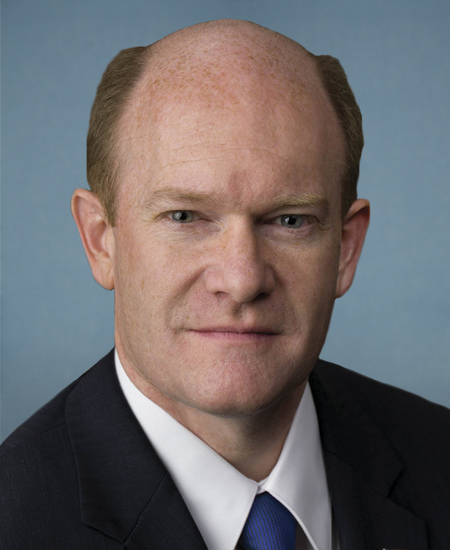
Sen. Christopher A. Coons
Sponsored bills
Maddy summaryThe Patients Deserve Price Tags Act requires hospitals, clinical diagnostic laboratories, imaging services providers, and ambulatory surgical centers to publicly disclose detailed pricing information for healthcare services in machine-readable formats. This includes standard charges, discounted cash prices, payer-specific negotiated rates, and other relevant pricing data that consumers can easily access and compare. The law applies to all facilities that provide services to Medicare beneficiaries, with implementation dates starting in 2026 for hospitals and 2027 for other providers. Non-compliant facilities face daily civil monetary penalties ranging from $300 to $10,000 per day, depending on facility size and duration of non-compliance.
Maddy summaryS 2252, the "Saving Lives and Taxpayer Dollars Act," prohibits the U.S. government or its partners from destroying foreign aid commodities like food, medicine, vaccines, or family planning products before they spoil or expire. Instead, it requires agencies to urgently deliver these items to intended beneficiaries - such as people in disaster zones, refugee camps, or communities facing health crises - through donation, sale, or other means. The bill mandates annual reports to Congress detailing any expired, spoiled, or destroyed aid, including reasons for failure to deliver and associated costs. This directly affects U.S. agencies managing global health and food aid (like USAID and the State Department) and aims to prevent waste while supporting health outcomes and U.S. agricultural exports.
Maddy summaryThis Senate resolution recognizes the importance of independent living and economic self-sufficiency for individuals with disabilities, emphasizing their right to live in their own homes and communities. It calls on the Department of Justice to rescind a recent opinion that the Senate views as undermining the legal requirement to provide community-based services instead of institutional care. The document also urges various federal agencies to improve funding for home and community-based services, increase accessible housing and transportation, and promote competitive employment opportunities for people with disabilities. Additionally, the resolution pledges bipartisan efforts to address barriers faced by individuals with disabilities, including those of color, and opposes cuts to the Medicaid program that could limit access to essential support services.
Maddy summaryThis bill allows rural law enforcement agencies with fewer than 50 officers to receive free training grants from the Department of Justice. Instead of applying directly, these agencies can pool their funding with neighboring departments to hire accredited nonprofit organizations to deliver the training. The program specifically covers topics such as de-escalation, officer wellness, leadership, and handling situations involving mental health crises or domestic violence. By simplifying the application process and removing reporting burdens, the legislation aims to help smaller agencies access resources they previously lacked.
Maddy summaryThe Right to IVF Act of 2026 establishes federal protections to ensure individuals can access assisted reproductive technology and intrauterine insemination without state-imposed restrictions, while also mandating that health insurance plans, Medicare, Medicaid, and the Federal Employees Health Benefits program cover these services. The bill defines these procedures broadly to include treatments like egg and embryo freezing and requires coverage regardless of whether a patient has been diagnosed with infertility. It further directs the Department of Defense and the Department of Veterans Affairs to provide fertility preservation and reproductive assistance to uniformed service members and veterans, including funding for egg or sperm retrieval and storage. Additionally, the legislation grants federal courts the authority to challenge and block any state laws that limit access to these reproductive treatments or discriminate against providers and patients based on protected characteristics.
Maddy summaryThis bill extends the deadline for the National Emergency Medical Services Memorial Foundation to establish a commemorative memorial in Washington D.C. and its surrounding areas to November 3, 2032. It directly affects the foundation by modifying the expiration date previously set to end a 7-year period. The change ensures the foundation has sufficient time to complete its memorial work within the updated timeframe.
Maddy summaryThe FIRST Act establishes a new program within the Department of State to promote the international deployment of American small modular reactor technology. Managed by the Under Secretary for Arms Control and International Security, the program will advocate for U.S. nuclear exports, ensure high safety and security standards, and provide support for project development and workforce training abroad. The legislation requires the program to submit detailed reports and briefings to Congress every 120 days regarding its activities and funding, and it is set to expire in 2034.
Maddy summaryThis concurrent resolution formally recognizes the significant wage gap between Black women and white, non-Hispanic men in the United States. The document cites data showing that Black women earn roughly 65 cents for every dollar earned by white men and highlights how this disparity impacts their ability to support families and accumulate wealth. By referencing existing laws like the Equal Pay Act and the Civil Rights Act, the bill reaffirms Congress's support for equal pay for equal work without proposing new legislation or policy changes. Ultimately, the measure serves as a symbolic acknowledgment of the economic challenges faced by Black women due to dual discrimination based on race and gender.
Maddy summaryThis resolution directs the Senate Legal Counsel to file a lawsuit on behalf of the Senate to enforce the Foreign Emoluments Clause of the U.S. Constitution, which prohibits the President from accepting gifts or payments from foreign governments without Congressional approval. The bill specifically targets alleged violations by President Donald J. Trump, citing instances such as accepting a refurbished aircraft from Qatar, cryptocurrency investments from foreign-linked entities, and real estate deals in various countries that generated income for the President and his family. By seeking a court injunction, the measure aims to stop the President from accepting these specific benefits unless Congress provides its consent.