

Maddy summaryThe Carbon Dioxide Removal Leadership Act of 2026 directs the Department of Energy to remove specific quantities of carbon dioxide from the atmosphere each year through 2036 and beyond, with targets increasing from 50,000 to 10 million metric tons annually. The bill defines eligible technologies as those that capture CO2 directly from the air or seawater and store it durably, while excluding methods like enhanced oil recovery or natural photosynthesis. To ensure accuracy, the law requires independent third parties to measure, monitor, and verify removals, with costs included in the price of removal, which must drop from $750 per ton in 2026 to $150 per ton by 2037. The Secretary of Energy must prioritize projects that create domestic jobs, source materials locally, and benefit communities historically dependent on fossil fuels, while reserving at least 20 percent of removals for smaller projects. Additionally, the act mandates regular reports to Congress on progress and authorizes funding to carry out these removal obligations.
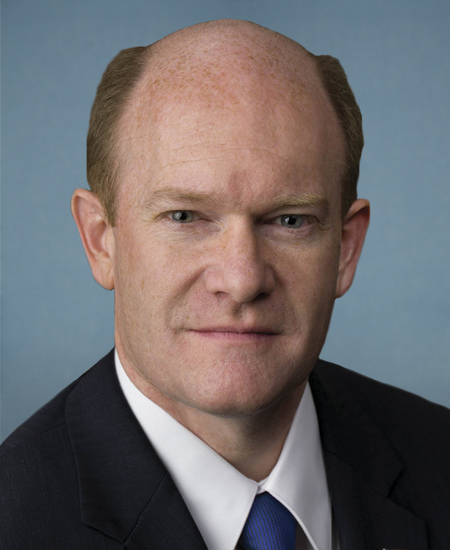
Sen. Christopher A. Coons
Sponsored bills
Maddy summaryThe Title VIII Nursing Workforce Reauthorization Act of 2025 reauthorizes federal funding for nursing education programs through 2030, increasing annual appropriations to support nurse training and workforce development. It expands grant eligibility to include nurse practitioner, nurse-midwifery, nurse anesthesia, and clinical nurse specialist programs, while requiring funds to cover clinical education costs like preceptor fees. The bill directs grants toward technology such as simulation labs, telehealth, and virtual training to modernize nursing education, and mandates partnerships with healthcare facilities to create clinical training opportunities. Additionally, it updates program requirements to include support for survivors of sexual assault and focuses on increasing nursing faculty and student enrollment to address nationwide nursing shortages.
Maddy summaryS 380, the Rural Obstetrics Readiness Act, creates a federal program to improve emergency obstetric care in rural health facilities without dedicated obstetric units. It establishes evidence-based training for non-obstetric providers to handle childbirth emergencies (like hemorrhage or severe hypertension), funds equipment purchases, and launches a telehealth pilot for rapid specialist consultations. The bill authorizes $5 million for training (2026-2028), $15 million for equipment and workforce support (2026-2029), and $5 million for teleconsultation (2026-2029). It directly affects rural hospitals and clinics in maternity care shortage areas, requiring them to coordinate with maternal health programs and develop emergency protocols. A separate study will map maternity ward closures and regional care patterns, reporting to Congress within three years.
Maddy summaryThe PEACE in Sudan Act establishes a comprehensive framework to address the ongoing conflict in Sudan by mandating detailed reports on foreign involvement, human rights violations, and the financial assets of armed groups. It requires the Secretary of State to develop a diplomatic strategy to end the war, assess potential terrorist designations for certain actors, and impose sanctions on individuals and entities supporting the conflict or obstructing peace efforts. The legislation also restricts U.S. foreign assistance to Sudan, prohibiting funding for government institutions or debt relief unless a national security waiver is granted, while allowing exceptions for lifesaving humanitarian aid. Additionally, the bill extends the tenure of the Special Envoy for Sudan and directs the U.S. to coordinate with international partners to enforce an arms embargo and hold perpetrators of atrocities accountable.
Maddy summaryThe Eliminate Chinese Organized Crime Act establishes a new program to provide financial and technical assistance to law enforcement agencies in Latin American and Caribbean countries. This funding is intended to help these agencies investigate and prosecute criminal groups linked to China that engage in activities such as drug trafficking, money laundering, and foreign interference. The assistance includes training on financial investigations, digital forensics support, and consultation with U.S. law enforcement experts, while also implementing vetting measures to ensure recipient agencies are not compromised. Additionally, the bill requires the Director of National Intelligence to submit an annual report to Congress detailing the assistance provided and summarizing known criminal activities and any law enforcement support received from China in the region.
Maddy summaryThe UNLOCK AUKUS Act amends federal export control laws to allow the transfer of specific defense articles and services to partners under the AUKUS security pact. By modifying the Arms Export Control Act, the bill removes certain restrictions that previously limited what technology and equipment could be shared with these allied nations. This change directly impacts the U.S. Department of State and the Department of Defense, enabling them to facilitate the collaboration required for next-generation nuclear-powered submarine programs. The legislation does not alter the core requirements for these transfers but adjusts the regulatory framework to support the partnership's goals.
Maddy summaryThe Pacific POWER Act directs the U.S. State Department to launch an international program aimed at expanding geothermal energy use in Indo-Pacific allies to strengthen national security ties and reduce reliance on Chinese energy technology. This initiative involves selecting at least five partner countries, including several in the Indo-Pacific region, to collaborate on developing geothermal resources and next-generation technologies like enhanced geothermal systems. The bill authorizes the creation of public-private partnerships, financial tools, and technical assistance to help these partners build geothermal capacity while establishing standards for community engagement and environmental safety. To oversee this effort, the legislation requires the Secretary of State to submit detailed reports to Congress outlining the strategy, resource needs, and progress of the program over a five-year funding period.
Maddy summaryThe Energy Security Pacts Act authorizes the Secretary of State to create multiyear agreements with eligible partner countries to enhance energy and economic security by diversifying critical mineral and energy supply chains. This legislation establishes a new Office of Energy Security Pacts within the State Department, led by a dedicated Director, and creates an interagency Council to coordinate efforts among various federal departments. Funding for these pacts can be drawn from existing national security and development accounts, with strict rules prohibiting military assistance, projects that harm U.S. jobs, and any activities posing environmental or safety risks. To qualify for these agreements, partner countries must generally have low per capita incomes or be in the process of graduating from World Bank aid, and the pacts must include detailed plans for economic growth and private sector investment.
Maddy summaryThe Blue Skies for Taiwan Act of 2026 establishes a framework to strengthen Taiwan's unmanned aerial system (UAS) capabilities and integrate them into U.S. defense supply chains. The bill creates a working group to assess Taiwan's drone production capacity, identify barriers to U.S. certification, and explore public-private partnerships for co-developing secure, PRC-independent drone components. It also mandates a cooperative framework with regional allies to promote Taiwan's participation in secure UAS programs and establishes a fast-track certification process for Taiwanese manufacturers to expedite export controls and security reviews. The legislation authorizes funding for these initiatives while explicitly stating it does not change U.S. policy on Taiwan's international status.
Maddy summaryThis bill extends the funding and authorization for the United States Commission on International Religious Freedom through September 2028. It directly affects the Commission, which monitors religious freedom violations worldwide and advises the U.S. government on related policies. The legislation amends the International Religious Freedom Act of 1998 to update the authorization period from the original 2025-2026 timeframe to 2026-2028. This procedural change ensures the Commission can continue its operations without interruption during the extended period.