

Maddy summaryThis bill establishes a framework to protect American-owned closed-source AI models from unauthorized extraction by foreign entities, particularly those from China and Russia. It requires the Secretary of State to conduct assessments identifying which foreign entities are conducting model extraction attacks or facilitating them through fraudulent account networks, then publish a public list of these actors for up to five years. The legislation authorizes the President to impose economic sanctions on identified entities and their affiliates, while also creating mechanisms for industry coordination and sharing information about threats. Importantly, the bill distinguishes between legitimate AI research conducted under contractual terms and unauthorized extraction attempts that bypass access controls or violate usage agreements.
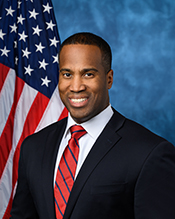
Rep. John James
Sponsored bills
Maddy summaryThe MATCH Act requires U.S. agencies to align export controls on semiconductor manufacturing equipment with allied nations to prevent adversaries from accessing critical technology. It mandates a 150-day period for diplomatic efforts to secure countrywide denial policies from allied suppliers, after which U.S. jurisdiction would extend to equipment exported from countries not complying with these controls. The bill specifically targets semiconductor manufacturing equipment that the U.S. cannot currently produce in high volume and includes a list of Chinese companies deemed to warrant comprehensive restrictions. If allies fail to implement matching controls, the Act would allow the U.S. to regulate equipment exported from non-compliant allied countries and restrict servicing of restricted items at facilities in adversary nations. The legislation includes a sunset provision that expires five years after enactment, with annual reporting requirements to Congress on progress and compliance.
Maddy summaryThis resolution expresses the sense of the House of Representatives that establishing a "Veterans Appreciation Month" would be a powerful way for the nation to recognize veterans. It suggests this recognition should occur as the United States marks its 250th anniversary of independence.
Maddy summaryThis bill reauthorizes the Workforce Innovation and Opportunity Act to strengthen workforce development programs for youth, adults, and dislocated workers across the United States. It establishes new performance accountability measures requiring states and local areas to meet specific employment and earnings targets, with funding reductions for entities that fail to perform. The legislation creates new funds for critical industry skills training and industry partnerships, expands eligibility for Job Corps to include more age groups and homeless youth, and mandates the use of evidence-based practices and digital tools in workforce services.
Maddy summaryThis House Resolution recognizes the efforts and public safety contributions of linemen and the important role they play in maintaining the nation's energy infrastructure. It expresses support for designating April 18, 2026, as "National Lineman Appreciation Day" and acknowledges linemen as first responders.
Maddy summaryThis resolution congratulates the University of Michigan Wolverines men's basketball team on winning the 2026 NCAA Division I Men's Basketball Championship. It recognizes the achievements of the student-athletes, coaches, and support staff who contributed to the team's victory, which marks the program's second national title in history. The resolution also invites the team to be honored at the United States Capitol Building and directs the House Clerk to provide copies of the resolution to University leadership for display.
Maddy summaryThis bill requires Members of Congress to receive reduced pay during government shutdowns, withholding one day's worth of salary for each day the federal government is closed due to a lapse in appropriations. It applies to all Members of the House and Senate starting with the 120th Congress and mandates that Treasury officials assist congressional payroll administrators in calculating and processing these deductions. The law defines a government shutdown as occurring when funding fails to pass for any federal agency or department, and it specifically targets compensation for individuals serving in congressional positions covered by the Legislative Reorganization Act of 1946.
Enhanced Iran Sanctions Act of 2025 This bill imposes sanctions on certain foreign persons (individuals and entities) that are involved in Iran's petroleum sector as well as certain associated persons. The bill also requires or authorizes actions to facilitate the enforcement of sanctions on Iran. Specifically, the bill requires the President to impose visa- and property-blocking sanctions on any foreign person that, after the bill's enactment, knowingly engages in any transaction related to the processing, export, or sale of oil, condensates, gas, liquefied natural gas, or other petrochemical products in whole or in part from Iran. The President must also impose sanctions on certain foreign persons associated with a sanctioned individual or entity. For example, the President must sanction the subsidiaries and corporate officers of a sanctioned business. The bill provides certain exceptions to these sanctions, including specifying that sanctions do not apply to the importation of goods or to conducting or facilitating transactions for humanitarian assistance. The Department of State must establish an interagency working group that shall seek to establish a multilateral contact group to coordinate international efforts to enforce sanctions on Iran. The bill expands the State Department rewards program to authorize a reward payment to any individual who furnishes information leading to the identification of a person (1) subject to sanctions under this bill, or (2) that has attempted or is attempting to evade sanctions under this bill.
Maddy summaryThis bill, titled the Protecting America's Working Dogs Act of 2026, would require the Attorney General to create a grant program to help cover medical expenses for retired working dogs that served in federal law enforcement, the military, or as service dogs for veterans and retired officers. The program would award grants of up to $575,000 each to eligible nonprofit organizations that primarily care for these dogs and use at least 70 percent of their spending on covered medical costs. Qualified working dogs include retired military working dogs, federal law enforcement dogs, and service dogs for veterans or retired federal law enforcement officers, with grants intended to pay for veterinary care, medical procedures, diagnostics, and necessary medications. The Attorney General would report annually to Congress on the number of dogs assisted and their average medical expenses, while grant amounts would be reduced if previous unspent funds remain.
Maddy summaryHR 7932, the HONOR Gold Star Families Act, increases the death gratuity paid to families of service members who died in the line of duty. It raises the current $100,000 payment to $200,000 for deaths occurring on or after January 1, 2026. The bill also adds an annual cost-of-living adjustment to this amount, increasing it each January 1 based on the previous year’s inflation rate as measured by the Consumer Price Index. This directly affects Gold Star Families - those who have lost a service member in military service - by providing a larger initial payment and ensuring future payments keep pace with inflation.