Maddy summaryHB 815, the Worker Adjustment and Retraining Notification Act, requires employers with 50+ full-time equivalent employees to provide 90 days' written notice before mass layoffs or business closings affecting 30+ employees at a single site. It directly affects large employers in Pennsylvania, mandating notification to affected employees, the Department of Labor and Industry, and local municipalities. The bill specifies that notices must be delivered to employee representatives or employees directly, and includes exceptions for unforeseeable circumstances or natural disasters. Violations may result in civil penalties enforced by the Department of Labor and Industry.
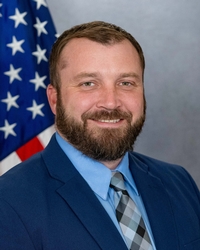
Rep. John Inglis
Sponsored bills
Maddy summaryHB 814 creates a tax credit for Pennsylvania residents who are spouses of first responders (including police, firefighters, EMTs, or emergency rescue personnel) killed while performing their duties. The credit equals 100% of the real property tax paid on the couple's primary residence, up to the amount of personal income tax due for the year. Spouses who remarry after their partner's death or who claim other property tax rebates are ineligible. The Department of Revenue may require documentation to verify the residence qualifies as the principal home. This bill directly affects surviving spouses of eligible first responders by reducing their state income tax liability.
Maddy summaryHB 803 requires Pennsylvania high schools (grades 9-12) to maintain opioid antagonists like naloxone (Narcan) on-site and train staff to use them during suspected overdose emergencies. Schools must develop a policy within 60 days with the Department of Education, detailing safe storage, administration procedures, and mandatory hospital transport after use. Trained staff, including nurses or teachers, can administer the medication in good faith without facing legal liability, criminal charges, or professional penalties. This law directly affects all public, charter, private, and nonpublic high schools in Pennsylvania, aiming to improve emergency response to opioid overdoses among students and staff.
Maddy summaryHB 776 requires Pennsylvania high school students to score at least 60% on a civic knowledge assessment to graduate or earn a general equivalency diploma, starting in the 2028-2029 school year. The bill amends the Public School Code to add this graduation requirement, which applies to all students except those with an individualized education program (IEP) if their IEP specifies an exemption. The assessment measures knowledge of civic topics like government structure and citizenship. This policy directly affects all Pennsylvania public high school students seeking graduation or a general equivalency diploma.
Maddy summaryHB 747 increases the debt limit for Pennsylvania's Business in Our Sites Program from $300 million to $375 million under the Commonwealth Financing Authority. This change directly affects the program, which supports business development on underutilized sites across the state. The bill amends Section 1543(b)(1) of Title 64 to allow the authority to incur higher aggregate indebtedness for this specific program. The amendment takes effect 60 days after enactment.
Maddy summaryHB 778 establishes a three-year pilot program to increase pre-kindergarten (Pre-K) teacher salaries in Pennsylvania to match those of elementary school teachers with similar qualifications. It directly affects Pre-K teachers working in programs located in high-poverty areas (school districts with ≥20% poverty or census tracts at ≤80% of the statewide median poverty level). The program requires the Department of Education to calculate salary gaps using a specific formula, provide subsidies to eligible Pre-K programs to close those gaps, and collect data for a legislative report. The bill mandates strict use of funds solely for teacher salary increases and includes requirements for reporting program outcomes to the legislature.
Maddy summaryHB 780 creates a tuition assistance program for early childhood educators in Pennsylvania. It provides grants to cover tuition costs (minus other financial aid) for individuals pursuing associate degrees or certifications in early childhood education, targeting those earning under 400% of the federal poverty level, enrolled in at least six credit hours per semester, and working 25+ hours weekly in approved early childhood programs. Recipients must agree to work in Pennsylvania early childhood education for two years after completing their program. Funding comes from a new state fund, with annual reports tracking enrollment, retention, wages, and job demand. The program aims to support workforce development in early childhood education through financial assistance tied to service commitments.
Maddy summaryHB 779 establishes a three-year pilot program to increase salaries for Head Start teachers in Pennsylvania. It targets Head Start programs located in school districts with at least 20% poverty or census tracts with 80% or lower median poverty. The program calculates a salary supplement by comparing Head Start teachers' qualifications to public elementary school teachers in the same district, then provides funds to align their pay. The Department of Education will select participating programs, collect data, and report findings to the legislature after one year.
Maddy summaryHB 758 amends Pennsylvania's Controlled Substance, Drug, Device and Cosmetic Act to reduce penalties for a specific drug-related violation. It changes the maximum fine from $500 to $25, eliminating the possibility of jail time for this offense. The bill directly affects individuals who violate clause (31) of the existing law, which relates to certain drug-related activities under the state's controlled substances regulations. This is a concrete policy change to lower the financial penalty for a minor violation, without altering the prohibited act itself.
Maddy summaryHB 769 requires Pennsylvania public schools (excluding fully online cyber charters) to provide dedicated physical space for libraries or information centers and maintain a library collection of at least 1,000 items per grade served, including print and nonprint materials like audio-visual equipment, starting in the 2026-2027 school year. The State Board of Education will establish building standards for library spaces and review these requirements every ten years. School boards must design spaces following the State Board's guidance, and the Secretary of Education can deny approval for construction projects that fail to meet the standards. This bill amends the Public School Code to ensure schools have adequate library resources for student learning.