

Maddy summaryThis bill requires dental insurance companies in Pennsylvania to create secure online portals that give dental providers and their staff daily access to detailed patient benefit information, including claims history and denial reasons. The legislation mandates that any verbal or written statements made by insurers regarding benefits or costs must be binding on future claims, with specific exceptions for fraud or eligibility changes. To enforce these rules, the bill allows providers to sue for the original billed amount if insurers fail to pay within 30 days and imposes administrative fines of up to $10,000 for non-compliance. The changes are designed to increase transparency and reduce billing disputes, and they will take effect one year after the bill is enacted.
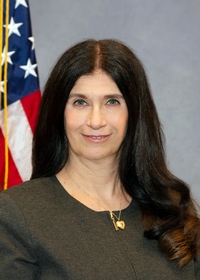
Rep. Kristine Howard
Sponsored bills
Maddy summaryThis Pennsylvania bill creates a new tax incentive to encourage the installation of green infrastructure, such as rain gardens, green roofs, and permeable pavement, on properties within the state. It defines "green infrastructure" as stormwater management practices that reduce or reuse runoff and sets rules for claiming a tax credit based on qualified costs like design, materials, and installation. To receive the credit, taxpayers must complete a certified project and submit detailed documentation to the Department of Revenue, while excluding costs covered by grants or routine maintenance. The legislation also updates the legal definition of "tax credit" to include this new program alongside existing state tax benefits.
Maddy summaryThis bill proposes to add cruelty to animals as a new criminal offense in Pennsylvania's Title 18. It would make it illegal to intentionally, knowingly, or recklessly illtreat, overload, beat, abandon, or abuse any animal. Additionally, the law would specifically prohibit using animals to pull carriages for business or money in cities with populations of 100,000 or more. If passed, these changes would take effect 60 days after the bill becomes law.
Maddy summaryThis Pennsylvania House Resolution condemns the Russian Federation's actions in Ukraine, specifically the illegal abduction and forced transfer of Ukrainian children to Russia. The document states that these actions violate the Genocide Convention by attempting to erase Ukrainian identity and culture through forced adoption and re-education. It notes that while some children have been returned, hundreds of thousands remain at risk of exploitation and cultural assimilation in occupied territories. The resolution directs copies to the President, Vice President, Secretary of State, and U.S. Congress members to formally register the state's opposition to these policies.
Maddy summaryThis bill is a ceremonial resolution that designates June 12, 2026, as "Women Veterans Day" in Pennsylvania to honor the contributions of female military service members. The measure does not create new laws or change any government policies; instead, it serves to formally acknowledge the state's approximately 70,000 women veterans and highlight their growing presence in the armed forces. The text includes background information on the history of women in the military and notes specific challenges they face, such as higher rates of military sexual trauma and lower utilization of veteran benefits. Ultimately, the resolution aims to raise awareness about these issues rather than implementing concrete programs or funding changes.
Maddy summaryThis bill designates 2026 as the 80th Anniversary Year of the State YMCA of Pennsylvania Youth and Government Program. The resolution formally recognizes the program's eight-decade history of engaging high school students in hands-on civic education and leadership training. It also commends the organization for its long-standing commitment to developing future leaders and providing financial assistance to participants.
Maddy summaryHB 1102 amends Pennsylvania’s military law to clarify and expand eligibility for the Medical Officer or Health Officer Incentive Program. It updates definitions to explicitly include "behavioral health officers" (requiring specific licenses, insurance, and federal compliance) and clarifies qualifications for physicians, physician assistants, and public health/environmental science officers. The bill affects Pennsylvania National Guard members in military medical roles who qualify for program stipends and incentives. Key changes ensure precise eligibility criteria for financial support, including updated requirements for residency, licensure, and program participation.
Maddy summaryThis bill (HB 2024) requires Pennsylvania's Office of the Deputy Adjutant General for Veterans' Affairs to create a mandatory training program for county veterans affairs directors. The program must cover specific topics like trauma-informed care, military sexual trauma, PTSD, and traumatic brain injury, developed in collaboration with the State Association of County Directors of Veterans Affairs. It directly affects county-level veterans' service staff who assist veterans across Pennsylvania. The training program becomes effective 180 days after the bill's passage.
Maddy summaryThis bill requires corporations and unincorporated associations in Pennsylvania to report the number of single-family or low-density residential properties they own in their annual filings. It establishes a new chapter in state law that restricts certain entities from owning residential real estate and mandates a waiting period for purchases by covered investors. The legislation allows the Department of State to dissolve or cancel the registration of an entity that violates these property ownership rules at least 10 times within a three-year period. Additionally, the bill grants municipalities specific powers to enforce these restrictions and creates a private right of action for individuals to sue entities that violate the new ownership prohibitions.
Maddy summaryThis bill establishes a new Pennsylvania tax credit program designed to help residents who pay for child and dependent care. It allows eligible taxpayers to claim a state tax credit based on the amount they already claim for the same expenses on their federal tax returns. The credit rate changes over time, starting at 30% for tax years ending before 2023, increasing to 100% for years between 2023 and 2026, and returning to 100% for years after 2026. The maximum credit is calculated on up to $3,000 of expenses for one child or $6,000 for two or more children.