

Issue · Technology
Technology
Every technology bill, vote, and legislator stance in Pennsylvania, automatically classified by Maddy, our AI policy reader.
Total bills
218
2025-2026 Regular Session
Top supporter
Devlin Robinson
100% support rate
Top opponent
Sharif Street
14% support rate
Ranked legislators
10
5 support · 5 oppose
Key legislators
Who's moving technology in Pennsylvania
| Legislator | Party | Stance | Support rate | Votes |
|---|---|---|---|---|

Devlin Robinson
Senate · District 37
|
R |
Strong +
|
100% | 55 |

Joe Picozzi
Senate · District 5
|
R |
Strong +
|
100% | 60 |

Scott Martin
Senate · District 13
|
R |
Strong +
|
100% | 49 |
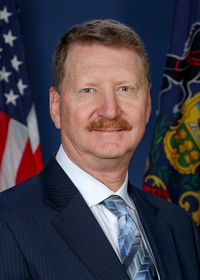
Elder Vogel
Senate · District 47
|
R |
Strong +
|
100% | 59 |
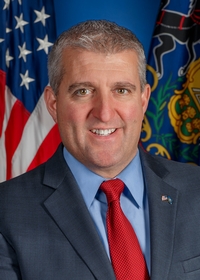
Frank Farry
Senate · District 6
|
R |
Strong +
|
100% | 45 |
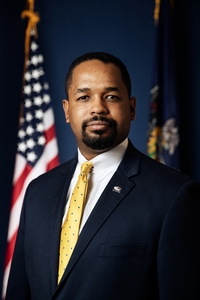
Sharif Street
Senate · District 3
|
D |
Strong −
|
14% | 54 |
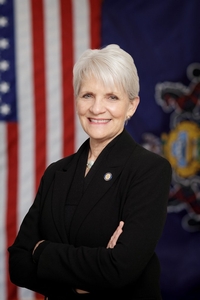
Carolyn Comitta
Senate · District 19
|
D |
Strong −
|
14% | 51 |

Tony Williams
Senate · District 8
|
D |
Strong −
|
17% | 48 |

Judy Schwank
Senate · District 11
|
D |
Strong −
|
17% | 51 |

Lindsey Williams
Senate · District 38
|
D |
Strong −
|
17% | 52 |
Showing 201–210 of 218
bills
All technology bills
SB 1014: An Act amending the act of March 10, 1949 (P.L.30, No.14), known as the Public School Code of 1949, in student supports, providing for bell-to-bell mobile device policy.
Topics
✓ EducationSupports EducationBill mandates phone-free classrooms to reduce distractions, directly supporting learning environment in K-12 schools. No funding cuts or curriculum restrictions; clear intent to strengthen educational focus.
✗ TechnologyOpposes TechnologyBill mandates restriction of personal electronic devices in schools during instruction, limiting technology access and use in educational settings.
SB 1044: An Act amending Title 75 (Vehicles) of the Pennsylvania Consolidated Statutes, providing for connected vehicle service and remote access and tracking.
Topics
✓ TechnologySupports TechnologyRequires user consent and security measures for vehicle data, protecting privacy and enhancing cybersecurity per bill summary.
✓ TransportationSupports TransportationAmends vehicle laws to establish data privacy and security standards for connected vehicles, enhancing user control and safety in transportation technology.
Sub-Topics
Vehicle Registration
SB 806: An Act providing for unfair methods of competition and for enforcement and penalties.
Sub-Topics
Artificial Intelligence
HB 1993: An Act providing for the use of artificial intelligence in mental health therapy and for enforcement.
Topics
✓ HealthcareSupports HealthcareMandates safety protocols, data privacy, and AI certification for mental health therapy, protecting patients and strengthening service standards within healthcare.
✓ TechnologySupports TechnologyMandates data privacy safeguards, safety protocols, and oversight for AI therapy tools, aligning with privacy protection and consumer safety indicators.
SB 491: An Act amending Title 66 (Public Utilities) of the Pennsylvania Consolidated Statutes, in alternative form of regulation of telecommunications services, further providing for network modernization plans and for additional powers and duties of commission.
HB 1925: An Act amending Titles 35 (Health and Safety), 40 (Insurance) and 67 (Public Welfare) of the Pennsylvania Consolidated Statutes, providing for artificial intelligence in facilities, for artificial intelligence use by insurers and for artificial intelligence use by MA or CHIP managed care plans; imposing duties on the Department of Health, the Insurance Department and the Department of Human Services; and imposing penalties.
Topics
✓ HealthcareSupports HealthcareRegulates AI safety/transparency in healthcare facilities/insurers, imposing penalties to protect patient rights and system integrity per bill's requirements.
✓ TechnologySupports TechnologyRegulates AI use in healthcare/insurance with safety/transparency rules, protecting consumers from misuse per bill's requirements and penalties.
HB 407: An Act amending Title 18 (Crimes and Offenses) of the Pennsylvania Consolidated Statutes, in assault, further providing for the offense of stalking.
Topics
✓ Criminal JusticeSupports Criminal JusticeAdds new offense for unauthorized location tracking, protecting privacy rights and enhancing stalking laws under criminal justice reform.
✓ TechnologySupports TechnologyProhibits unauthorized location tracking via technology, strengthening data privacy protections under criminal law.
HB 140: An Act amending the act of December 17, 1968 (P.L.1224, No.387), known as the Unfair Trade Practices and Consumer Protection Law, further providing for definitions.
Topics
✓ HousingSupports HousingBill defines algorithmic rent-setting as unfair, protecting tenants from exploitative pricing practices under consumer protection law.
✗ TechnologyOpposes TechnologyRestricts algorithmic rent-setting software by defining its use as 'unfair methods of competition' under consumer protection law, limiting tech application in housing.