Issue · Technology

Technology

Every technology bill, vote, and legislator stance in Pennsylvania, automatically classified by Maddy, our AI policy reader.

Total bills
218
2025-2026 Regular Session
Top supporter
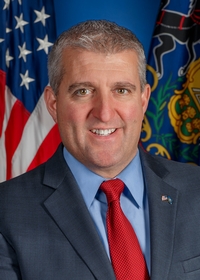
Devlin Robinson
100% support rate
Top opponent
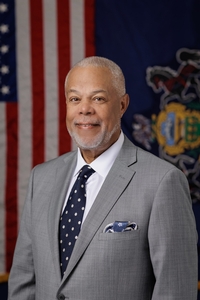
Sharif Street
14% support rate
Ranked legislators
10
5 support · 5 oppose
Key legislators

Who's moving technology in Pennsylvania

Legislators moving technology in Pennsylvania
Legislator Party Stance Support rate Votes
Devlin Robinson
Devlin Robinson Senate · District 37
R
Strong +
100% 55
Joe Picozzi
Joe Picozzi Senate · District 5
R
Strong +
100% 60
Scott Martin
Scott Martin Senate · District 13
R
Strong +
100% 49
Elder Vogel
Elder Vogel Senate · District 47
R
Strong +
100% 59
Frank Farry
Frank Farry Senate · District 6
R
Strong +
100% 45
Sharif Street
Sharif Street Senate · District 3
D
Strong −
14% 54
Carolyn Comitta
Carolyn Comitta Senate · District 19
D
Strong −
14% 51
Tony Williams
Tony Williams Senate · District 8
D
Strong −
17% 48
Judy Schwank
Judy Schwank Senate · District 11
D
Strong −
17% 51
Lindsey Williams
Lindsey Williams Senate · District 38
D
Strong −
17% 52
Showing 111–120 of 218 bills

All technology bills

passed · Pennsylvania · House Jul 23, 2025

HB 1299: An Act amending the act of December 17, 1968 (P.L.1224, No.387), known as the Unfair Trade Practices and Consumer Protection Law, providing for unlawful retention policy.

HB 1299 amends Pennsylvania's Unfair Trade Practices and Consumer Protection Law to regulate automatic renewal and continuous service offers. It requires businesses to clearly disclose renewal terms, pricing after trials, and cancellation options in a way consumers can retain, and to allow online cancellation. The law applies to most subscription-based goods/services but excludes health clubs, federally regulated utilities, natural gas/electricity contracts, and insurance entities. Violations would be treated as unfair trade practices under existing enforcement mechanisms.
Tags Consumer Protection
in committee · Pennsylvania · Senate Jun 1, 2026

SB 270: An Act amending the act of July 2, 1935 (P.L.589, No.210), referred to as the Milk Sanitation Law, prohibiting the sale of human milk over the Internet.

SB 270 amends Pennsylvania's Milk Sanitation Law to ban the online sale of human milk. The bill specifically prohibits selling or offering human milk via the internet, including through classified advertisements or direct transactions between individuals. This directly affects online sellers and buyers of human milk, adding a new restriction to the existing law that previously regulated physical milk sales. The amendment takes effect 90 days after enactment.
in committee · Pennsylvania · House Dec 3, 2025

HB 2064: An Act amending Title 42 (Judiciary and Judicial Procedure) of the Pennsylvania Consolidated Statutes, in governance of the system, further providing for fee increases and automation fee.

HB 2064 increases the maximum fee that clerks of courts in Pennsylvania counties of second class A and third through eighth class (including home rule counties of the same class) can charge for initiating a legal action to $10 (from $5). The fee must be deposited into a county-specific "automation fund" to cover only court technology updates and automation improvements. Future fee increases are capped at the three-year Consumer Price Index change and can occur no more than once every three years. This bill directly affects residents and businesses filing lawsuits in these specific counties.
in committee · Pennsylvania · House Feb 4, 2026

HB 1640: An Act amending Title 42 (Judiciary and Judicial Procedure) of the Pennsylvania Consolidated Statutes, in rules of evidence, providing for protection of reproductive health services records.

HB 1640 protects patient privacy for reproductive health care records in Pennsylvania. It requires healthcare providers (covered entities) to obtain written permission from patients before sharing records related to permitted reproductive services - such as pregnancy care, contraception, or abortion - except in limited circumstances like court orders, abuse investigations, or legal defense needs. The law explicitly preserves existing confidentiality protections under other state laws, including those for mental health and domestic violence services. It applies directly to patients seeking reproductive health care and the healthcare providers handling their records.
Sub-Topics Women's Health
in committee · Pennsylvania · House Mar 24, 2025

HB 989: An Act amending the act of December 17, 1968 (P.L.1224, No.387), known as the Unfair Trade Practices and Consumer Protection Law, further providing for contracts and effect of rescission.

HB 989 extends a 3-day "cooling-off period" for consumers who purchase goods or services priced at $25 or more through door-to-door sales, phone calls, or online platforms. It requires sellers to provide a bilingual receipt and a detachable cancellation form at the time of sale, clearly stating the right to cancel within three business days. Consumers must return merchandise in its original condition and notify sellers in writing to cancel, with sellers required to refund payments within 10 business days. This bill directly affects buyers in these specific sales scenarios and mandates new disclosure requirements for sellers under Pennsylvania's consumer protection law.
in committee · Pennsylvania · Senate Jul 10, 2025

SB 930: An Act amending the act of March 10, 1949 (P.L.30, No.14), known as the Public School Code of 1949, in student supports, further providing for definitions; in school safety and security, further providing for definitions, for School Safety and Security Committee, for school safety and security assessment providers, for School Safety and Security Grant Program, for school safety and security coordinator, for school safety and security training and for reporting and memorandum of understanding; in school security, further providing for training, for school resource officers, for school security guards and for duties of commission; in Safe2Say Program, further providing for intent, for definitions, for Safe2Say Program and for annual report; in threat assessment, further providing for definitions, for threat assessment teams and for threat assessment guidelines, training and information materials; and making editorial changes.

SB 930 amends Pennsylvania's Public School Code to strengthen school safety and security systems. It establishes a School Safety and Security Committee, requires schools to appoint coordinators for safety planning, and mandates annual training for staff on topics like cyber safety, active shooter drills, and mental health awareness. The bill creates a grant program funding mental health services and cyber security measures (e.g., preventing data breaches), with funds restricted to these purposes. Schools must report safety meeting attendance and security personnel details annually, starting in 2026, to their boards of directors. These changes directly affect public school districts, charter schools, and their administrators.
in committee · Pennsylvania · House Mar 13, 2025

HB 891: An Act amending the act of March 4, 1971 (P.L.6, No.2), known as the Tax Reform Code of 1971, providing for Keystone State Apprenticeship Tax Credit; establishing the Keystone State Apprenticeship Tax Credit Program; and imposing duties on the Department of Labor and Industry.

HB 891 creates the Keystone State Apprenticeship Tax Credit Program, providing tax incentives to Pennsylvania businesses that hire apprentices. It directly affects employers participating in approved apprenticeship programs, with preference given to those training disadvantaged youth (low-income individuals aged 16-24) and businesses in key sectors like clean energy, healthcare, and technology. The program allocates up to $10 million annually in tax credits from 2025 to 2030, administered by the Department of Labor and Industry, which will determine eligibility and prioritize employers based on specific criteria like apprentice graduation rates and program novelty. Businesses must register apprenticeship agreements with the department to qualify for the credit.
in committee · Pennsylvania · House Feb 5, 2025

HB 518: An Act amending the act of December 17, 1968 (P.L.1224, No.387), known as the Unfair Trade Practices and Consumer Protection Law, further providing for definitions and for unlawful acts or practices and exclusions.

HB 518 amends Pennsylvania's Unfair Trade Practices law to address consumer guarantees generated by artificial intelligence. It specifically makes it unlawful for businesses to fail to honor written guarantees, warranties, or policies created by consumer-facing AI systems. The bill defines "artificial intelligence" broadly to include systems that perform human-like tasks (e.g., learning, decision-making) without significant human oversight. This directly affects businesses using AI for customer commitments, adding a new prohibited practice under the state's consumer protection law. The change clarifies that deceptive AI-generated promises now fall under existing penalties for unfair trade practices.
Sub-Topics Artificial Intelligence Tags Consumer Protection
in committee · Pennsylvania · House May 12, 2025

HB 1437: An Act amending the act of March 4, 1971 (P.L.6, No.2), known as the Tax Reform Code of 1971, in sales and use tax, further providing for exclusions from tax.

HB 1437 creates a temporary sales tax exemption in Pennsylvania for specific personal items during an annual window. It excludes clothing accessories, footwear, school supplies, computers/software, and certain bedding items from sales tax when purchased by individuals for nonbusiness use during the first Friday in August through the following Sunday. The Department of Revenue must post a list of qualifying items online by July 10 each year. This policy change directly affects individual consumers shopping for these items during the defined exclusion period.
in committee · Pennsylvania · House Feb 21, 2025

HR 87: A Resolution directing the Joint State Government Commission to conduct a study reviewing the risk to critical infrastructure from foreign purchases of critical infrastructure assets and adjacent land in this Commonwealth.

HR 87 is a resolution directing Pennsylvania's Joint State Government Commission to study security risks to critical infrastructure from foreign purchases of infrastructure assets and adjacent land. The study will examine current state protections, compare approaches used by other states, and assess whether adopting a process similar to the federal CFIUS review (which evaluates foreign investments for national security risks) would be feasible. It requires the Commission to report findings and recommendations to the General Assembly within 24 months. This resolution does not create new laws but aims to inform future policy decisions about protecting critical infrastructure.
Showing 111 to 120 of 218 bills
Previous 1 11 12 13 22 Next