Issue · Labor & Employment

Labor & Employment (Child Labor)

Every labor & employment bill, vote, and legislator stance in Pennsylvania, automatically classified by Maddy, our AI policy reader.

Total bills
8
2025-2026 Regular Session
Top supporter
Jill Cooper
75% support rate
Top opponent
Ann Flood
33% support rate
Ranked legislators
10
5 support · 5 oppose
Key legislators

Who's moving child labor in Pennsylvania

Legislators moving child labor in Pennsylvania
Legislator Party Stance Support rate Votes
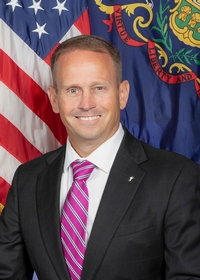
Jill Cooper
Jill Cooper House · District 55
R
Support
75% 4
Abigail Salisbury
Abigail Salisbury House · District 34
D
Support
67% 3
Aerion Abney
Aerion Abney House · District 19
D
Support
67% 3
Anthony Bellmon
Anthony Bellmon House · District 203
D
Support
67% 3
Ben Sanchez
Ben Sanchez House · District 153
D
Support
67% 3
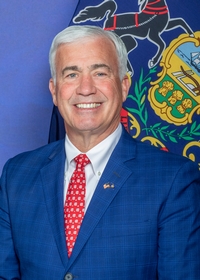
Ann Flood
Ann Flood House · District 138
R
Oppose
33% 3
Charity Krupa
Charity Krupa House · District 51
R
Oppose
33% 3
Eric Davanzo
Eric Davanzo House · District 58
R
Oppose
33% 3
Eric Nelson
Eric Nelson House · District 57
R
Oppose
33% 3
Jamie Barton
Jamie Barton House · District 124
R
Oppose
33% 3
Showing 8 of 8 bills

All labor & employment bills

in committee · Pennsylvania · House Jun 3, 2026

HR 549: A Resolution urging the Congress of the United States and the United States Secretary of Labor to review the child labor provisions of the Fair Labor Standards Act and the occupational restrictions issued under the act and take action to increase employment and training opportunities for youth workers.

This Pennsylvania House resolution urges the U.S. Congress and the Secretary of Labor to review and potentially update federal child labor laws under the Fair Labor Standards Act. The bill argues that current restrictions on hours and job types for young workers limit their ability to gain essential training and fill critical skills gaps in industries like construction and manufacturing. While the resolution emphasizes that safety must remain a priority, it calls for reforms that would allow more youth employment opportunities to support the state's economy. Because this is a non-binding resolution, it does not change any laws but instead serves as a formal request for federal officials to reconsider existing regulations.
Sub-Topics Child Labor Labor Standards Minimum Wage Tags Children
in committee · Pennsylvania · House May 4, 2026

HB 2481: An Act amending the the act of October 24, 2012 (P.L.1209, No.151), known as the Child Labor Act, further providing for employment of minors in student-learner and apprenticeship programs; providing for a review of laws and regulations related to the employment of minors; and abrogating regulations.

This bill updates Pennsylvania's Child Labor Act to clarify how minors can participate in student-learner and apprenticeship programs, allowing them to work in these roles as long as it complies with existing federal laws. It also permits high school graduates who have finished such programs to continue working in those occupations without additional restrictions beyond federal standards. To ensure consistency, the legislation cancels specific outdated regulations and requires the Department of Labor and Industry to develop new rules within a year or have the old rules expire in three years.
in committee · Pennsylvania · House Mar 17, 2025

HB 939: An Act amending the the act of October 24, 2012 (P.L.1209, No.151), known as the Child Labor Act, further providing for definitions and for employment of minors in a performance; and providing for employment of minors as content creators.

HB 939 amends Pennsylvania's Child Labor Act to include minors working as content creators (such as social media influencers, vloggers, and streamers) under the same protections as those in performing arts. The bill requires employers to establish a trust account holding at least 15% of a minor's earnings (above $2,500) for their benefit, managed by a fiduciary, with the parent or guardian setting up the account before employment. This applies when a minor's content creation is "substantial," defined as being the principal subject of the content or creating content for 10+ days in a 30-day period. The law directly affects minors in digital content creation and their employers, ensuring earnings are partially safeguarded for their future.
Sub-Topics Child Labor
in committee · Pennsylvania · House Feb 20, 2025

HB 637: An Act establishing the Youth Summer Employment Grant Program and the Youth Summer Employment Fund; and authorizing regulations.

HB 637 establishes Pennsylvania's Youth Summer Employment Grant Program, administered by the Department of Labor and Industry. The program provides grants to eligible employers (including businesses, nonprofits, and municipalities) who hire residents aged 15-18 for at least eight weeks during summer, pay at least $15/hour or the state minimum wage, and offer work or educational experiences. Grants amount to $5,000 for 10-20 youth, $10,000 for over 20 youth, with an additional $5,000 if 50% of hired youth live in historically disadvantaged communities (defined as areas with ≥20% poverty for 30+ years). Funding comes from a new nonlapsing Youth Summer Employment Fund in the State Treasury, with the department required to advertise the program to employers and schools.
in committee · Pennsylvania · House Mar 4, 2025

HB 805: An Act amending the the act of October 24, 2012 (P.L.1209, No.151), known as the Child Labor Act, further providing for administration and for penalties.

HB 805 amends Pennsylvania's Child Labor Act to strengthen oversight of child labor enforcement. It requires the Department of Labor and Industry to submit an annual report to the General Assembly by April 1, detailing complaints, violations (including by industry and county), and specific data on cases involving unaccompanied alien minors released by federal authorities. The bill also clarifies that knowingly employing minors without proper care is a second-degree misdemeanor, punishable by fines up to $5,000 or up to two years in jail per violation. Additionally, it mandates cross-reporting to Immigration and Customs Enforcement for suspected immigration violations and to Human Services for child abuse concerns during investigations.
in committee · Pennsylvania · Senate Jun 18, 2025

SB 852: An Act amending the act of January 17, 1968 (P.L.11, No.5), known as The Minimum Wage Act of 1968, further providing for definitions, for minimum wages and for preemption.

SB 852 updates Pennsylvania's Minimum Wage Act to establish new hourly wage rates starting in 2026 ($12/hour) and 2027 ($15/hour), with automatic annual cost-of-living adjustments based on the Consumer Price Index beginning in 2025. It clarifies that tipped workers must retain all tips, cannot be required to surrender tips to employers to meet wage requirements, and must be informed in writing about their minimum wage entitlement. The bill also preempts local ordinances, meaning cities cannot set higher minimum wages than this state law. It directly affects all Pennsylvania employers and workers, particularly those in tipped occupations.
passed · Pennsylvania · House Mar 25, 2025

HB 118: An Act amending the the act of October 24, 2012 (P.L.1209, No.151), known as the Child Labor Act, further providing for penalties.

HB 118 amends Pennsylvania's Child Labor Act to increase penalties for employers violating child labor laws. It raises the fine for first-time violations from $500 to $1,000 per violation and increases penalties for repeat offenses to $3,000 per violation or up to 10 days in jail. The bill directly affects employers who hire minors in prohibited work situations. These changes are concrete policy adjustments to enforcement, not new work restrictions. The amendment takes effect 30 days after enactment.
in committee · Pennsylvania · House Feb 3, 2025

HB 455: An Act providing for grants to organizations that host or offer education, workforce training or skills development to young adults; establishing the Building a Better Future Grant Program; imposing duties on the Department of Labor and Industry; and making an appropriation.

HB 455 establishes Pennsylvania's "Building a Better Future Grant Program" to fund organizations providing education and workforce training to young adults aged 16-24 who are disconnected from education. The program targets organizations serving youth from low-income backgrounds with specific vulnerabilities (e.g., foster care, disability, homelessness, or school dropout) and requires grantees to offer at least two services like job training, career counseling, or high school equivalency support. The Department of Labor and Industry will administer $5 million in state funding (from the General Fund) to award grants of up to $1 million per organization, with 5% reserved for statewide technical assistance. This directly affects eligible young adults and qualifying local organizations focused on construction, healthcare, and other in-demand vocational fields.