Issue · Healthcare

Healthcare (Medical Licensing)

Every healthcare bill, vote, and legislator stance in Pennsylvania, automatically classified by Maddy, our AI policy reader.

Total bills
44
2025-2026 Regular Session
Top supporter
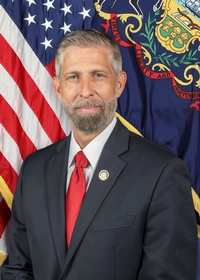
Alec Ryncavage
100% support rate
Top opponent
-
no data yet
Ranked legislators
5
5 support · 0 oppose
Key legislators

Who's moving medical licensing in Pennsylvania

Legislators moving medical licensing in Pennsylvania
Legislator Party Stance Support rate Votes
Alec Ryncavage
Alec Ryncavage House · District 119
R
Strong +
100% 4
Brenda Pugh
Brenda Pugh House · District 120
R
Strong +
100% 4
Brian Rasel
Brian Rasel House · District 56
R
Strong +
100% 4
CW
Catherine Wallen House · District 193
R
Strong +
100% 4
Craig Williams
Craig Williams House · District 160
R
Strong +
100% 4
Showing 21–30 of 44 bills

All healthcare bills

signed · Pennsylvania · House Jul 20, 2026

HB 482: An Act authorizing the Commonwealth of Pennsylvania to join the Interstate Compact; providing for the form of the compact; and imposing additional powers and duties on the Governor, the Secretary of the Commonwealth and the Compact.

HB 482 authorizes Pennsylvania to join the Interstate Occupational Therapy Licensure Compact, enabling licensed occupational therapists and assistants from Pennsylvania to practice in other participating states without obtaining separate licenses. The bill establishes mechanisms for mutual recognition of licenses, sharing of disciplinary and investigative data between states, and accountability for practitioners providing services across state lines. It directly affects occupational therapists, assistants, and patients seeking services in multiple states, particularly supporting military spouses relocating and expanding telehealth access. Key provisions include requiring states to participate in a shared data system, defining terms like "Compact Privilege," and preserving each state’s regulatory authority over local practice standards. This is a procedural bill enabling Pennsylvania’s participation in an existing interstate framework, not creating new licensing requirements.
in committee · Pennsylvania · Senate Jun 27, 2025

SB 837: An Act amending Titles 18 (Crimes and Offenses), 35 (Health and Safety) and 40 (Insurance) of the Pennsylvania Consolidated Statutes, in provisions relating to abortion, repealing provisions relating to short title of chapter and to legislative intent, further providing for definitions, repealing provisions relating to medical consultation and judgment, to informed consent, to parental consent, to abortion facilities, to printed information, to Commonwealth interference prohibited, to spousal notice, to determination of gestational age, to abortion on unborn child of 24 or more weeks gestational age, to infanticide, to prohibited acts and to reporting, further providing for publicly owned facilities, public officials and public funds and for fetal experimentation and repealing provisions relating to civil penalties, to criminal penalties, to State Board of Medicine and State Board of Osteopathic Medicine and to construction; providing for reproductive rights; repealing provisions relating to compliance with Federal health care legislation as to regulation of insurers and related persons generally; imposing penalties; and making an editorial change.

SB 837 amends Pennsylvania's abortion laws by repealing the existing "Abortion Control Act" (Sections 3201-3202) and overhauling related statutes. It removes requirements for parental consent, spousal notice, and certain medical consultations, while revising definitions (like "abortion" and "born alive") and gestational age limits. The bill establishes a new framework for "reproductive rights" and repeals provisions related to federal healthcare compliance, civil/criminal penalties, and medical board oversight. This directly affects abortion providers, patients seeking abortions, and healthcare facilities operating in Pennsylvania.
signed · Pennsylvania · House Jul 7, 2025

HB 309: An Act amending the act of October 5, 1978 (P.L.1109, No.261), known as the Osteopathic Medical Practice Act, further providing for power to license, for visiting team physician and for licenses, exemptions, nonresident practitioners, graduate students, biennial registration and continuing medical education.

HB 309 amends Pennsylvania's Osteopathic Medical Practice Act (1978) to update licensing rules for osteopathic physicians and related healthcare providers. It changes registration requirements from annual to biennial (every two years), clarifies rules for visiting team physicians at sports events, and adjusts continuing medical education requirements. The bill directly affects licensed osteopathic physicians, nonresident practitioners, medical students, and healthcare facilities employing osteopathic staff. Signed into law on July 7, 2025 (Act No. 29), it streamlines administrative processes without creating new licensing barriers.
Sub-Topics Medical Licensing
in committee · Pennsylvania · Senate Jun 9, 2025

SB 841: An Act amending the act of July 19, 1979 (P.L.130, No.48), known as the Health Care Facilities Act, in licensing of health care facilities, further providing for licensure.

SB 841 requires home health care agencies, home care registries, and their direct care workers (including those in Pennsylvania's Community Health Choices Program) to complete dementia-specific training. It mandates four hours of initial training and two hours of annual continued training covering Alzheimer's care, person-centered approaches, and dementia-related behaviors. Agencies must maintain documentation of this training in employee files and use department-approved curricula. The Department of Health will develop implementing regulations within one year, with the law taking effect 60 days after passage.
in committee · Pennsylvania · Senate Jun 24, 2025

SB 888: An Act providing for the use of certain credentialing applications and for credentialing requirements for health insurers; imposing penalties; and conferring powers and imposing duties on the Insurance Department.

This bill, the Health Care Practitioner Credentialing Act, requires Pennsylvania health insurers to accept the CAQH credentialing application or a nationally recognized alternative for health care practitioners seeking to join provider networks. It sets clear timelines: insurers must notify practitioners within 10 business days if an application is incomplete and issue a credentialing decision within 45 business days for complete applications. Insurers failing to comply may face administrative penalties, though the bill does not guarantee practitioners a spot in any insurer's network. The law applies broadly to most health insurers (including Medicaid managed care organizations) but excludes certain coverage types like accident-only or vision insurance.
in committee · Pennsylvania · House Apr 22, 2025

HB 1231: An Act amending the act of July 9, 1987 (P.L.220, No.39), known as the Social Workers, Marriage and Family Therapists and Professional Counselors Act, further providing for State Board of Social Workers, Marriage and Family Therapists and Professional Counselors.

HB 1231 amends Pennsylvania's 1987 Social Workers, Marriage and Family Therapists and Professional Counselors Act to revise the composition of the State Board of Social Workers, Marriage and Family Therapists and Professional Counselors. The bill specifies that the 13-member board must include exactly five licensed social workers (with at least one being a clinical social worker), two licensed marriage and family therapists, two licensed professional counselors, one member who rotates between marriage/family therapy and counseling roles, two public members, and the Commissioner of Professional and Occupational Affairs. This change directly affects the licensing oversight board and the professionals regulated under this law, including social workers, marriage therapists, and counselors seeking or maintaining licensure in Pennsylvania.
Sub-Topics Medical Licensing
in committee · Pennsylvania · House Mar 3, 2025

HB 787: An Act authorizing the Commonwealth of Pennsylvania to join the Interstate Dental and Dental Hygiene Licensure Compact; and providing for the form of the compact.

HB 787 would authorize Pennsylvania to join the Interstate Dental and Dental Hygiene Licensure Compact, a multi-state agreement. The bill creates a system where dentists and dental hygienists can more easily obtain licenses in participating states by sharing a single set of documents and passing the nationally recognized ADEX exam, eliminating duplicate paperwork and fees. This directly affects dental professionals seeking to practice across state lines, including military personnel and their spouses who receive expedited processing. The compact maintains each state's authority to regulate dental practice and take disciplinary action while standardizing licensing requirements and reducing costs for licensees.
Sub-Topics Medical Licensing
signed · Pennsylvania · Senate May 6, 2026

SB 507: An Act amending the act of December 20, 1985 (P.L.457, No.112), entitled "An act relating to the right to practice medicine and surgery and the right to practice medically related acts; reestablishing the State Board of Medical Education and Licensure as the State Board of Medicine and providing for its composition, powers and duties; providing for the issuance of licenses and certificates and the suspension and revocation of licenses and certificates; provided penalties; and making repeals," further providing for definitions, for midwifery and for nurse-midwife license; and providing for certified midwife license.

SB 507 amends Pennsylvania's medical licensing law to reestablish the State Board of Medical Education and Licensure as the State Board of Medicine and update its structure. It directly affects midwifery professionals by creating three new license categories: midwifery, nurse-midwife, and certified midwife. The bill establishes specific requirements and definitions for these licenses under the board's authority. This change clarifies licensing pathways for midwifery practitioners within the state's medical regulatory framework. The bill passed final passage on October 21, 2025.
in committee · Pennsylvania · House Jul 14, 2025

HB 1733: An Act amending the act of July 9, 1987 (P.L.220, No.39), known as the Social Workers, Marriage and Family Therapists and Professional Counselors Act, further providing for legislative intent, for definitions, for license required, for State Board of Social Workers, Marriage and Family Therapists and Professional Counselors, for powers and functions of board, for qualifications for license, for procedures for licensing, for exemption from licensure examination, for reciprocity, for endorsement of out-of-State licenses and for reinstatement of license; providing for restriction on use of title "licensed professional art therapist" and related titles; and further providing for penalties, for license renewal, records and fees and for unlawful practice.

HB 1733 adds art therapy to Pennsylvania's regulated health professions by creating specific licensure requirements for "licensed professional art therapists" and "licensed associate art therapists." It defines "art therapy" as a clinical practice using art-based techniques to address mental health needs, requiring therapists to meet education standards from accredited institutions. The bill restricts the use of the title "licensed professional art therapist" to those holding a valid license, while "licensed associate art therapists" must work under supervision and cannot practice independently. This directly affects art therapists seeking to legally use the title or provide services in Pennsylvania, establishing new standards for training, supervision, and scope of practice.
in committee · Pennsylvania · House Mar 31, 2025

HB 1068: An Act providing for licensure of family members to provide skilled care to designated children, for applications for licensure, for qualifications for licensure, for employment and compensation of licensed family members, for limitations and supervision of licensed family members, for notice to parents of recipients and for authorization of covered skilled care.

HB 1068 creates a licensing program allowing family members (such as parents, grandparents, or adult siblings) to provide Medicaid-covered skilled care to children with medical needs. To qualify, applicants must complete training, pass background checks, and meet state nursing standards. The bill requires Medicaid agencies to cover the cost of training and licensure renewal, and it mandates that licensed family caregivers receive compensation for services like skilled monitoring. This directly affects Medicaid recipients (children under 21 with diagnosed conditions) and their eligible family caregivers, with oversight by the State Board of Nursing.
Showing 21 to 30 of 44 bills
Previous 1 2 3 4 5 Next