Issue · Healthcare

Healthcare (Substance Abuse)

Every healthcare bill, vote, and legislator stance in Pennsylvania, automatically classified by Maddy, our AI policy reader.

Total bills
53
2025-2026 Regular Session
Top supporter
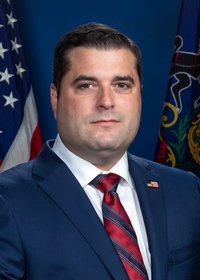
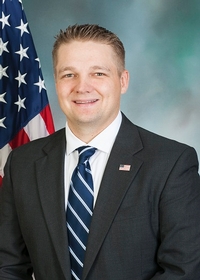
Dan Laughlin
100% support rate
Top opponent
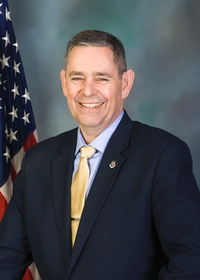
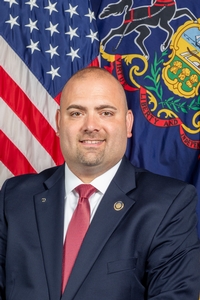
Joe Hamm
7% support rate
Ranked legislators
10
5 support · 5 oppose
Key legislators

Who's moving substance abuse in Pennsylvania

Legislators moving substance abuse in Pennsylvania
Legislator Party Stance Support rate Votes
Dan Laughlin
Dan Laughlin Senate · District 49
R
Strong +
100% 7
Devlin Robinson
Devlin Robinson Senate · District 37
R
Strong +
100% 7
Joe Picozzi
Joe Picozzi Senate · District 5
R
Strong +
100% 7
Rosemary Brown
Rosemary Brown Senate · District 40
R
Strong +
100% 7
Cris Dush
Cris Dush Senate · District 25
R
Strong +
100% 5
Joe Hamm
Joe Hamm House · District 84
R
Strong −
7% 15
Stephanie Borowicz
Stephanie Borowicz House · District 76
R
Strong −
7% 15
Aaron Bernstine
Aaron Bernstine House · District 8
R
Strong −
8% 13
Dave Zimmerman
Dave Zimmerman House · District 99
R
Strong −
8% 13
Jamie Barton
Jamie Barton House · District 124
R
Strong −
8% 13
Showing 11–20 of 53 bills

All healthcare bills

in committee · Pennsylvania · Senate Jun 30, 2025

SB 905: An Act amending Title 40 (Insurance) of the Pennsylvania Consolidated Statutes, in regulation of insurers and related persons generally, providing for addiction treatment services information collection and reporting.

This Pennsylvania bill requires health insurance companies to collect and report detailed statistics on addiction treatment services provided under their plans. Insurers must submit annual reports to the state department by April 30, including data on the number of people receiving treatment, units of service authorized and paid for, average length of stay, and the percentage of treatment requests that were denied or limited. The reported information is broken down by treatment type, such as inpatient rehabilitation, outpatient services, and detoxification, while protecting individual patient privacy. The state Department of Drug and Alcohol Programs will review these reports to check compliance with federal parity laws and Pennsylvania regulations, then share findings with legislative committees.
in committee · Pennsylvania · Senate Jun 30, 2025

SB 904: An Act amending Title 40 (Insurance) of the Pennsylvania Consolidated Statutes, in mental health parity and access to addiction treatment, further providing for scope of chapter, for definitions and for annual attestation.

This bill requires health insurance companies in Pennsylvania to annually certify that their mental health and addiction treatment coverage complies with federal and state parity laws. Insurers must submit sworn statements by January 1 each year confirming they have reviewed all their policies and plans for compliance, including those managed by third-party administrators. The law also clarifies which types of insurance policies are covered and establishes specific filing deadlines with the state insurance department. These changes aim to ensure consistent oversight of mental health and substance use disorder benefits across the state's health insurance market.
in committee · Pennsylvania · Senate Jun 30, 2025

SB 903: An Act amending Title 35 (Health and Safety) of the Pennsylvania Consolidated Statutes, providing for alcohol and other drug addiction continuing education.

This bill requires healthcare professionals in Pennsylvania to complete continuing education on alcohol and drug addiction as a condition of license renewal starting November 1, 2025. The program applies to physicians, physician assistants, nurses, and nurse practitioners and mandates at least 10 hours of training covering addiction identification, referral procedures, and support group resources. Healthcare licensing boards will enforce this requirement and may grant waivers for individuals facing serious illness, military service, or other hardships. The education must include training on a specific referral protocol called "warm handoff" that connects patients from emergency care to specialty treatment services.
in committee · Pennsylvania · Senate Jul 8, 2025

SB 901: An Act amending Title 40 (Insurance) of the Pennsylvania Consolidated Statutes, in regulation of insurers and related persons generally, providing for disclosure of addiction treatment coverage and for administrative penalties.

This bill requires health insurance companies in Pennsylvania to send their policyholders a clear, two-page notice twice each year explaining what addiction treatment services are covered under their plans. The notice must detail specific care levels like detoxification and rehabilitation, explain how long stays are available, describe how to access services, and outline appeal processes. Insurers must submit these notices to the Department of Drug and Alcohol Programs for review before sending them to customers, and the department has 45 days to approve or request changes. Companies that fail to provide this information as required could face administrative fines or penalties determined by the department.
in committee · Pennsylvania · Senate Jul 8, 2025

SB 909: An Act amending the act of April 9, 1929 (P.L.177, No.175), known as The Administrative Code of 1929, in powers and duties of the Department of Drug and Alcohol Programs, further providing for regulatory flexibility during opioid epidemic.

This bill updates Pennsylvania's Administrative Code to give the Department of Drug and Alcohol Programs more flexibility in hiring and training staff during an opioid epidemic. It allows individuals with lived experience of addiction recovery or internship experience to serve as counselors if approved by a clinical supervisor, and prevents the department from adding new credential requirements for treatment staff during the crisis. The law defines an opioid epidemic as a period with over 1,000 confirmed overdose deaths from opioids in at least three consecutive years, and it takes effect 60 days after passage.
in committee · Pennsylvania · Senate Jul 8, 2025

SB 900: An Act providing for Commonwealth support for a Mental Health and Intellectual Disability Staff Member Loan Forgiveness Program and an Alcohol and Drug Addiction Counselor Loan Forgiveness Program; and imposing duties on the Pennsylvania Higher Education Assistance Agency.

This bill establishes a loan forgiveness program in Pennsylvania to help recruit and retain workers in mental health, intellectual disability, and addiction counseling fields. It directly affects full-time employees at county mental health agencies, private providers, and licensed addiction treatment facilities who have student loans and agree to work in these professions for at least four years. Under the program, eligible workers can receive up to $25,000 in loan forgiveness over four years, with a maximum of $6,250 forgiven each year, provided they remain employed in qualifying positions. The Pennsylvania Higher Education Assistance Agency is tasked with administering the program and determining compliance with employment requirements.
Sub-Topics Substance Abuse
in committee · Pennsylvania · Senate Feb 24, 2026

SB 1196: An Act amending the act of June 13, 1967 (P.L.31, No.21), known as the Human Services Code, in public assistance, providing for pain parity in Medicaid and for pain parity in commercial insurance.

SB 1196 requires Pennsylvania's Medicaid program and commercial health insurers to treat non-opioid pain medications equally to opioid medications. Specifically, it prohibits Medicaid from labeling non-opioid drugs as "nonpreferred" when opioids are preferred and bans insurers from imposing stricter coverage rules, higher costs, or more restrictive prior authorization for non-opioid drugs compared to opioids. The law applies to all FDA-approved pain medications once approved, ensuring patients have equal access to non-opioid options without facing worse insurance terms than opioid alternatives. It takes effect 60 days after enactment.
in committee · Pennsylvania · House Jan 12, 2026

HB 2134: An Act amending Title 35 (Health and Safety) of the Pennsylvania Consolidated Statutes, in general provisions relating to emergency management services, further providing for definitions; in Commonwealth services, further providing for State Fire Commissioner; in grants to fire companies and emergency medical services companies, further providing for scope of chapter, for definitions, for publication and notice, for award of grants, for consolidation incentive, for establishment, for publication and notice, for award of grants and for consolidation incentive, repealing provisions relating to COVID-19 Crisis Fire Company and Emergency Medical Services Grant Program, further providing for Fire Company Grant Program and for Emergency Medical Services Company Grant Program, repealing provisions relating to additional funding and to COVID-19 Crisis Fire Company and Emergency Medical Services Grant Program, providing for hazardous materials and specialty funding, further providing for allocation of appropriated funds, repealing provisions relating to Emergency Medical Services COVID-19 Recovery Grant Program, providing for Hazardous Materials Team and Specialty Team Grant Program, further providing for expiration of authority, repealing provisions relating to expiration of authority relating to COVID-19 Crisis Fire Company and Emergency Medical Services Grant Program and to expiration of authority relating to Emergency Medical Services COVID-19 Recovery Grant Program and further providing for special provisions and for annual reports; and making transfers.

HB 2134 amends Pennsylvania's emergency services laws to update grant programs for fire companies and emergency medical services (EMS) providers. It creates a new "Fire Department Identification Number" (FDID) system requiring the State Fire Commissioner to assign unique five-character codes to fire departments, hazardous materials teams, and specialty teams. The bill repeals outdated COVID-19 emergency grant programs and establishes new funding streams for hazardous materials teams, specialty teams, and standard fire/EMS company grants, while clarifying how funds are allocated and requiring annual reports. These changes directly affect fire companies, EMS providers, and the State Fire Commissioner's office by modernizing administrative processes and funding mechanisms.
Sub-Topics Substance Abuse
in committee · Pennsylvania · House Jan 30, 2026

HB 2182: An Act amending the act of April 14, 1972 (P.L.233, No.64), known as The Controlled Substance, Drug, Device and Cosmetic Act, further providing for drug overdose medication.

HB 2182 amends Pennsylvania's Controlled Substance Act to allow emergency medical services (EMS) providers to administer opioid overdose medications, specifically naloxone and nalmefene, as part of their standard practice. The bill requires the Department of Health to update EMS provider regulations to include these medications within their scope of practice. This change directly affects EMS personnel by enabling them to respond to opioid overdoses more effectively without needing additional authorization during emergencies. The bill takes effect 60 days after enactment.
in committee · Pennsylvania · House Jan 30, 2026

HB 2181: An Act amending the act of April 14, 1972 (P.L.233, No.64), known as The Controlled Substance, Drug, Device and Cosmetic Act, further providing for drug overdose medication.

HB 2181 amends Pennsylvania's Controlled Substance Act to define "opioid antagonist" as drugs approved by the U.S. Food and Drug Administration for emergency reversal of opioid overdoses, including naloxone hydrochloride and similar FDA-approved medications. The bill specifically adds these examples to the legal definition within the existing law. This change directly affects healthcare providers, emergency responders, and pharmacists who administer these medications during opioid overdose emergencies by clarifying the legal scope of approved treatments.
Sub-Topics Substance Abuse
Showing 11 to 20 of 53 bills
Previous 1 2 3 6 Next