Issue · Education

Education

Every education bill, vote, and legislator stance in Pennsylvania, automatically classified by Maddy, our AI policy reader.

Total bills
417
2025-2026 Regular Session
Top supporter
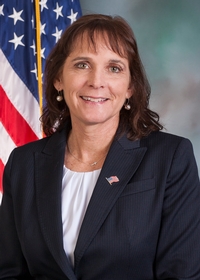
Lynda Culver
89% support rate
Top opponent
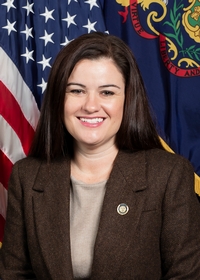
Barb Gleim
23% support rate
Ranked legislators
10
5 support · 5 oppose
Key legislators

Who's moving education in Pennsylvania

Legislators moving education in Pennsylvania
Legislator Party Stance Support rate Votes
Lynda Culver
Lynda Culver Senate · District 27
R
Strong +
89% 64
Greg Rothman
Greg Rothman Senate · District 34
R
Strong +
89% 58
Dave Argall
Dave Argall Senate · District 29
R
Strong +
89% 59
Kim Ward
Kim Ward Senate · District 39
R
Strong +
88% 78
Regina Young
Regina Young House · District 185
D
Strong +
80% 195
Barb Gleim
Barb Gleim House · District 199
R
Oppose
23% 155
Marc Anderson
Marc Anderson House · District 92
R
Oppose
25% 157
Joe D'Orsie
Joe D'Orsie House · District 47
R
Oppose
26% 159
Charity Krupa
Charity Krupa House · District 51
R
Oppose
32% 166
Brian Rasel
Brian Rasel House · District 56
R
Oppose
33% 157
Showing 111–120 of 417 bills

All education bills

in committee · Pennsylvania · House Dec 18, 2025

HB 2107: An Act authorizing the Commonwealth of Pennsylvania to join the Interstate Compact for School Psychologists; providing for form of compact; and imposing additional powers and duties on the Governor, the Secretary of the Commonwealth and the Compact.

HB 2107 would authorize Pennsylvania to join the Interstate Compact for School Psychologists, an existing agreement among states to simplify licensing for school psychologists who wish to work across state lines. The compact would allow school psychologists licensed in one participating state to obtain an equivalent license in another without repeating lengthy application processes, while still requiring them to follow the practice laws of the state where they work. This aims to address school staffing shortages by making it easier for licensed psychologists to relocate, particularly benefiting military families and schools facing workforce gaps. The bill also specifies that Pennsylvania's Governor and Secretary of the Commonwealth must take steps to join the compact and implement its requirements.
passed · Pennsylvania · House May 1, 2026

HB 2176: An Act amending the act of March 10, 1949 (P.L.30, No.14), known as the Public School Code of 1949, in terms and courses of study, providing for social media literacy education.

HB 2176 would require Pennsylvania public and nonpublic schools to integrate social media literacy into their curriculum. The bill mandates that state academic standards include specific lessons on social media's mental, psychological, and physical impacts on students, its effects on learning, safe online behavior (including identifying cyberbullying and predatory activity), and personal device security. The Department of Education must develop educational materials and provide professional development for teachers on these topics. This bill directly affects all Pennsylvania schools, including public school districts, charter schools, and nonpublic schools, by adding concrete requirements to student learning standards.
in committee · Pennsylvania · House Feb 4, 2026

HB 2152: An Act amending the act of March 10, 1949 (P.L.30, No.14), known as the Public School Code of 1949, in school safety and security, further providing for School Safety and Security Grant Program; and, in terms and courses of study, providing for secondary school start times.

HB 2152 amends Pennsylvania's Public School Code to allow school districts to use state grant funds for shifting secondary school start times to no earlier than 8:30 a.m., requiring the new time to be at least 15 minutes later than current start times. School entities must adopt a policy for the later start time and inform communities about the health and academic benefits of adequate sleep for students before implementation. The Department of Education must provide guidance and support to schools planning this change, including public awareness campaigns. This applies to all Pennsylvania school districts and charter schools serving grades 7-12.
passed · Pennsylvania · House Jun 5, 2026

HB 2117: An Act amending the act of March 10, 1949 (P.L.30, No.14), known as the Public School Code of 1949, in school health services, further providing for definitions, for possession and use of asthma inhalers and epinephrine auto-injectors, for school access to emergency epinephrine and for administration of epinephrine auto-injectors by school bus drivers and school crossing guards.

This bill amends Pennsylvania's Public School Code to allow students with asthma or severe allergies to possess and self-administer their prescribed asthma medications (including inhalers) and epinephrine auto-injectors at school. Schools must create written policies requiring students to demonstrate self-administration capability and notify the school nurse after use, while ensuring medications are stored safely and accessible only to authorized students. The bill also permits trained school staff, including bus drivers and crossing guards, to administer epinephrine auto-injectors in emergencies for students experiencing allergic reactions or asthma attacks. These changes aim to improve student safety by ensuring timely access to life-saving medications during school hours.
in committee · Pennsylvania · House Jan 20, 2026

HB 2148: An Act amending the act of March 10, 1949 (P.L.30, No.14), known as the Public School Code of 1949, requiring certain school entities to adopt policies and procedures relating to access to school property by individuals or certain enforcement officials; and providing for training, reporting to governing bodies of school entities and for department guidelines.

HB 2148 requires Pennsylvania school entities (including school districts, charter schools, and cyber charters) to adopt policies ensuring all students, parents, guardians, and school personnel can access school property regardless of immigration status. Specifically, schools must develop and publicly adopt inclusive policies within 90 days of the bill’s effective date, requiring school boards to approve these policies via public resolution with 45 days’ notice. Policies must be published in all languages spoken by students at home and reviewed quarterly to maintain accessibility. The bill explicitly prohibits immigration or law enforcement officials (including ICE, Customs, and local agencies acting under federal immigration authority) from restricting access to school zones without proper legal process. This directly affects all Pennsylvania public and private schools serving students, mandating concrete procedural changes to protect school access.
in committee · Pennsylvania · Senate Dec 22, 2025

SB 1125: An Act amending the act of March 10, 1949 (P.L.30, No.14), known as the Public School Code of 1949, providing for welcoming schools.

SB 1125 requires Pennsylvania school entities (including districts, charter schools, and career schools) to guarantee all students, parents, guardians, and school staff access to school property regardless of immigration status, starting with the 2025-2026 school year. Schools must adopt written policies promoting inclusivity within 90 days, designating a school official to handle related matters, and publish these policies in all languages spoken by students at home at least 30 days before a public meeting. Policies must be approved by a public resolution with 45 days notice and reviewed at least quarterly, with updates made through the same public process. This law directly affects school operations, ensuring consistent access and procedural transparency for all school community members.
in committee · Pennsylvania · House Feb 4, 2026

HB 2169: An Act amending the act of April 9, 1929 (P.L.343, No.176), known as The Fiscal Code, making editorial changes to delete references to "approved private school" for the purpose of adding references to "approved special education school."

HB 2169 amends Pennsylvania's Fiscal Code to update terminology in funding provisions for special education schools. It replaces references to "approved private school" with "approved special education school" in Section 1923(5), which governs how funds from the Public School Code (Section 2509.8) are allocated. The bill directly affects approved special education schools with day tuition under $32,000, requiring funding to be no less than 175% of the 2015-2016 allocation. This is a technical correction to align statutory language with current educational terminology, with no change to the underlying funding mechanism or eligibility criteria.
in committee · Pennsylvania · House Jan 28, 2026

HB 2166: An Act amending the act of August 5, 1932 (Sp.Sess., P.L.45, No.45), referred to as the Sterling Act, providing for remittance by a city of the first class to a nonresident's resident municipality and school district.

HB 2166 requires cities of the first class in Pennsylvania (like Philadelphia) that collect a nonresident wage tax to remit an amount equal to the tax their home municipality would have collected on that income. This directly affects nonresident workers who live in one municipality but work in a city of the first class, ensuring their home municipality and school district receive the tax revenue they would have earned. The key mechanism mandates a direct transfer of funds to the nonresident's resident municipality and school district, calculated based on the tax the home municipality would impose on earned income and net profits. The bill takes effect 60 days after enactment.
in committee · Pennsylvania · House Jan 21, 2026

HB 2153: An Act amending the act of June 27, 2006 (1st Sp.Sess., P.L.1873, No.1), known as the Taxpayer Relief Act, in taxation by school districts, further providing for definitions, providing for disposition of data center property tax revenue and further providing for school district tax notices.

HB 2153 amends Pennsylvania's Taxpayer Relief Act to redirect property tax revenue from data centers toward tax relief for homeowners and farmers. It defines "data center" as facilities primarily housing AI infrastructure (including servers, power systems, and AI equipment) and requires school districts to use all revenue from data center property taxes to fund homestead and farmstead tax exclusions. In the first fiscal year data center taxes are fully collected, all revenue must cover these exclusions; in subsequent years, the amount equals the first year's revenue. School districts must itemize these exclusions on tax bills, showing the original tax, exclusion amount, and final payment. This directly affects school districts collecting data center taxes and homeowners/farmers receiving reduced tax bills.
Sub-Topics Property Tax Revenue
in committee · Pennsylvania · Senate Dec 4, 2025

SB 1103: An Act providing for State aid requirement for libraries relating to book removal and for prohibited removal of instructional materials and voluntary inquiry materials in public school entities.

SB 1103 requires Pennsylvania public libraries and school libraries to adopt a policy against removing books or materials due to partisan or doctrinal disapproval to qualify for state aid, either by adopting the American Library Association's Library Bill of Rights or creating a written policy. The bill prohibits public schools from removing required classroom materials or non-required materials (such as books for independent reading) for reasons including an author's race, gender identity, sexual orientation, political views, or content related to student educational needs. It specifically bans removals based on school board or complainant discomfort, personal morality, or religious views. The law takes effect 60 days after enactment.
Sub-Topics Curriculum Libraries
Showing 111 to 120 of 417 bills
Previous 1 11 12 13 42 Next