

Issue · Budget & Taxes
Budget & Taxes (Procurement)
Every budget & taxes bill, vote, and legislator stance in Pennsylvania, automatically classified by Maddy, our AI policy reader.
Total bills
42
2025-2026 Regular Session
Top supporter
Aerion Abney
100% support rate
Top opponent
David Rowe
0% support rate
Ranked legislators
10
5 support · 5 oppose
Key legislators
Who's moving procurement in Pennsylvania
| Legislator | Party | Stance | Support rate | Votes |
|---|---|---|---|---|

Aerion Abney
House · District 19
|
D |
Strong +
|
100% | 5 |
Ben Sanchez
House · District 153
|
D |
Strong +
|
100% | 5 |
Ben Waxman
House · District 182
|
D |
Strong +
|
100% | 5 |

Bridget Malloy Kosierowski
House · District 114
|
D |
Strong +
|
100% | 5 |

Chris Rabb
House · District 200
|
D |
Strong +
|
100% | 5 |
David Rowe
House · District 85
|
R |
Strong −
|
0% | 4 |
Joe Hamm
House · District 84
|
R |
Strong −
|
0% | 4 |
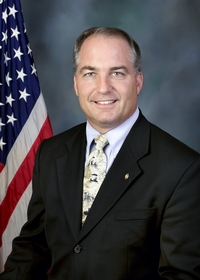
Kerry Benninghoff
House · District 171
|
R |
Strong −
|
0% | 4 |
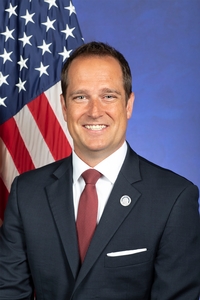
Ryan Warner
House · District 52
|
R |
Strong −
|
0% | 4 |

Stephanie Borowicz
House · District 76
|
R |
Strong −
|
0% | 4 |
Showing 11–20 of 42
bills
All budget & taxes bills
HB 2454: An Act amending the act of March 4, 1971 (P.L.6, No.2), known as the Tax Reform Code of 1971, in sales and use tax, further providing for exclusions from tax.
HB 2245: An Act amending the act of March 4, 1971 (P.L.6, No.2), known as the Tax Reform Code of 1971, in sales and use tax, further providing for exclusions from tax.
HB 2538: An Act amending the act of March 4, 1971 (P.L.6, No.2), known as the Tax Reform Code of 1971, in sales and use tax, further providing for exclusions from tax.
HB 2301: An Act amending the act of March 4, 1971 (P.L.6, No.2), known as the Tax Reform Code of 1971, in Pennsylvania Economic Development for a Growing Economy (PA EDGE) tax credits, further providing for definitions and providing for tax credits for critical minerals extraction.
Topics
✓ Budget & TaxesSupports Budget & TaxesBill expands tax credit program for critical minerals extraction, promoting economic development and fiscal incentives for local businesses while utilizing produced water resources.
✓ EnergySupports EnergyBill promotes critical minerals extraction from produced water, supporting energy infrastructure and national security needs through tax incentives.
✗ EnvironmentOpposes EnvironmentBill incentivizes extraction of critical minerals from produced water, which could increase industrial activity and potential environmental impacts from wastewater use and extraction processes.
HB 2104: An Act amending Title 71 (State Government) of the Pennsylvania Consolidated Statutes, in boards and offices, providing for information technology; establishing the Office of Information Technology and the Information Technology Fund; providing for administrative and procurement procedures and for the Joint Cybersecurity Oversight Committee; imposing duties on the Office of Information Technology; providing for administration of Pennsylvania Statewide Radio Network; and imposing penalties.
Topics
✓ Budget & TaxesSupports Budget & TaxesEstablishes five-year budget limits for IT projects to control costs, reduce redundancy, and improve fiscal management within state IT spending.
✓ TechnologySupports TechnologyCreates Joint Cybersecurity Oversight Committee, mandates data protection, and centralizes IT management to improve cybersecurity and reduce redundancy.
HB 1768: An Act establishing the Local Food Purchasing Incentive Grant Program, the Keystone Producer Grant Program, the Keystone Assistance Grant Program and the Keystone Fresh Farm to School Account; and imposing duties on the Department of Education and the Department of Agriculture.
Topics
✓ Budget & TaxesSupports Budget & TaxesBill allocates state funds via new grant programs (Local Food Purchasing, Keystone Producer, etc.) for agricultural support, increasing government spending on food system initiatives.
✓ EducationSupports EducationBill creates Keystone Fresh Farm to School Account funding school meal programs sourcing local farms, directly supporting student nutrition and access within K-12 education system.
Sub-Topics
Procurement
HB 1096: An Act amending Title 3 (Agriculture) of the Pennsylvania Consolidated Statutes, establishing the Pennsylvania Food Bucks Program and the Pennsylvania Food Bucks Program Account; and providing for research on Pennsylvania Food Bucks Program.
Sub-Topics
Procurement
HB 1450: An Act amending the act of March 4, 1971 (P.L.6, No.2), known as the Tax Reform Code of 1971, providing for Homebuyer Rebate Program.
Sub-Topics
Procurement
HB 1540: An Act amending Title 62 (Procurement) of the Pennsylvania Consolidated Statutes, establishing the Buy America, Buy Union Grant Program and the Buy America, Buy Union Grant Fund; and imposing duties on the Department of Community and Economic Development.
Topics
✓ Budget & TaxesSupports Budget & TaxesBill establishes a dedicated fund to finance grants for union labor and American-made materials on state projects, increasing government spending on specific initiatives.
✓ Labor & EmploymentSupports Labor & EmploymentMandates union labor for state project grants, directly supporting collective bargaining and union employment standards per bill's core requirement.