






Issue · Budget & Taxes

Budget & Taxes

Every budget & taxes bill, vote, and legislator stance in Pennsylvania, automatically classified by Maddy, our AI policy reader.

Total bills
655
2025-2026 Regular Session
Top supporter
Camera Bartolotta
94% support rate
Top opponent
Katie Muth
23% support rate
Ranked legislators
10
5 support · 5 oppose
Key legislators

Who's moving budget & taxes in Pennsylvania

Legislators moving budget & taxes in Pennsylvania
Legislator Party Stance Support rate Votes
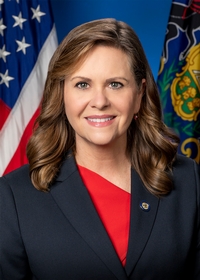
Camera Bartolotta
Camera Bartolotta Senate · District 46
R
Strong +
94% 74
Lisa Baker
Lisa Baker Senate · District 20
R
Strong +
93% 61
Joe Picozzi
Joe Picozzi Senate · District 5
R
Strong +
92% 83
Frank Farry
Frank Farry Senate · District 6
R
Strong +
92% 67
Dave Argall
Dave Argall Senate · District 29
R
Strong +
91% 80
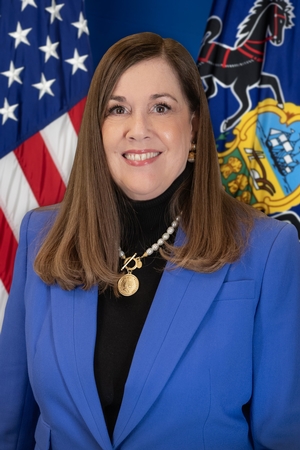
Katie Muth
Katie Muth Senate · District 44
D
Oppose
23% 74
Art Haywood
Art Haywood Senate · District 4
D
Oppose
29% 83
Lindsey Williams
Lindsey Williams Senate · District 38
D
Oppose
30% 74
Charity Krupa
Charity Krupa House · District 51
R
Oppose
31% 292
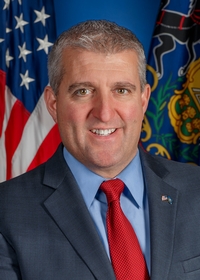
Steve Santarsiero
Steve Santarsiero Senate · District 10
D
Oppose
32% 68
Showing 11–20 of 655 bills

All budget & taxes bills

signed · Pennsylvania · Senate Jul 12, 2026

SB 146: An Act amending the act of April 9, 1929 (P.L.343, No.176), known as The Fiscal Code, in emergency COVID-19 response, providing for extension of use of certain funds; in Child Care Staff Recruitment and Retention Program, further providing for Child Care Staff Recruitment and Retention Program; in cigarette sales and licensing, further providing for definitions and providing for allowable mode of operations for licensed cigarette stamping agents; in joint underwriting association, further providing for fund transfers; providing for food processing residuals; in financially distressed municipalities, further providing for financial recovery; in oil and gas wells, further providing for Oil and Gas Lease Fund and providing for deep wells and Utica Shale permits and for well plugging; providing for manufacturing and investment tax credit, for Innovate in PA 2.0 Tax Credit and for design build best value; in human services, further providing for medical assistance payments for institutional care, for resident care and related costs and for LIFE Program and providing for transition to chip-enabled access cards, for Medical Assistance Reentry Program, for Children's Trust Fund and for medical assistance pharmacy services; in additional keystone opportunity expansion zones, providing for additional zone for shipbuilding and for additional zones; providing for residential revitalization keystone opportunity zones and for violent incident clearance and technological investigative methods; in special funds, further providing for funding and for Pennsylvania Convention Center; in additional special funds and restricted accounts, providing for Veterans' Trust Fund Board and further providing for establishment of special fund and account, for use of fund and for distributions from Pennsylvania Race Horse Development Fund; in additional special funds and restricted accounts, further providing for deposits and providing for Professional Licensure Augmentation Account; in general budget implementation, further providing for Executive Offices, for Department of Agriculture, for Department of Corrections, for Department of Labor and Industry and for Department of Transportation, providing for Pennsylvania Emergency Management Agency and further providing for Commonwealth Financing Authority, for Federal and Commonwealth use of forest land, for Multimodal Transportation Fund, for School Safety and Security Fund, for State Gaming Fund, for State Employees' Retirement System Restricted Account and for Public School Employees' Retirement System Restricted Account; in retirement, providing for 2026 special ad hoc municipal police and firefighter postretirement adjustment, for supplemental annuities for public school employees commencing 2026, for supplemental annuities for State employees commencing 2026 and for payment of supplemental annuity and special ad hoc postretirement adjustment; in electricity load forecast accountability, providing for energy and water reporting and for advanced transmission technologies; in 2025-2026 budget implementation, further providing for Department of Agriculture, for Department of Human Services and for Pennsylvania Higher Education Assistance Agency; providing for 2026-2027 budget implementation and for 2026-2027 restrictions on appropriations for funds and accounts; in fiscal supplements to statutory programs, providing for amusement tax clarification, for situs for local sales tax for cities of the first class, for situs for local sales tax for counties of the second class, for net income and for housing; abrogating a regulation; making repeals; providing for suspension of pension actuarial notes; and making editorial changes.

SB 146 establishes a Veterans' Trust Fund Board to manage and oversee the State Veterans' Trust Fund under Pennsylvania law. The bill directly affects veterans' programs by creating a dedicated board to administer funds supporting veteran services, such as housing, healthcare, and employment initiatives. Key provisions include defining the board's structure, responsibilities, and governance for the Trust Fund, updating existing statutes to reflect these changes. The bill does not create new benefits but organizes the management of existing funding streams for veterans' support. (Note: As of the latest action, the bill was "Reported as amended" in committee and has not yet become law.)
in committee · Pennsylvania · House Jun 30, 2026

HB 2685: An Act amending the act of March 4, 1971 (P.L.6, No.2), known as the Tax Reform Code of 1971, in tax credit and tax benefit administration, further providing for definitions and providing for tax credits relating to economic development.

This bill amends Pennsylvania's tax code to create a new economic development tax credit designed to support business growth and infrastructure improvements within the state. To receive this credit, entities must hire only Pennsylvania residents, use 100% materials sourced from within the state or the United States, and comply with prevailing wage laws. The Department of Community and Economic Development is tasked with auditing recipients annually to ensure they meet these requirements, and any entity found non-compliant must repay the full amount of the tax credit.
Sub-Topics Business Taxes Tax Credits Tax Incentives Tags Economic Development
in committee · Pennsylvania · House Jun 30, 2026

HB 2684: An Act providing for commuter impact zones; establishing the Commuter Impact Zone Grant Program, Commuter Impact Mitigation Grant Program and Commuter Impact Fund; and imposing duties on the Department of Transportation.

This bill establishes a new framework in Pennsylvania to identify and support communities heavily affected by regional commuter traffic. It creates a system where the Department of Transportation designates specific municipalities as "commuter impact zones" based on criteria such as high out-of-county employment rates, heavy highway congestion, and environmental strain. Once designated, these municipalities become eligible for funding through two new grant programs: one for infrastructure repairs like road maintenance and stormwater management, and another for residential noise reduction, air quality improvements, and small business stabilization. The legislation also sets up a dedicated fund to finance these initiatives and requires the state department to develop specific rules for awarding grants, with individual awards capped at $5 million per year.
Sub-Topics Roads & Highways
in committee · Pennsylvania · House Jul 6, 2026

HB 2688: An Act amending the act of May 1, 1933 (P.L.103, No.69), known as The Second Class Township Code, in taxation and finance, further providing for township and special tax levies.

This bill allows second-class townships in Pennsylvania to vote on adding a new local tax to fund their police departments. Under the proposed changes, a township board of supervisors can place a referendum on the ballot to approve an annual tax of up to three mills on real property. If voters approve the measure, the collected funds would be used specifically to support the local police force. The tax would be collected in cash and would become effective 60 days after the bill is passed.
Sub-Topics Policing Tags Local Government
in committee · Pennsylvania · House Jul 6, 2026

HB 2689: An Act amending the act of April 9, 1929 (P.L.343, No.176), known as The Fiscal Code, in general budget implementation, further providing for Department of Agriculture.

This bill amends Pennsylvania's Fiscal Code to create a disaster recovery grant program for fruit and vegetable growers affected by freeze events between April 1 and April 21, 2026. It allocates up to $20 million from previously set-aside funds for highly pathogenic avian influenza to assist growers of specialty crops, including pome and stone fruits, grapes, berries, and vegetables, who suffered production losses exceeding 30%. The legislation explicitly excludes costs already covered by federal funding, insurance, or other contracts from receiving these state grants and requires the Department of Agriculture to publish implementation guidelines within 90 days of the bill's effective date.
in committee · Pennsylvania · House Jul 6, 2026

HB 2687: An Act amending the act of September 30, 1983 (P.L.160, No.39), known as the Public Official Compensation Law, further providing for judicial salaries, for compensation of Governor and Lieutenant Governor, State Treasurer, Auditor General, Attorney General, Commissioners of the Pennsylvania Public Utility Commission and heads of departments and for members of the General Assembly.

HB 2687 amends Pennsylvania's Public Official Compensation Law to establish automatic annual salary increases for judges, the Governor, Lieutenant Governor, State Treasurer, Auditor General, Attorney General, public utility commissioners, department heads, and General Assembly members. The bill mandates that these raises, effective each January 1, be calculated using the lower of two inflation measures: the regional Consumer Price Index or the nationwide index for wage earners. Under this new system, the Supreme Court determines judicial raises, the Governor sets executive branch increases, and the legislative leaders calculate adjustments for lawmakers. The legislation also requires these salary changes to be published in the Pennsylvania Bulletin within a specific timeframe after the calculation is made.
in committee · Pennsylvania · House Jun 22, 2026

HB 2657: An Act providing for the regulation and sale of kratom products; imposing a tobacco products tax on natural kratom products; imposing duties on the Department of Health; and imposing penalties.

This bill establishes a regulatory framework for the sale of kratom products in Pennsylvania, requiring businesses to register with the Department of Health and prohibiting the sale of synthetic kratom varieties. It mandates that retailers verify customers are at least 21 years old using electronic ID scanners and strictly forbids sharing this data, while also enforcing specific labeling and child-resistant packaging requirements. Additionally, the legislation imposes a tax on natural kratom products and outlines penalties for violations, aiming to standardize oversight and protect public health.
Sub-Topics Public Health
in committee · Pennsylvania · House Jun 16, 2026

HB 2634: An Act amending the act of March 10, 1949 (P.L.30, No.14), known as the Public School Code of 1949, in charter schools, further providing for funding for charter schools and for funding for cyber charter schools.

This bill updates Pennsylvania's Public School Code to clarify how state funding is distributed to charter and cyber charter schools. It establishes a specific formula where local school districts must pay charter schools based on the per-student cost of operating the district's own programs, adjusted annually by wage and employment cost indices. The legislation also sets up a process where the state education secretary can deduct unpaid amounts from a district's state funds if the district fails to pay the charter school on time. These changes aim to ensure that charter schools receive consistent and predictable funding from the districts where their students reside.
in committee · Pennsylvania · House Jun 24, 2026

HB 2667: An Act amending Title 73 (Townships) of the Pennsylvania Consolidated Statutes, in finance and taxation relating to townships of the first class, further providing for tax levies.

This bill allows townships of the first class in Pennsylvania to vote on whether to impose a new annual tax of up to three mills to fund their police departments. Under the proposed changes, the board of commissioners can only set this tax rate if residents approve it through a public referendum. The legislation applies specifically to these townships and would only take effect 60 days after it becomes law.
Sub-Topics Policing
in committee · Pennsylvania · Senate Jun 25, 2026

SB 1394: An Act amending the act of March 4, 1971 (P.L.6, No.2), known as the Tax Reform Code of 1971, in historic preservation incentive tax credit, further providing for definitions and for tax credit certificates.

This bill amends Pennsylvania's tax code to update rules for the historic preservation incentive tax credit program. It expands the definition of eligible taxpayers to include various business entities and tax-exempt organizations that own historic structures. The legislation also increases the maximum annual tax credit amount a single applicant can receive from $500,000 to $1.5 million while setting a new statewide annual cap of $20 million. Additionally, it requires the Department of Community and Economic Development to distribute these credits equitably across different regions of the state.
Sub-Topics Tax Credits
Showing 11 to 20 of 655 bills