


Issue · Budget & Taxes

Budget & Taxes

Every budget & taxes bill, vote, and legislator stance in Pennsylvania, automatically classified by Maddy, our AI policy reader.

Total bills
33
2025-2026 Regular Session
Top supporter
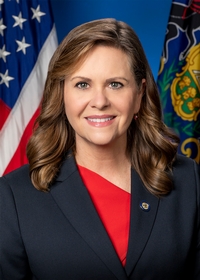
Camera Bartolotta
94% support rate
Top opponent
Katie Muth
23% support rate
Ranked legislators
10
5 support · 5 oppose
Key legislators

Who's moving budget & taxes in Pennsylvania

Legislators moving budget & taxes in Pennsylvania
Legislator Party Stance Support rate Decisive votes
Camera Bartolotta
Camera Bartolotta Senate · District 46
R
Strong +
94% 31
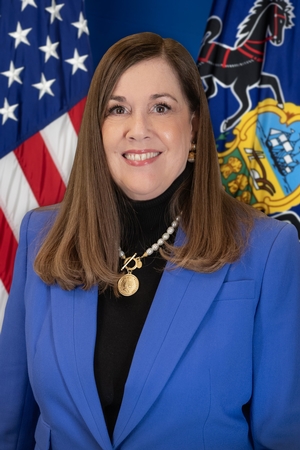
Lisa Baker
Lisa Baker Senate · District 20
R
Strong +
93% 28
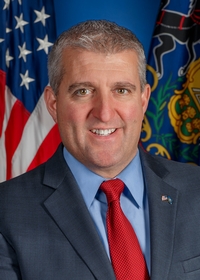
Joe Picozzi
Joe Picozzi Senate · District 5
R
Strong +
92% 39
Frank Farry
Frank Farry Senate · District 6
R
Strong +
92% 36
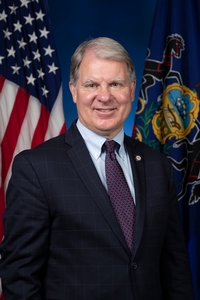
Dave Argall
Dave Argall Senate · District 29
R
Strong +
91% 32
Katie Muth
Katie Muth Senate · District 44
D
Oppose
23% 35
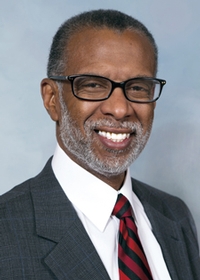
Art Haywood
Art Haywood Senate · District 4
D
Oppose
29% 41
Lindsey Williams
Lindsey Williams Senate · District 38
D
Oppose
30% 30
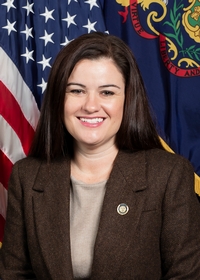
Charity Krupa
Charity Krupa House · District 51
R
Oppose
31% 179
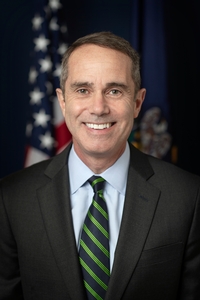
Steve Santarsiero
Steve Santarsiero Senate · District 10
D
Oppose
32% 28
Showing 11–20 of 33 bills

All budget & taxes bills

signed · Pennsylvania · Senate Nov 12, 2025

SB 315: An act amending the act of March 10, 1949 (P.L.30, No.14), entitled "An act relating to the public school system, including certain provisions applicable as well to private and parochial schools; amending, revising, consolidating and changing the laws relating thereto," in preliminary provisions, further providing for Special Education Funding Commission and for minimum number of days or hours; in duties and powers of boards of school directors, providing for admission fees for school-sponsored activities; in intermediate units, further providing for staff; in certification of teachers, further providing for certificates qualifying persons to teach and for instructional certificate grade spans and age levels and duties of department, providing for instructional certificate grade spans and age levels and for State certificate fee reduction, further providing for standard employment application, for career and technical instructional certificate, for program of continuing professional and paraprofessional education and for postbaccalaureate certification, providing for assessment of basic skills, further providing for professional educator discipline fee and providing for career and technical administrative director certification flexibility; in pupils and attendance, further providing for attendance policy at charter, regional charter and cyber charter schools, for procedure when child is truant, for procedure by school when child habitually truant, for procedure upon filing of citation, for penalties for violating compulsory school attendance requirements and for study of truancy procedure, providing for department supports to prevent truancy and further providing for reports to Superintendent of Public Instruction and for exceptional children and education and training; in student supports, further providing for definitions; in school safety and security, further providing for definitions, for School Safety and Security Committee, for school safety and security assessment providers, for School Safety and Security Grant Program, for school safety and security coordinator and for school safety and security training, providing for school safety and mental health grants for 2025-2026 school year and further providing for reporting and memorandum of understanding; in school security, further providing for training, for school resource officers, for school security guards and for duties of commission; in Safe2Say Program, further providing for intent, for definitions, for Safe2Say Program and for annual report; in threat assessment, further providing for definitions, for threat assessment teams and for threat assessment guidelines, training and information materials; in Drug and Alcohol Recovery High School Program, further providing for scope of program and selection of students and for enrollment of students; in evidence-based reading instruction, further providing for definitions and providing for school entity duties related to evidence-based reading instruction, for school entity duties related to reading screening, for reading deficiency identification and parental notification, for reading intervention plans, for grant program, for funding, for reporting, for accountability and for construction; in high schools, further providing for attendance in other districts and providing for Free Application for Federal Student Aid; in interscholastic athletics accountability, further providing for council recommendations and standards; in charter schools, further providing for funding for cyber charter schools, for enrollment and notification and for enrollee wellness checks; in career and technical education, further providing for capital reserve fund for approved purchases of equipment and facility maintenance, for career and technical education equipment grants, for Cosmetology Training through Career and Technical Center Pilot Program and for Barber Training through Career and Technical Center Pilot Program; providing for Nursing Shortage Assistance Program; in community colleges, further providing for financial program and reimbursement of payments; in the State System of Higher Education, further providing for definitions and for Grow Pennsylvania Merit Scholarship Program; in educational tax credits, further providing for limitations; in higher education accountability and transparency, further providing for exit counseling; in miscellaneous provisions relating to institutions of higher education, repealing provisions relating to State-related university performance-based funding model, further providing for prohibition on scholarship displacement at public institutions of higher education and providing for cooperation and for State scholarship renewals; in institutions of higher education, further providing for powers and duties of State Board of Higher Education, for definitions, for Performance-based Funding Council and for public institution of higher education reporting, providing for State-related University Performance Fund, for performance-based funding formula and for public accountability and further providing for agency duties, for grant priority and for report; in Ready-to-Succeed Scholarship, further providing for agency; in funding for public libraries, providing for State aid for fiscal year 2025-2026; in reimbursements by Commonwealth and between school districts, further providing for student-weighted basic education funding beginning with 2023-2024 school year, for extraordinary special education program expenses, for assistance to school districts declared to be in financial recovery status or identified for financial watch status and for Ready-to-Learn Block Grant; in construction and renovation of buildings by school entities, further providing for applicability; abrogating regulations; and making an editorial change.

SB 315 amends Pennsylvania's 1949 education code to update school funding, safety, and instructional requirements. It establishes new school safety grants, updates teacher certification standards, and strengthens truancy prevention measures for all public and charter schools. The bill adds funding for career and technical education equipment, expands mental health support through school safety programs, and modifies higher education scholarship rules. As Act No. 47 of 2025, it became law on November 12, 2025, affecting students, teachers, school districts, and higher education institutions statewide.
in committee · Pennsylvania · House Sep 10, 2025

HB 425: An Act amending the act of April 9, 1929 (P.L.343, No.176), known as The Fiscal Code, providing for J-1 Visa Waiver Physician Grant Program.

HB 425 updates Pennsylvania's Fiscal Code to establish a grant program for physicians participating in the J-1 visa waiver program. It directly affects foreign-trained doctors who complete their J-1 visa requirements and wish to practice in Pennsylvania, particularly in underserved areas. The bill creates a mechanism for the state to provide financial grants to these physicians to support their relocation and practice within the state. This policy change aims to address healthcare workforce shortages by incentivizing qualified physicians to remain in Pennsylvania after completing their visa obligations.
passed · Pennsylvania · House Aug 15, 2025

HB 1788: An Act amending Titles 74 (Transportation) and 75 (Vehicles) of the Pennsylvania Consolidated Statutes, in sustainable mobility options, further providing for operating program; in metropolitan transportation authorities, providing for supplemental performance reporting; providing for Public Transportation Trust Fund transfer and annual increase; establishing the Road and Bridge Project Fund and the Road and Bridge Project Sinking Fund; in public-private transportation partnerships, providing for applicable authority projects; in lighting equipment, further providing for use and display of illuminating signs; in taxes for highway maintenance and construction, further providing for supplemental funding for three and four digit highway construction; and establishing the Three and Four Digit State Route Account.

HB 1788 amends Pennsylvania's transportation laws to improve oversight of transit authorities and fund infrastructure projects. It requires metropolitan transportation authorities to meet new performance standards for fare evasion, bus routes, and public-private partnerships, with consequences for non-compliance. The bill establishes the Public Transportation Trust Fund (funded by 6.15% of certain tax revenues), the Road and Bridge Project Fund for highway maintenance, and a Sinking Fund for bond repayment. These funds will finance road/bridge projects, while mandatory annual reports to legislative committees will track authority spending and progress toward fiscal goals.
passed · Pennsylvania · House Jul 23, 2025

HB 1668: An Act amending the act of April 9, 1929 (P.L.343, No.176), known as The Fiscal Code, in Water Assistance Program, providing for retrofitting residential high-rise buildings with automatic fire sprinkler systems.

HB 1668 allows first-class cities in Pennsylvania to create property tax incentives for owners of residential high-rise buildings to install automatic fire sprinkler systems and monitoring devices. It directly affects building owners in cities like Philadelphia by offering tax abatements or relief programs to encourage these safety upgrades. The bill amends the Fiscal Code to authorize this approach, focusing on concrete policy changes without mandating specific actions.
passed · Pennsylvania · House Jul 23, 2025

HB 1424: An Act amending the act of December 31, 1965 (P.L.1257, No.511), known as The Local Tax Enabling Act, in local taxes, further providing for delegation of taxing powers and restrictions thereon.

HB 1424 amends Pennsylvania's Local Tax Enabling Act to prohibit local governments from taxing admission fees at recreational campgrounds. It adds a new restriction (section 18) preventing municipalities from levying amusement taxes on guest charges for campground access. The bill also clarifies that camping property rentals aren't considered "places of amusement" for tax purposes. This change affects all local authorities covered by the original tax law, including cities, towns, and school districts.
passed · Pennsylvania · House Jul 15, 2025

HB 1574: An Act amending the act of April 9, 1929 (P.L.343, No.176), known as The Fiscal Code, establishing the Redevelopment Authority Startup Loan Program and the Redevelopment Authority Startup Fund.

HB 1574 creates a new loan program and fund to help local redevelopment authorities start community renewal projects. It establishes a Redevelopment Authority Startup Fund to provide low-interest loans for initiatives like rebuilding neighborhoods or revitalizing downtown areas. This directly affects cities and towns with active redevelopment agencies, giving them a new way to finance early-stage projects. The bill amends the Fiscal Code to set up this funding mechanism, changing how these local agencies access capital for urban renewal efforts.
passed · Pennsylvania · House Jul 14, 2025

HB 1575: An Act amending the act of March 4, 1971 (P.L.6, No.2), known as the Tax Reform Code of 1971, in tax credit and tax benefit administration, further providing for definitions; and providing for factory or mill building economic revitalization.

HB 1575 creates a new tax credit program to revitalize vacant industrial properties in Pennsylvania. It directly affects building owners of pre-1973 factories or mills that have been at least 75% vacant for 24 months and are designated by their municipality for rehabilitation. The bill establishes a credit equal to 20% of qualified renovation costs (like structural repairs or equipment upgrades) that meet specific value thresholds, applied against certain business taxes. To qualify, properties must be rehabilitated for mixed commercial/residential use, and the program is administered by the Department of Community and Economic Development.
passed · Pennsylvania · House Jul 8, 2025

HB 1572: An Act amending the act of March 4, 1971 (P.L.6, No.2), known as the Tax Reform Code of 1971, in historic preservation incentive tax credit, further providing for tax credit certificates.

HB 1572 modifies Pennsylvania's historic preservation tax credit program by setting new annual spending limits and allocation rules. It caps total annual tax credits at $20 million (excluding unused prior-year credits), limits credits to $1.5 million per project owner annually (up from $500,000), and requires equitable regional distribution of credits - reallocating unclaimed funds to other regions. The bill directly affects historic preservation project owners seeking tax credits for rehabilitation work. These changes apply to fiscal years starting July 1, 2025, and aim to manage program funding more systematically.
passed · Pennsylvania · House Jun 30, 2025

HB 1650: An Act providing for the Pennsylvania Home Preservation Grant Program; and imposing duties on the Department of Community and Economic Development.

HB 1650 establishes Pennsylvania's Home Preservation Grant Program, administered by the Department of Community and Economic Development. It provides grants to local governments (counties, cities, townships) to fund repairs and improvements on existing owner-occupied homes, targeting households earning 80-120% of the area median income. Grants can cover up to $50,000 per unit for habitability fixes, energy/water efficiency upgrades, or accessibility modifications, with local governments allowed to use up to 10% of funds for administration. Applications must demonstrate experience in housing rehabilitation and include plans for using funds per the bill's requirements, with priority given to projects leveraging additional funding sources.
signed · Pennsylvania · House Jun 27, 2025

HB 1333: An Act making appropriations from the Professional Licensure Augmentation Account and from restricted revenue accounts within the General Fund to the Department of State for use by the Bureau of Professional and Occupational Affairs in support of the professional licensure boards assigned thereto.

HB 1333 allocates funds from specific state accounts (the Professional Licensure Augmentation Account and restricted General Fund revenue) to the Department of State's Bureau of Professional and Occupational Affairs. This funding supports the professional licensure boards responsible for regulating occupations like nursing, engineering, and real estate. The bill provides the necessary budget resources for these boards to operate, including processing applications and enforcing licensing standards. As a funding measure, it directly affects the administrative operations of these boards but does not create new licensing requirements or change eligibility for professionals.
Showing 11 to 20 of 33 bills
Previous 1 2 3 … 4 Next