Maddy summaryThis bill changes tax rules to help intelligence community employees who relocate for work. It allows these employees (excluding military members) to deduct moving expenses and exclude relocation reimbursements from taxable income when moving due to a required assignment change. The key change modifies two sections of the tax code to treat intelligence community relocations similarly to other federal employee moves. This directly affects current or new intelligence community staff who must move for mission-critical assignments. The policy aims to reduce tax burdens when these employees relocate for work.
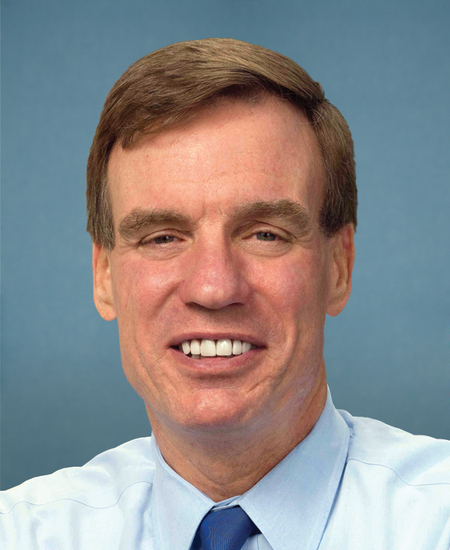
Sen. Mark R. Warner
Sponsored bills
Maddy summaryThe Election Worker Protection Act of 2025 provides federal grants to states for election worker recruitment, training, and safety. It establishes new criminal penalties for threatening or harassing election workers, with fines up to $100,000 and up to 5 years in prison. The bill creates a grant program to protect election workers' personally identifiable information from public disclosure, including through redaction of personal data in public records. States would receive funding based on their voting age population, with requirements for diversity-focused recruitment and regular reporting on program outcomes.
Maddy summaryThe SECURE Act creates a new pathway for certain foreign nationals to adjust to lawful permanent resident status without leaving the United States. It primarily affects individuals who have been continuously present in the U.S. for at least three years and qualify under Temporary Protected Status (TPS), including those who previously had TPS or were granted deferred enforced departure. The bill allows eligible applicants to apply for permanent residency, provides work authorization while applications are pending, and protects the confidentiality of application information. It also includes provisions for spouses and children of qualifying applicants to adjust their status, and requires new reporting for countries whose TPS designation is terminated. The law includes specific eligibility requirements related to criminal background checks and continuous physical presence.
Maddy summaryThis bill reauthorizes annual federal funding for the Healthy Food Financing Initiative (HFFI), which helps expand access to healthy food in underserved communities. It directs $25 million for fiscal year 2025, increasing to $50 million annually starting in 2029, to support projects like grocery stores and farmers' markets in food deserts. The funds, sourced from the Commodity Credit Corporation, directly support low-income neighborhoods lacking affordable fresh food options. This is a procedural funding extension for an existing program, not a new policy change.
Maddy summarySRES 279 is a symbolic Senate resolution designating June 2025 as "Great Outdoors Month" to recognize the importance of outdoor recreation. It encourages all U.S. residents to responsibly participate in outdoor activities during June 2025 and year-round, referencing economic data showing outdoor recreation contributed $1.2 trillion to the U.S. economy in 2023. The resolution does not create new laws, funding, or obligations - it is purely a commemorative designation with no direct policy impact on specific groups or programs. It follows prior Senate resolutions about outdoor recreation but has no enforcement mechanism.
Maddy summaryThe Keeping Obstetrics Local Act focuses on improving access to obstetric care in rural and underserved communities. It requires states to study costs of maternity services and mandates Medicaid payments for obstetric care at eligible hospitals to be at least 150% of Medicare rates (starting in 2027), with increased federal funding. The bill also requires 12-month continuous coverage for pregnant individuals under Medicaid and CHIP, establishes health homes for coordinated maternal care, and creates special payments for low-volume obstetric hospitals to prevent closures. Additionally, it requires hospitals to provide advance notice of obstetric unit closures and collects detailed data on labor and delivery services, directly affecting rural hospitals, pregnant individuals, and maternal health care providers.
Maddy summaryThe Insurrection Act of 2025 establishes specific conditions under which the President may deploy military forces domestically to address insurrections, rebellions, or widespread violence that overwhelm state and local authorities. It requires the President to consult Congress, issue a proclamation ordering lawbreakers to disperse, and submit a detailed report before deployment, with congressional approval needed within 7 days. The bill specifically protects voting rights by requiring that military deployment to address voting rights violations must comply with the Voting Rights Act of 1965. It also prohibits using National Guard members on training or other duty for domestic deployments. This legislation directly affects the President, Congress, state authorities, and military operations.
Maddy summaryS 2035, the "Protect IVF Act," establishes federal rights to access and provide fertility treatment, including IVF, under widely accepted medical standards defined by the American Society for Reproductive Medicine. It directly affects patients seeking fertility care, health care providers offering IVF services, health insurance issuers covering such care, and manufacturers of fertility-related drugs or devices. The bill preempts state laws that restrict IVF access in ways inconsistent with medical standards - such as mandating unnecessary procedures, limiting telemedicine, or imposing discriminatory barriers - and allows federal court enforcement against violating state actions. This focuses on protecting existing access rather than creating new benefits or altering insurance coverage requirements.
Maddy summaryThis bill amends U.S. tax law to close a loophole allowing companies to artificially shift profits between U.S. and foreign subsidiaries to reduce taxes. It directly affects U.S. corporations with foreign subsidiaries that engage in "round-tripping" - moving profits through transactions involving U.S.-sold property or services without proper documentation of foreign use. The key mechanism creates a "round-tripping ratio" that reduces tax benefits for profits tied to these practices by calculating the percentage of income derived from such transactions relative to total foreign income. Small businesses with average annual gross receipts under $100 million are exempt from this calculation. The changes apply to tax years beginning after the bill's enactment.
Maddy summaryThe TRAPS Act establishes a federal Task Force on Payment Scams, chaired by the Treasury Secretary, to coordinate efforts across agencies and industry to combat electronic payment scams. The Task Force includes representatives from the FTC, FCC, DOJ, financial regulators, consumer groups, and industry experts to evaluate scam trends, develop prevention strategies, and improve consumer education. It must submit an initial report to Congress within one year and provide annual updates, with the Task Force terminating three years after the first report. This bill directly affects how federal agencies and industry collaborate to address scams targeting consumers through digital payment platforms.