

Maddy summaryThe CREATE AI Act of 2024 establishes a National Artificial Intelligence Research Resource (NAIRR) to improve access to computational resources, data, and AI testbeds for researchers and students. The NAIRR will be managed by the National Science Foundation with an Operating Entity selected through a competitive process, providing resources to eligible users at universities, non-profits, government agencies, and certain small businesses. The bill requires the NAIRR to prioritize projects focused on privacy, ethics, civil rights, safety, and trustworthiness of AI systems. It creates governance structures including an NAIRR Steering Subcommittee chaired by the Director of the Office of Science and Technology Policy to oversee the resource's development and operations. The goal is to democratize AI research by making resources more accessible to a broader range of researchers and students, particularly those from underrepresented groups in STEM.
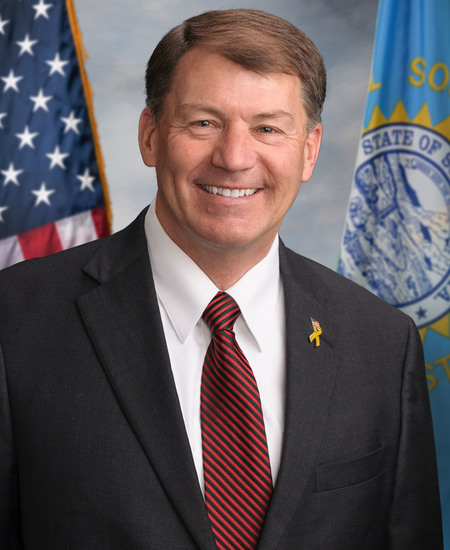
Sen. Mike Rounds
Sponsored bills
Maddy summaryThe BADGES for Native Communities Act aims to improve safety and response systems for Native American communities by addressing gaps in data collection and law enforcement coordination. It establishes Tribal facilitators to coordinate reporting of missing persons, unclaimed remains, and death investigations involving Native people to the National Missing and Unidentified Persons System. The bill creates a grant program to support state and tribal coordination on missing persons cases, a demonstration program for background checks of Bureau of Indian Affairs law enforcement officers, and requires studies on evidence handling and mental health resources for law enforcement officers. These provisions directly affect Native American tribes, Tribal organizations, and federal agencies like the Bureau of Indian Affairs and the Department of Justice. The bill includes reporting requirements to Congress to track implementation and outcomes of these programs.
Maddy summaryThe Federal Acquisition Security Council Improvement Act of 2024 amends the Federal Acquisition Security Council structure to strengthen national security protections in government procurement. It redefines key terms like "covered source of concern" (a foreign entity posing security risks) and establishes a more structured Council within the Executive Office of the President with specific agency representatives. The Council will develop a prioritization scheme for evaluating security risks, issue "designated orders" to exclude certain foreign sources from government contracts, and monitor compliance with these orders. The bill creates a Program Office within the Office of the National Cyber Director to support these functions and establishes procedures for reviewing and modifying exclusion orders.
Maddy summaryThe Forgotten Heroes of the Holocaust Congressional Gold Medal Act (S. 91) authorizes the award of a single Congressional Gold Medal to 60 diplomats who risked their careers and safety to save Jewish lives during the Holocaust. These diplomats, representing countries including Sweden, Switzerland, Spain, Portugal, and others, issued visas and provided safe passage to Jews fleeing Nazi persecution despite strict orders from their home governments. The medal will be presented collectively to the next of kin of each diplomat, along with representatives from their home countries, and then permanently displayed at the United States Holocaust Memorial Museum. The act recognizes these individuals' bravery without implying they represent all who performed similar humanitarian acts during the Holocaust. The medal serves as a permanent tribute to their sacrifice and will be available for public display and research.
Maddy summaryThis bill amends the Robert T. Stafford Disaster Relief Act to increase the population threshold for "small impoverished community" from 3,000 to 5,000 residents. It directly affects communities that previously did not qualify for certain disaster aid programs due to population size but now meet the revised definition. The key mechanism is a simple textual change in Section 203(a) of the Act, expanding eligibility for federal disaster assistance to more communities. This adjustment makes no other policy changes, focusing solely on the population definition for aid access.
Maddy summaryThe Fence Line Fairness Act of 2024 establishes state-level mediation committees to resolve boundary disputes between National Forest System land and private land. It directly affects private landowners (specifically active farmers and ranchers) who have disagreements with the Forest Service over land boundaries. The bill requires the Secretary of Agriculture to notify landowners of disputes and refer them to a mediation committee within 60 days, which must hold private hearings, provide resolution recommendations, and submit a report to federal and state officials and congressional committees within 180 days. The committees are composed of six farmers/ranchers appointed by federal and state agencies, serving five-year terms.
Maddy summarySRES 925 is a Senate resolution honoring the late Senator Fred R. Harris of Oklahoma, who died on November 23, 2024, at age 94. The resolution expresses the Senate’s sorrow at his passing, requests that his family be notified, and directs the Senate to adjourn in his memory. It does not create new laws or affect any policies - it is a formal expression of respect for a former senator’s legacy.
Maddy summaryThis bill amends federal firearm transfer rules to allow sellers to send required notification information to local law enforcement via verified electronic means, instead of only using certified mail. It directly affects firearm sellers (like dealers) who must notify the chief law enforcement officer in the buyer's residence before transferring a firearm. The key provision adds "verified electronic notification" as an option, requiring digital communication sent to a designated address with proof of delivery and address verification. This replaces the sole prior requirement of certified mail (return receipt requested) with a new electronic alternative that meets specific verification standards. The change updates existing Section 922(c) of Title 18, U.S. Code, for firearm transfer notifications.
Maddy summarySRES 909 is a non-binding Senate resolution designating November 21, 2024, as "National Rural Health Day." It formally recognizes the contributions of rural health care providers and the unique challenges faced by rural communities, including hospital closures and access barriers. The resolution celebrates rural health care workers and the millions they serve, while expressing the Senate's commitment to improving rural health care accessibility and affordability. This is a ceremonial designation with no new policy or funding changes.
Maddy summaryS 4305, the DHS Better Ballistic Body Armor Act, requires the Department of Homeland Security to procure body armor specifically designed for female agents and officers. The bill mandates that this armor must fit properly (verified via ASTM standards), include technology preventing bullets from skipping into vulnerable areas, and pass gender-specific testing by the National Institute of Justice (NIJ). It directly affects female DHS personnel by ensuring their body armor meets enhanced fit and protection standards. The law also requires annual reports from DHS components tracking compliance and usage, with a final report to Congress within three years of enactment.