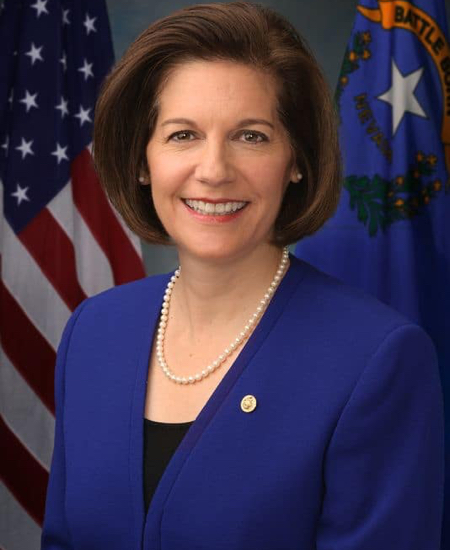
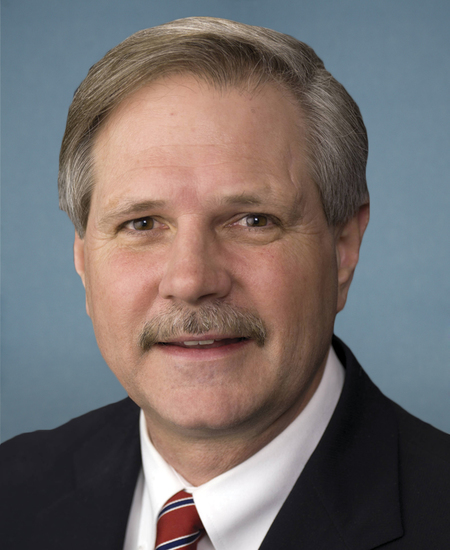
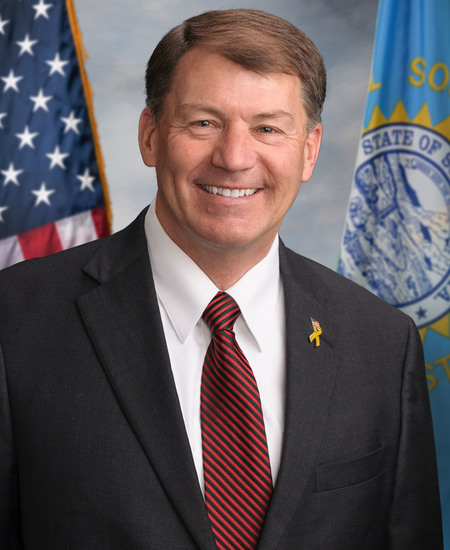
S 465 United States Senate · 118th Congress

BADGES for Native Communities Act

The BADGES for Native Communities Act aims to improve safety and response systems for Native American communities by addressing gaps in data collection and law enforcement coordination. It establishes Tribal facilitators to coordinate reporting of missing persons, unclaimed remains, and death investigations involving Native people to the National Missing and Unidentified Persons System. The bill creates a grant program to support state and tribal coordination on missing persons cases, a demonstration program for background checks of Bureau of Indian Affairs law enforcement officers, and requires studies on evidence handling and mental health resources for law enforcement officers. These provisions directly affect Native American tribes, Tribal organizations, and federal agencies like the Bureau of Indian Affairs and the Department of Justice. The bill includes reporting requirements to Congress to track implementation and outcomes of these programs.
Sub-Topics: Law Enforcement Tags: Tribal Nations
Bill status passed 3 of 5 stages cleared
Introduction
Feb 2023
Committee Review
Nov 2024
Senate Passage
Dec 2024
House Passage
President
Introduced Feb 16, 2023 Last action Dec 17, 2024
Maddy AI version diff · 1 comparison

What changed between versions

Introduced in Senate → Engrossed in Senate · 12 edits · Dec 16, 2024
MAJOR
The engrossed version makes several substantive changes: it broadens the definition of 'Federal law enforcement agency' to cover the entire Office of Justice Services rather than just BIA direct-service police, expands the DOJ annual staffing report with new metrics (turnover, vacancies, experience levels), shifts grant funding from FY2023-2027 to FY2025-2029, removes the GAO study on the background check demonstration program, and replaces detailed rules for accepting prior background investigations with a simpler agreements provision. It also renames 'sexual assault' to 'sexual violence' with a broader statutory definition and changes 'missing and murdered' to 'missing or murdered.'
DEFINITION

The term 'Federal law enforcement agency' now means the Office of Justice Services of the Bureau of Indian Affairs instead of just BIA direct-service police, broadening which agency's activities are covered by the Act.

'Sexual assault case of interest to Indian Tribes' was renamed to 'sexual violence case of interest to Indian Tribes' and now uses a broader definition referencing 25 U.S.C. 1304(a) rather than specific felony chapters in title 18.

'Relevant Tribal organization' category (III) was changed from 'violence against Indian women and children' to the broader 'violence against Indians,' and a new category (IV) for 'missing or murdered Indigenous persons' was added.

REQUIREMENT

The DOJ annual report on Indian country staffing was significantly expanded to include turnover rates, average years of experience, number of vacant positions, identification of needed expertise, estimates of employees needed, and hiring/retention/training strategies.

The detailed framework for accepting prior background investigations from State, local, Tribal, or BIA sources (including quality verification and additional investigation rules) was removed and replaced with a simpler provision allowing memoranda of agreement to expedite access to background information.

The Tribal facilitator's duty regarding reporting cases to NAMUS was softened from 'ensure' to 'encourage,' reducing the mandatory nature of that obligation. The annual report and public transparency requirements were simplified by removing specific data metrics on case counts and closure rates.

FISCAL

The missing or murdered response coordination grant program authorization was shifted from fiscal years 2023 through 2027 to fiscal years 2025 through 2029, delaying the funding window by two years.

ENFORCEMENT

The GAO study requirement on the background check demonstration program (both initial and final reports) was removed entirely.

TIMELINE

The background check demonstration program report changed from an annual report to a one-time report due 3 years after program establishment, which must include whether the program should be reauthorized.

SCOPE

The GAO evidence study now includes 'response times' in its scope, and barriers are limited to those 'identified by the agencies' rather than any barriers. The word 'survey' was replaced with 'description.'

The grant program name changed from 'Missing and murdered' to 'Missing or murdered,' and eligible activities now include inputting data into the Missing Persons File in the National Crime Information Center in addition to NAMUS.

TECHNICAL

Throughout the bill, 'unclaimed remains' was renamed to 'unclaimed human remains,' and references to the Bureau of Indian Affairs were clarified to specifically mean the Office of Justice Services of the Bureau of Indian Affairs.

Floor votes

How they voted

This bill passed the Senate. No roll call record of that vote is available.
Full legislative history

Actions timeline

Total actions
11
Key actions
5
Committee
4
Dec 16, 2024
Upper · Passed
Passed Senate with an amendment by Unanimous Consent. (consideration: CR S7054-7056; text: CR S7054-7056)
upper
Dec 16, 2024
Upper · Passed
Passed/agreed to in Senate: Passed Senate with an amendment by Unanimous Consent.
upper
Nov 18, 2024
Upper · Passed
Committee on Indian Affairs. Reported by Senator Schatz with an amendment in the nature of a substitute. With written report No. 118-244.
upper
Sep 25, 2024
Upper · Passed
Committee on Indian Affairs. Ordered to be reported with an amendment in the nature of a substitute favorably.
upper
May 1, 2024
Upper · Passed
Committee on Indian Affairs. Hearings held. Hearings printed: S.Hrg. 118-406.
upper
Feb 16, 2023
Committee
Read twice and referred to the Committee on Indian Affairs.
upper
Feb 16, 2023
Introduced
Introduced in Senate
upper
1 primary · 2 co-sponsors

Sponsors