

Maddy summaryThe Scientific Integrity Act requires federal agencies that fund, conduct, or oversee research to create and enforce policies ensuring that scientific work remains free from political influence and misconduct. These policies must explicitly prohibit actions such as suppressing data, altering findings, or retaliating against individuals who share research results, while also guaranteeing employees the right to publish their work and participate in professional organizations. To oversee these rules, each agency must appoint a career Scientific Integrity Officer, provide regular ethics training to staff, and publicly report on complaints and policy changes. Additionally, the law mandates that personnel decisions and scientific conclusions be based on expertise and established scientific processes rather than ideology, with periodic reviews to ensure compliance.
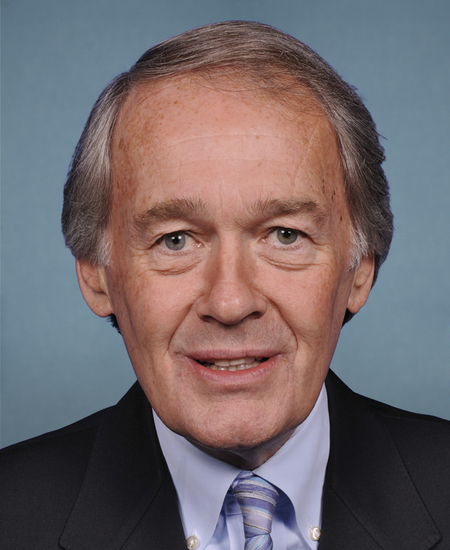
Sen. Edward J. Markey
Sponsored bills
Maddy summaryThe Reproductive Health Care Accessibility Act aims to improve access to reproductive health services for individuals with disabilities by addressing barriers such as inaccessible facilities and a lack of provider training. The bill creates several new funding programs to train medical professionals on disability-specific needs, recruit more disabled students into reproductive health careers, and provide accessible educational materials to patients. It authorizes millions of dollars in grants over five years to support these workforce development initiatives and establishes a national center to offer technical assistance on accessible care standards. Additionally, the legislation funds a study to identify effective programs and coordinate efforts across federal, state, and local agencies to ensure equitable health outcomes.
Maddy summaryThe Strength in Diversity Act of 2026 creates a competitive grant program for school districts and state agencies to develop and implement plans that increase racial and socioeconomic diversity in public schools. To receive funding, eligible entities must submit detailed applications outlining how they will reduce isolation in schools, engage with communities, and improve academic outcomes for all students. The bill authorizes the use of funds for activities such as redrawing school boundaries, revising student assignment methods, recruiting diverse staff, and creating transportation plans to encourage attendance across different neighborhoods. Grants are awarded based on the quality of the proposed plan and its potential to meaningfully decrease segregation while maintaining high academic standards.
Maddy summaryThe Universal School Meals Program Act of 2026 mandates that all children enrolled in participating schools receive free breakfast and free lunch, eliminating previous income-based eligibility requirements. The bill establishes specific funding rates for these meals, adjusts them annually for inflation, and requires states to disburse funds directly to selected schools. Additionally, the legislation prohibits schools from collecting unpaid meal debts from parents and forbids practices like segregating students or publicly identifying those who cannot pay. The act also expands summer food programs to include all children, updates poverty measurement standards for federal data, and extends free lunch eligibility to incarcerated juveniles in eligible detention centers.
Maddy summaryThe Reactors at Risk Act of 2026 requires the Secretary of Defense and the Under Secretary of Energy for Nuclear Security to submit a joint report to Congress within 120 days of enactment. This report will assess the national security and safety risks posed by nuclear reactors located in regions prone to armed conflict, such as Ukraine, the Middle East, and areas involved in potential disputes between India and Pakistan or North Korea and South Korea. The document will also outline steps the United States and its allies can take to prevent, prepare for, and mitigate these risks. While the main report will be unclassified, it may include a classified annex containing sensitive information.
Maddy summaryThis resolution honors the life and legacy of Dirk Kempthorne, a former U.S. Senator, Governor of Idaho, and Secretary of the Interior. It formally acknowledges his public service across various roles, including his work on environmental conservation, veterans' support, and economic development in Idaho. The Senate expresses its sorrow over his death and directs that a copy of the resolution be sent to his family. Additionally, the Senate stands in adjournment as a final mark of respect to his memory.
Maddy summaryThis bill reauthorizes the Integrated Coastal and Ocean Observation System through 2030, updating the 2009 law to replace "Council" with "Committee" (specifically the Ocean Policy Committee) throughout. It expands the system's scope to include meteorological observations and data management systems, requiring collaboration between regional observing systems and federal agencies. The bill authorizes $56 million annually for fiscal years 2026-2030, mandating at least 7.5% of funds support existing regional coastal observing systems. It directly affects federal agencies, regional observing networks, and coastal states by updating governance and funding mechanisms for ocean and weather data collection.
Maddy summaryThis bill raises the maximum guarantee amount for small businesses under the Small Business Administration's Surety Bond Program from $6.5 million to $20 million per federal contract. It directly affects small businesses seeking federal contracts and the SBA, which administers the program. Key changes include increasing the per-contract limit to $20 million and allowing the SBA to allocate up to 5% of annual program funds for administrative costs like IT, staff, and outreach. The bill modifies existing provisions in the Small Business Investment Act without adding new requirements for businesses.
Maddy summaryThis Senate resolution formally recognizes May as Asian American, Native Hawaiian, and Pacific Islander Heritage Month to honor the contributions of these communities to United States history. The document highlights the diversity of the population, cites historical milestones such as the completion of the transcontinental railroad and the passage of immigration laws, and acknowledges specific achievements of individuals like Daniel K. Inouye and Patsy Mink. It also notes the ongoing challenges faced by these groups, including a rise in hate crimes, while celebrating their growing presence in government and society. Ultimately, the bill serves as a symbolic statement of appreciation rather than establishing new legal requirements or funding.
Maddy summaryThis resolution designates May 10, 2026, as National Asian American, Native Hawaiian, and Pacific Islander Mental Health Day to highlight the unique mental health challenges faced by these communities. It aims to raise awareness about issues such as high healthcare costs, low service utilization rates, and the impact of historical trauma on mental well-being. The measure encourages federal, state, and local health agencies to develop policies that improve access to culturally and linguistically appropriate care. By linking this observance with National Mental Health Awareness Month, the bill seeks to reduce stigma and promote better health outcomes through increased support and resources.