Supply Chain Disruptions Relief Act This bill modifies the treatment of liquidations of new motor vehicle inventory as qualified LIFO (last in first out accounting method) inventory. It allows new motor vehicle dealers to elect to wait until the end of 2025 to replace their inventory for purposes of determining income attributable to the sale of such inventory during 2020 and 2021.
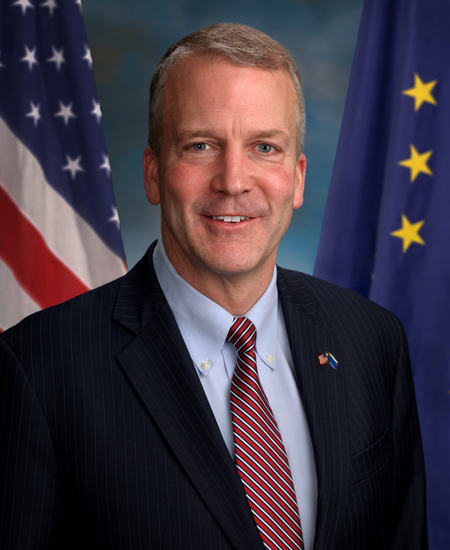
Sen. Dan Sullivan
Sponsored bills
This bill excludes certain settlement trust payments to an Alaska Native or descendant of an Alaska Native who is aged, blind, or disabled for purposes of determining the individual's eligibility for need-based federal programs (e.g., the Supplemental Nutrition Assistance Program).
Pro bono Work to Empower and Represent Act of 2021 or the POWER 2.0 Act This act makes permanent the requirement for the chief judge of each federal judicial district to lead, at least annually, a public event to promote pro bono legal services for survivors of domestic violence, dating violence, sexual assault, and stalking. The requirement was enacted in 2018; it is scheduled to sunset after a four-year period.
Protecting Firefighters from Adverse Substances Act or the PFAS Act This act requires the Department of Homeland Security (DHS) to develop guidance for firefighters and other emergency response personnel on training, education programs, and best practices to protect them from exposure to perfluoroalkyl and polyfluoroalkyl substances, commonly referred to as PFASs, from firefighting foam and to prevent the release of PFASs into the environment. These substances are man-made and may have adverse human health effects. A variety of products contain the compounds, such as nonstick cookware or weatherproof clothing. DHS shall make available a curriculum designed to reduce and eliminate exposure to PFAS from firefighting foam and personal protective equipment (PPE); prevent the release of PFAS from firefighting foam into the environment; and educate firefighters and other emergency response personnel on foams and non-foam alternatives, PPE, and other firefighting tools and equipment that do not contain PFAS. The U.S. Fire Administration shall make recommendations to DHS as to the content of the curriculum. DHS must create an online public repository on tools and best practices to reduce, limit, and prevent the release of and exposure to PFASs.
Access for Veterans to Records Act of 2022 This bill directs the Office of the Archivist of the United States to submit to Congress a comprehensive plan for eliminating the backlog of requests for records from, and improving the efficiency and responsiveness of operations at, the National Personnel Records Center. Such plan must include the number and percentage of unresolved veteran record requests that have been pending for more than 20 days, 90 days, and one year; target time frames to eliminate the backlog; a detailed plan for using existing funds to improve technology infrastructure, including secure access to appropriate agency federal records, to prevent future backlogs; actions to improve customer service for requesters; measurable goals with respect to the comprehensive plan and metrics for tracking progress toward such goals; and strategies to prevent future record request backlogs, including backlogs caused by an event that prevents employees of the center from reporting to work in person. The office must submit updates of such plan at specified intervals.
Fire Suppression Improvement Act This bill sets the federal cost share of fire management assistance at 75% of the eligible cost of such assistance and permits a state or local government to use such assistance for the predeployment of assets and resources. The Federal Emergency Management Agency (FEMA) must complete a rulemaking to provide criteria for the circumstances under which it may recommend that the President increase the federal cost share.
Fire Ready Nation Act of 2022 This bill establishes fire weather programs and activities to improve fire forecasting and readiness. The National Oceanic and Atmospheric Administration (NOAA) shall establish a coordinated fire weather services program within NOAA to support readiness, responsiveness, and overall resilience of the United States to wildfires, fire weather, smoke, and other associated conditions, hazards, and impacts in built and natural environments (including at the wildland-urban interface); develop a comprehensive, centralized, and publicly accessible digital presence designed to promote usability of the services, tools, data, and information produced by the program; seek to acquire sufficient high-performance computing resources and capacity for research, operations, and data storage in support of the program; establish a fire weather testbed to evaluate the accuracy and usability of technology, models, fire weather products and services, and other research to accelerate the implementation and use of new capabilities by NOAA, federal and land management agencies, and other relevant stakeholders; conduct annual post-fire-weather season surveys and assessments; establish an Incident Meteorologist Service within the National Weather Service (NWS); assess resources, personnel, procedures, and activities necessary to maximize the functionality and utility of the automated surface observing system and implement a plan that addresses the findings of the assessment; and conduct a workforce support services assessment of NWS employees engaged in emergency response.
Kids Online Safety Act This bill sets out requirements for covered platforms (i.e., social networks, video streaming services, or other applications that connect to the internet and are likely to be used by minors) to protect minors from online harm, including requirements relating to (1) safeguards to restrict access to the personal data of minors, (2) tools to help parents supervise a minor's use of a platform, and (3) reporting of harm to minors from using the platform.
Alaska Salmon Research Task Force Act This bill requires the National Oceanic and Atmospheric Administration to convene an Alaska Salmon Research Task Force. The task force must review and report on research about the Pacific salmon in Alaska, identify applied research needed to better understand salmon migration and declining salmon returns in some regions of Alaska, and support sustainable management of salmon.
Continuity for Operators with Necessary Training Required for ATC Contract Towers Act of 2021 or the CONTRACT Act of 2021 This bill exempts certain air traffic controllers from a required reduction in their retirement annuity payment on account of earnings from certain work performed while entitled to such annuity. Under current law, retired Federal Aviation Administration air traffic controllers receive an annuity payment during the period between the mandatory retirement age of 56 and the Social Security minimum age of 62. Such annuity payment is required to be reduced by a certain percentage of any excess earnings during this period. The bill exempts from such reduction in annuity payments an air traffic controller who participates in the Air Traffic Control Contract Program (a public-private partnership for air traffic control services) following mandatory retirement.