

Maddy summaryThe Venezuelan Democracy Act establishes specific criteria for determining when Venezuela has a transition government or democratically elected government, including requirements for respecting human rights, restoring democratic institutions, and releasing political prisoners. It imposes financial sanctions on the Maduro regime, blocking transactions related to debt instruments and cryptocurrency, and restricts Venezuela's membership in international financial institutions until a democratically elected government is in place. The bill authorizes U.S. support for democratic groups, human rights observers, and humanitarian assistance to the Venezuelan people, while directing that aid be provided through transition or democratically elected governments. Sanctions can be suspended or terminated if Venezuela meets the established democratic transition criteria, aiming to promote democratic change through targeted sanctions and support for democratic institutions.
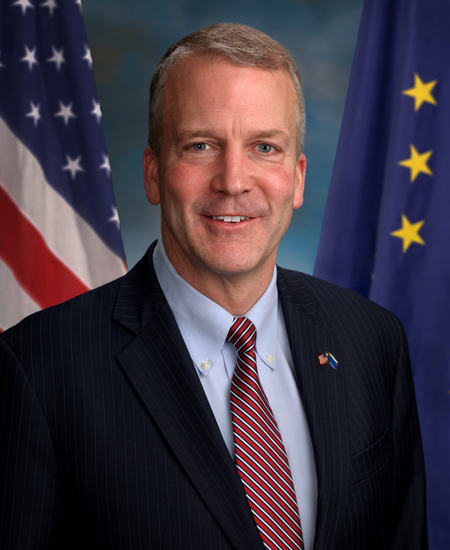
Sen. Dan Sullivan
Sponsored bills
Maddy summaryThis bill (SJRES 22) seeks to block a specific rule issued by the Department of Education regarding federal student loan modifications. It targets the rule titled "Waivers and Modifications of Federal Student Loans," which included a one-time debt relief program announced in October 2022. The resolution requests Congress disapprove the rule under the Congressional Review Act, preventing the Department from implementing it. If approved, the rule would have no legal effect, directly affecting how student loan borrowers could access modifications or debt relief under that specific policy.
Maddy summaryThis bill establishes the Federal Energy Regulatory Commission (FERC) as the sole lead agency for environmental reviews (NEPA) of natural gas pipeline projects, requiring other federal and state agencies to coordinate with FERC early in the process. It mandates strict deadlines (90 days after FERC completes review) for agencies to issue required permits, with public tracking of progress on FERC’s website. The bill directly affects natural gas project developers, FERC, and state/federal agencies handling permits, streamlining reviews to reduce delays. Key mechanisms include requiring agencies to join FERC’s review process or face restrictions on supplemental reviews, and mandating regular progress reports to FERC. It focuses on procedural coordination, not environmental standards, to expedite project approvals.
Maddy summaryS 989, the North American Energy Act, requires federal approval for new cross-border oil, natural gas, or electricity infrastructure projects in the U.S. It mandates that the Federal Energy Regulatory Commission (FERC) or Secretary of Energy issue a "certificate of crossing" within 90 days for such projects, unless they're deemed not in the U.S. public interest. The bill specifically accelerates approvals for natural gas imports/exports to Canada and Mexico (requiring approval within 30 days) and eliminates the need for Presidential permits for these projects. It does not affect existing facilities or projects with pending permits, and it repeals certain existing requirements for electricity transmission approvals. This bill directly affects energy companies seeking to build new border-crossing infrastructure.
Maddy summaryThis bill directs the U.S. Treasury to instruct American representatives at multilateral development banks (like the World Bank and Asian Development Bank) to oppose new loans to China. It is based on findings that China exceeded the income threshold for graduation from development assistance in 2016 and has since received over $20 billion in loans from these institutions. The bill requires annual reports tracking China's borrowing, U.S. voting efforts to end lending to countries that have surpassed graduation thresholds, and the status of China's eligibility. It directly affects China's access to multilateral development financing and the operational policies of these banks.
Maddy summaryThis bill prohibits entities controlled by the governments of Iran, North Korea, China, or Russia from purchasing or leasing agricultural land in the United States. It also prevents these entities from participating in most Department of Agriculture programs if they own or lease agricultural land, with limited exceptions for food safety and certain agency programs. The bill amends existing reporting requirements to include security interests and leases in the Agricultural Foreign Investment Disclosure Act, requiring more comprehensive transparency about foreign ownership. It mandates annual reports to Congress on foreign ownership risks and the effectiveness of current monitoring systems. The legislation aims to protect agricultural land from foreign influence while improving transparency about who owns U.S. farmland.
Maddy summaryThis bill prohibits the Surgeon General and federal agencies from mandating COVID-19 vaccination for interstate travel. It also bans interstate transportation providers (like airlines, trains, and buses) from denying service to travelers based solely on their COVID-19 vaccination status. The law specifically applies to interstate passenger transportation under Department of Transportation jurisdiction and explicitly excludes intrastate travel. It does not affect existing health regulations or require vaccination for travel. The bill clarifies that no federal authority may impose a vaccine mandate for travel under this law.
Maddy summaryThis bill modifies U.S. tax code to boost research and development (R&D) investment by businesses. It allows companies to immediately deduct R&D costs (instead of amortizing them over 5 years) and expands refundable tax credits for small businesses, raising the annual credit cap from $250,000 to $750,000 by 2032. Small businesses with gross receipts under $15 million can now qualify for higher credit rates (up to 20% of R&D costs) and may exclude years with no R&D expenses when calculating credits. The changes apply to taxable years beginning after December 2022, directly benefiting R&D-focused startups and small businesses.
Maddy summaryThis bill establishes a temporary commission to develop a comprehensive U.S. strategy for relations with China, requiring a "whole-of-government" approach across all federal departments and agencies. The China Grand Strategy Commission would be composed of government officials and appointed experts with China expertise, tasked with defining U.S. national security priorities, assessing economic and security ties, and making recommendations to protect U.S. interests. The commission must submit its final report by September 1, 2025, and will terminate 120 days after submission. This proposal creates a structured process for developing coordinated policy toward China without implementing immediate policy changes.
Maddy summaryThis joint resolution (SJRES 20) seeks to block a 2023 rule from the Department of Justice and Bureau of Alcohol, Tobacco, Firearms and Explosives (ATF) that classified certain firearms with stabilizing braces as rifles under federal law. If passed, it would nullify the rule, meaning firearms equipped with these braces would no longer be subject to the rule’s classification requirements. The resolution uses the congressional disapproval process under Title 5, U.S. Code, to stop the rule from taking effect, directly affecting firearm manufacturers and owners who use stabilizing braces on weapons.