This resolution recognizes the 70th anniversary of the signing of the Mutual Defense Treaty between the United States and South Korea. Affirming the importance of the U.S.-South Korean alliance as the linchpin to safeguarding peace, security, and prosperity on the Korean peninsula, the resolution welcomes President Yoon Suk Yeol to the United States. It also supports ongoing defense and security ties, calls for continued promotion of human rights, and encourages close cooperation between the United States, South Korea, and Japan.
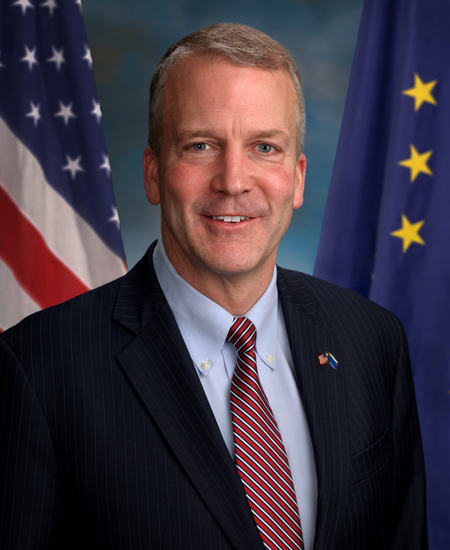
Sen. Dan Sullivan
Sponsored bills
Maddy summaryThis bill requires the Comptroller General, with input from the Energy Secretary and EPA Administrator, to study the full environmental impact of electric vehicles (EVs). The study must examine battery production (including mineral mining), electricity sources for charging, grid strain from widespread EV adoption, costs of building charging infrastructure, and maintenance needs for roads and bridges. It does not change any laws or regulations but mandates a report to Congress within 180 days of enactment. The study aims to provide data on EV ecosystem costs and environmental effects, directly affecting future policy discussions about electric vehicles.
Maddy summaryThis bill increases federal student loan limits for students enrolled in eligible flight education programs, with specific annual and aggregate limits based on whether students are dependent or independent and their progress through the program. It requires institutions to collect and report data on program completion rates and establishes a new grant program to support partnerships between educational institutions and workforce partners to expand access to flight training, particularly for underrepresented populations. The grants will fund scholarships, outreach to schools, and startup support for aviation programs at minority-serving institutions. The bill also includes reporting requirements for the Department of Education and a GAO review to assess implementation.
Securing our Border Act This bill addresses issues concerning border security and immigration, including by transferring funds from the Internal Revenue Service to certain border-related projects. Specifically, the bill transfers certain funds previously appropriated for tax enforcement activities (e.g., collecting owed taxes and conducting criminal investigations) to fund (1) nonintrusive inspection systems along the northern border and southwest border of the United States, and (2) the construction of a border wall system along the southwest border. The bill also authorizes the U.S. Customs and Border Protection to pay recruitment, retention, and relocation bonuses, subject to various requirements and limitations. For example, a relocation bonus may not exceed 15% of the agent's annual basic bay and must be conditioned on the agent agreeing to serve for at least three years at the new duty station. The bill also modifies the treatment of non-U.S. nationals ( aliens under federal law) arriving by land from a country next to the United States. Specifically, if such an individual is not clearly entitled to admission into the United States, the Department of Justice must (1) return the individual to that neighboring country or a safe third country while removal proceedings are pending, or (2) detain the individual while the individual's asylum application is under consideration. (Current law authorizes DOJ to return the individual to the neighboring country but does not require such action or detention.)
Maddy summaryThis bill requires the VA Secretary to respond to written questions from Senate and House Veterans' Affairs committees within 45 business days. If delays are expected, the VA must notify the committee member in advance, explaining the reason, providing a new timeline, and detailing steps needed to answer. It also mandates other federal agencies to promptly assist the VA when requested to meet these deadlines. The bill directly affects the VA Secretary, congressional committees, and other federal agencies involved in VA oversight.
Maddy summaryThis bill requires the Department of Veterans Affairs (VA) to conduct research on how cannabis affects veterans with chronic pain or PTSD. It mandates an 18-month observational study (using existing VA health records and surveys) to compare health outcomes - like pain levels, opioid use, mental health, and sleep - between veterans who use cannabis and those who don’t. If the study supports it, the VA could later run clinical trials on cannabis use for these conditions. The research directly involves VA-enrolled veterans with chronic pain or PTSD, but does not change access to cannabis or VA benefits.
Maddy summaryThis bill exempts certain family members of eligible Filipino veterans from U.S. immigration visa limits. It directly affects spouses, children, and other relatives of Filipino veterans who were naturalized under specific historical laws (the 1990 Immigration Act or the 1940 Act related to WWII service). The key provision amends the Immigration and Nationality Act to create a new exemption category, allowing these family members to qualify for visas without being subject to annual numerical caps. This changes the process by removing a specific barrier to family reunification for this group. The bill focuses on updating visa eligibility rules, not creating new benefits.
Maddy summaryThe FISH Act of 2023 establishes a U.S. "black list" of foreign fishing vessels engaged in Illegal, Unreported, or Unregulated (IUU) fishing, including those using forced labor. Vessels on this list would be denied access to U.S. ports, services, and transshipment in U.S. waters, with sanctions imposed on their beneficial owners. The bill requires coordination between the National Oceanic and Atmospheric Administration, State Department, and Customs and Border Protection to implement the list, verify seafood imports, and share data to combat IUU fishing. It also authorizes $20 million annually for enforcement and includes provisions for technical assistance to help nations improve fisheries management. The law directly affects foreign fishing vessels, their owners, and U.S. agencies responsible for enforcement and import verification.
Maddy summaryS 1235 "Bruce's Law" creates new federal programs to address fentanyl contamination in illegal drugs. It mandates public education campaigns targeting youth, parents, schools, and first responders about the dangers of fentanyl-contaminated drugs, including prevention strategies and early warning signs of addiction. The bill establishes a Federal Interagency Work Group to coordinate efforts across health, law enforcement, and education agencies, and authorizes grants for community coalitions in areas with significant fentanyl-related overdoses to implement evidence-based prevention programs focused on youth. These provisions apply directly to communities experiencing fentanyl-related overdoses and require annual reporting to Congress on strategies to reduce overdoses.
Maddy summaryThis bill exempts the Broadband Equity, Access, and Deployment Program (BEAD) from public disclosure requirements under the Freedom of Information Act (FOIA), meaning internal program communications and decisions will not be subject to public disclosure requests. It directly affects the federal broadband funding program established under the Infrastructure Investment and Jobs Act, which allocates $42 billion to expand high-speed internet access. The key provision amends existing law to explicitly exclude BEAD-related information from FOIA requests, while still subjecting the program to standard federal transparency rules. This is a procedural change focused on information access, not new infrastructure funding or policy.