

Maddy summaryThis bill authorizes the awarding of a Congressional Gold Medal to tennis legend Billie Jean King in recognition of her lifelong advocacy for gender equality in sports and society. The legislation specifically acknowledges her pivotal role in advancing women's rights, including her work leading to the passage of Title IX and her efforts to establish equal prize money in tennis. Under the bill, the Secretary of the Treasury would strike a gold medal featuring an image and inscription of Billie Jean King, with bronze duplicates available for sale to cover costs. The medal would be presented by congressional leaders as a formal recognition of her contributions to American society. This is a commemorative honor, not a policy that creates new legal requirements or funding.
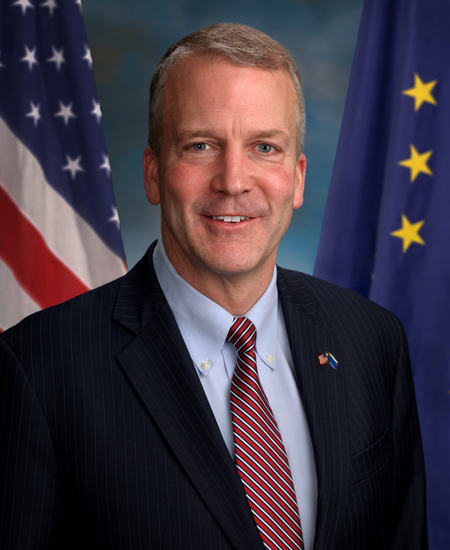
Sen. Dan Sullivan
Sponsored bills
Maddy summaryThis bill awards a Congressional Gold Medal to the United States Army Dustoff crews who served during the Vietnam War, recognizing their life-saving medical evacuations. The medal, to be designed by the Secretary of the Treasury in consultation with the Secretary of Defense, will be displayed at the U.S. Army Medical Department Museum. The bill honors the approximately 900,000 wounded personnel these crews transported over the course of the Vietnam War, including U.S., South Vietnamese, and allied forces, who relied on their rapid medical evacuation services.
This resolution acknowledges the 120th anniversary of Big Brothers Big Sisters of America and commends the organization for its work mentoring the young people of the United States and strengthening thousands of communities.
Maddy summaryThis resolution (SRES 887) is a symbolic Senate expression of support for designating October 7-12, 2024, as "National 4-H Week." It does not create new laws or funding but formally recognizes the 4-H youth development program, which serves nearly 6 million young people nationwide through community-based projects in health, science, and leadership. The resolution highlights 4-H’s role in fostering youth leadership and its partnership with land-grant universities and the USDA. It directly affects the 4-H organization, its 500,000 volunteers, and the youth members participating in the program.
Maddy summaryThis Senate resolution (SRES 890) condemns Hamas for the October 7, 2023, attack on Israel that killed approximately 1,200 people - including 40 U.S. citizens - and took hostages. It supports three specific outcomes: ensuring Israel's long-term security, preventing Hamas from regaining power in the region, and securing the safe return of U.S. hostages held in Gaza. As a non-binding resolution, it does not create new laws or policies but expresses the Senate's position. The resolution was introduced by 45 Senators and passed unanimously on September 25, 2024.
Maddy summaryThis bill increases Medicare reimbursement rates for critical access hospitals (CAHs) located in noncontiguous states (like Alaska and Hawaii) from 101% to 105% for several key services starting in 2025. It specifically applies to inpatient care, outpatient services, ambulance services, and skilled nursing facility services provided by these hospitals. The policy change directly affects CAHs in Alaska, Hawaii, and other noncontiguous states by providing higher federal payments for covered services. The bill amends existing Medicare payment provisions in the Social Security Act to implement this rate adjustment.
Maddy summaryThe SOLES Act (S 5184) adjusts Medicare payments for outpatient services at sole community hospitals located in noncontiguous states like Alaska and Hawaii. If the standard Medicare payment under the outpatient prospective payment system (OPPS) is lower than the previous rate (pre-BBA), the bill requires an additional payment equal to 94% of the difference. This change applies to services provided on or after January 1, 2025. The law directly affects hospitals in Alaska and Hawaii that serve as the sole emergency care providers in their communities.
Maddy summaryThe UNDERSTAND Act requires Medicaid and CHIP programs to collect standardized data on social determinants of health (like housing instability, food insecurity, and education access) for beneficiaries. States must use a new uniform reporting system to gather this information annually from healthcare providers, with guidance on privacy, avoiding duplicate screenings, and collecting child-related data through parents or guardians when appropriate. The law mandates a federal report to Congress within four years analyzing trends from this collected data to improve identification of social health needs. This affects Medicaid/CHIP beneficiaries indirectly through data collection, and directly impacts states (as they must implement reporting) and healthcare providers (who must submit standardized information).
Maddy summaryS 5253, the ARTIST Act, amends the Marine Mammal Protection Act to create a specific exemption for Alaska Native artisans. It allows Alaska Native individuals residing on the North Pacific or Arctic coasts to take marine mammals (like walrus, narwhal, or whale) for subsistence or to create and sell "authentic Alaska Native articles of handicrafts and clothing" made with traditional methods using natural materials. The bill requires such items to meet a strict definition (no mass production, using natural materials) to be sold across state lines, and permits sale of edible portions within Alaska villages. It also gives the Secretary authority to regulate taking if species are depleted, requiring public notice, hearings, and substantial evidence for any restrictions.
Maddy summaryThis bill clarifies that Alaska Native artisans can legally possess, sell, or transport traditional handicrafts containing nonedible parts of migratory birds, as long as the items meet specific cultural criteria. It directly affects Alaska Native artisans whose traditional crafts (like carvings or woven items) use legally sourced bird parts, as defined by tribal enrollment, CDIB, or the Silver Hand program. The key mechanism amends the Migratory Bird Treaty Act to explicitly exempt authentic items made using traditional methods without mass production, while still prohibiting items made from wasteful or illegal hunting. The bill requires federal agencies to update regulations and coordinate with treaty partners to implement this clarification under four international conservation agreements.