Maddy summaryThis bill increases Medicare reimbursement rates for critical access hospitals (CAHs) located in noncontiguous states (like Alaska or Hawaii) to 105% for specific services, up from the current 101%. It directly affects CAHs in these states by raising payments for inpatient care, outpatient services, ambulance transport, and skilled nursing facility services starting January 1, 2026. The key mechanism amends existing Social Security Act provisions to insert the higher 105% rate for services provided by CAHs in noncontiguous states. This policy change aims to address cost disparities for rural healthcare providers in geographically isolated areas.
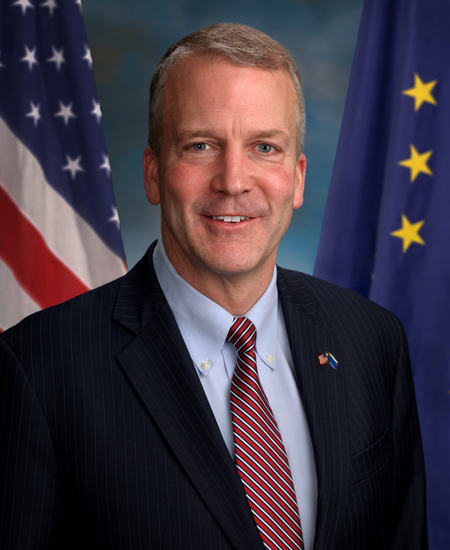
Sen. Dan Sullivan
Sponsored bills
Maddy summaryThe Ensuring Outpatient Quality for Rural States Act (S 551) adjusts Medicare payments for outpatient hospital services in Alaska and Hawaii to address their higher operating costs. Starting in 2026, it allows the government to modify the non-labor portion of payment rates (covering expenses like rent and equipment) for these states, similar to adjustments made elsewhere. The bill specifies these changes should not be budget neutral, meaning they won’t be offset by cuts to other Medicare payments. It directly affects Medicare-certified hospitals in Alaska and Hawaii providing outpatient care.
Maddy summaryThis bill establishes a formal U.S.-Israel defense partnership focused on joint development of counter-unmanned systems technology, authorizing $150 million annually from 2026-2030 for a dedicated program. It directly affects U.S. and Israeli defense departments, contractors, and military personnel through collaborative research, joint training, and shared procurement of counter-drone systems. Additional provisions include extending existing anti-tunnel and counter-UAS cooperation with increased funding, creating a new emerging tech program for AI/cybersecurity collaboration, and establishing a U.S. Defense Innovation Unit office in Israel. The bill requires annual reports to Congress on program progress and mandates semiannual financial oversight for all joint activities.
Maddy summaryS 553, the SOLES Act, requires increased Medicare payments for sole community hospitals in Alaska and Hawaii. If a hospital's payment under Medicare's outpatient system is less than 94% of its reasonable costs, the payment must be raised to cover the shortfall. This directly affects the 11 sole community hospitals in these states that are the only providers of acute care in their communities. The bill mandates that these extra payments don't count toward budget neutrality rules or affect patient copayments, and requires the Secretary to issue implementing regulations within six months of enactment.
Maddy summaryThis bill imposes new sanctions on foreign entities (including banks, insurers, and logistics companies) that knowingly facilitate Iran's oil, gas, LNG, or petrochemical exports. It blocks U.S. property of sanctioned entities and bars targeted individuals from entering the U.S. via visa restrictions or revocation. Exceptions cover goods imports and certain international obligations, while the President may grant limited 180-day waivers for national security reasons, subject to congressional reporting. The law aims to disrupt Iran's energy revenue streams used for terrorism, weapons programs, and repression, with enforcement coordinated through a new interagency working group.
Credit Union Board Modernization Act This bill revises the required frequency of meetings held by a credit union's board of directors. Specifically, new credit unions and credit unions with a low soundness rating must meet monthly. All other credit unions must hold at least six meetings annually, with at least one meeting held during each fiscal quarter. Currently, all credit union boards must meet at least once a month.
Maddy summaryS 530, the WEST Act of 2025, repeals a specific Bureau of Land Management (BLM) rule titled "Conservation and Landscape Health" (88 Fed. Reg. 19583, April 3, 2023). The bill directly affects the BLM by nullifying the legal force of this 2023 regulation. It contains no new provisions or policy changes, only the repeal of an existing rule. This is a procedural legislative action with no direct impact on the public, businesses, or other entities.
Maddy summaryThis bill prohibits U.S. government cooperation with the International Criminal Court (ICC) and blocks funding for the Palestinian Authority under existing law if it engages with ICC investigations. It specifically blocks U.S. economic support funds for the Palestinian Authority when the ICC investigates Israeli officials, as referenced in the 2024 Appropriations Act. The bill also bans all federal funds from supporting ICC activities, including investigations, arrest warrants, or enforcement of rulings. It directly affects U.S. foreign aid programs and the Palestinian Authority's access to U.S. funding tied to ICC-related actions.
Filipino Veterans Family Reunification Act of 2025 This bill exempts from immigrant visa limitations the children of certain individuals who were naturalized due to their military service during World War II. Specifically, this applies to the children of veterans who served honorably during World War II in the U.S. Armed Forces or in Filipino military units such as the Philippine Army, Philippine Scouts, or recognized guerilla units.
Maddy summaryThis bill would require federal agencies to submit detailed reports about new regulations to Congress before they take effect. Major rules (defined as those with an annual economic effect of $100 million or more, or significant effects on competition, employment, or public safety) would need congressional approval via a joint resolution before taking effect, with Congress having 70 days to act. Nonmajor rules would have a different, shorter review process. The bill would also require agencies to publish cost-benefit analyses and other supporting documentation, and would mandate that rules be reviewed and potentially reapproved after 10 years.