Maddy summaryThis bill finalizes land entitlements for the Cape Fox Village Corporation (a Native Village of Saxman entity under the Alaska Native Claims Settlement Act). It waives a requirement for Cape Fox to select additional land, allowing the transfer of approximately 180 acres of federal surface land within the Tongass National Forest to Cape Fox. Simultaneously, the subsurface rights to this land are transferred to Sealaska Corporation. The conveyance includes a public easement to maintain access to National Forest land on Revillagigedo Island.
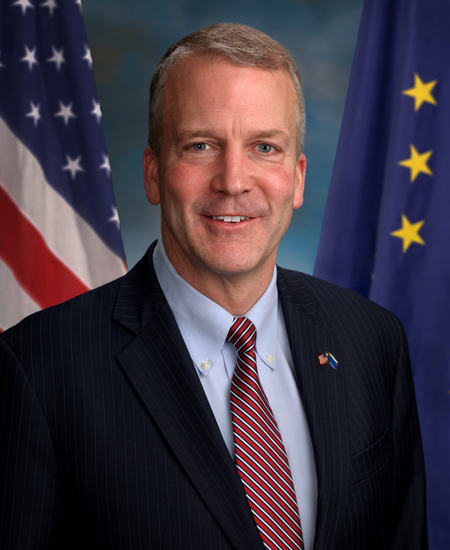
Sen. Dan Sullivan
Sponsored bills
Maddy summaryThe HELPER Act of 2025 creates a new FHA mortgage insurance program specifically for first responders and teachers, allowing them to purchase homes with no down payment. It defines "first responders" as full-time law enforcement officers, firefighters, paramedics, EMTs, and K-12 teachers employed by government or accredited schools. The program requires applicants to be first-time homebuyers with 4 years of recent employment in their field, complete housing counseling, and intend to remain in their role for at least one year after closing. Mortgages under this program must be used for a primary residence, cover 100% of the home's appraised value, and exclude monthly insurance premiums.
Maddy summaryThis bill establishes a pilot program to provide grants to spaceport operators for improving transportation infrastructure at or near launch/reentry sites. Operators receive grants based on their licensed launch activity ($250,000 per licensed launch, $100,000 per permit), with a maximum $2.5 million annual grant per operator. Supplemental grants (up to 50% of the primary grant) are available if states or private entities match funds. The program runs until 2030 and requires infrastructure projects to directly support transportation safety and be generally accessible, with total annual funding capped at $20 million.
Maddy summaryS 990, the Freedom to Haul Act of 2025, prohibits the Environmental Protection Agency (EPA) from implementing or enforcing Phase 3 greenhouse gas emissions standards for heavy-duty vehicles (finalized in April 2024). It amends the Clean Air Act to require that future emissions rules for vehicles cannot mandate specific technologies or limit the availability of new trucks based on engine type. This directly affects EPA regulatory authority and vehicle manufacturers, ensuring a broader range of new truck options remains available. The bill focuses on preventing regulatory restrictions on vehicle choice, not on emissions outcomes.
Maddy summaryS 991 repeals a specific requirement in the Small Business Act that previously mandated federal contractors to award construction subcontracts within the county or state where the work is performed. This change directly affects small businesses participating in the federal 8(a) contracting program, which helps them compete for government construction projects. The bill eliminates paragraph (11) of section 8(a) (15 U.S.C. 637(a)), removing the geographic restriction on subcontracting. This simplifies the contracting process for small businesses by allowing them greater flexibility in selecting subcontractors nationwide. The bill makes a concrete policy change to administrative rules without altering program eligibility or funding.
Maddy summaryThis bill repeals the EPA's 2024 emissions standards for light- and medium-duty vehicles and amends the Clean Air Act to prevent future regulations from mandating specific technologies or limiting new vehicle availability based on engine type. It directly affects the EPA's regulatory authority and vehicle manufacturers by blocking technology mandates and restrictions on engine types in new vehicles. Key provisions require the EPA to revise regulations within 24 months to align with these changes, ensuring no federal rules limit vehicle choices based on engine technology. The bill's title is misleading, as it does not address automobile retail sales or consumer choice at dealerships.
Maddy summaryThis bill amends the Clean Air Act to prevent states from imposing standards that limit the sale or use of new internal combustion engine vehicles. It adds a new requirement that state standards must not directly or indirectly restrict such vehicles, and it prohibits the EPA from considering pre-2025 state standards as valid under existing waivers. The bill also requires the EPA to revoke certain existing waivers granted between January 2022 and the bill's enactment date if those waivers don't comply with the new standard. This directly affects states with their own vehicle emission rules (like California's ZEV program), limiting their ability to regulate internal combustion engine vehicles through EPA-approved standards.
Maddy summaryThe Tech to Save Moms Act expands access to telehealth for pregnant and postpartum individuals in underserved communities by allowing remote screening and management of pregnancy complications through digital tools. It authorizes $6 million annually (2026-2030) for grants to train maternal health providers on reducing racial disparities, using telehealth during emergencies, and addressing social health risks. The grants prioritize health professional shortage areas, rural communities, and populations with high maternal mortality rates, requiring grantees to evaluate outcomes and develop best practices. The bill also mandates a study on AI and monitoring devices to address racial biases in maternal health technology.
Maddy summaryS. 925 (Credit for Caring Act of 2025) creates a 30% tax credit for eligible family caregivers incurring qualified expenses to care for a certified relative with long-term care needs. It directly affects caregivers who earn over $7,500 annually and pay expenses exceeding $2,000 per year for care recipients certified by a healthcare professional as needing at least 180 days of care during the tax year. The credit covers costs like human assistance, home modifications, transportation, and respite care, with a maximum annual credit of $5,000 (adjusted for inflation). The credit phases out for taxpayers with modified adjusted gross income above $75,000 ($150,000 for joint filers). The bill applies to taxable years beginning after December 31, 2024.
Veterans 2nd Amendment Protection Act of 2025 This bill prohibits the Department of Veterans Affairs (VA) from transmitting certain information to the National Instant Criminal Background Check System (NICS) utilized by licensed importers or dealers of firearms. Specifically, the bill prohibits the VA from transmitting personally identifying information of a veteran or a beneficiary to the NICS solely on the basis that such veteran or beneficiary has an appointed fiduciary to manage their benefits, unless there is an order or finding of a judicial authority that such veteran or beneficiary is a danger to themselves or others.