

Maddy summaryThe Affordable Housing Credit Improvement Act of 2025 updates the Low-Income Housing Tax Credit program to increase affordability and accessibility for low-income households. It raises state allocation amounts through revised per capita calculations, modifies income eligibility rules to better serve extremely low-income households, and adds protections for domestic violence victims in housing. The bill expands "difficult development areas" to include rural areas and Indian lands, and changes the program's name from "Low-Income Housing Credit" to "Affordable Housing Credit" to better reflect its purpose. These changes aim to make affordable housing more accessible while improving transparency and accountability in the program's implementation.
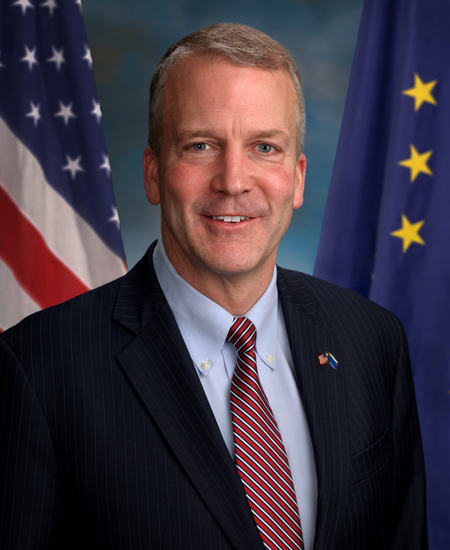
Sen. Dan Sullivan
Sponsored bills
Maddy summaryThis Senate resolution (SRES 86) expresses the Senate's official position on a longstanding diplomatic issue. It clarifies that United Nations General Assembly Resolution 2758 (1971), which determined China's UN seat representation, does not endorse China's "One China Principle" (claiming Taiwan is part of China) or address Taiwan's political status. The resolution reaffirms the U.S. "One China Policy" does not accept China's sovereignty claim over Taiwan and opposes China's misuse of Resolution 2758 to isolate Taiwan from international organizations like the WHO or UN agencies. It specifically supports Taiwan's meaningful participation in international forums and opposes China's coercion of other nations to sever ties with Taiwan. The resolution is non-binding but aims to correct factual misrepresentations used to limit Taiwan's global engagement.
Maddy summaryThe Combating Organized Retail Crime Act amends federal law to strengthen legal tools for addressing organized retail crime, including theft from stores, online, and supply chains. It establishes a new Organized Retail and Supply Chain Crime Coordination Center within the Department of Homeland Security to coordinate Federal, State, local, and tribal law enforcement efforts. The Center will share information, assist with investigations, track crime trends, and provide training to combat these crimes. The bill expands legal definitions to include organized retail crime as a specific category and requires annual reports on the Center's activities. The Center will operate for 7 years before sunset.
Maddy summaryS.1391, the Coastal Communities Ocean Acidification Act of 2025, amends the 2009 Federal Ocean Acidification Research and Monitoring Act to improve collaboration on ocean acidification issues. It requires the federal advisory board to include two tribal representatives and mandates ongoing input mechanisms - like liaisons or online platforms - from coastal stakeholders, fishery councils, Indigenous knowledge groups, and non-Federal experts. The bill specifically directs the National Oceanic and Atmospheric Administration (NOAA) to prioritize collaboration with Indian Tribes, Native Hawaiian organizations, and underserved coastal communities in research planning, vulnerability assessments, and adaptation efforts. These changes aim to integrate diverse community knowledge into federal ocean acidification monitoring and response strategies.
Maddy summaryThis bill establishes 7 regional "Ocean Innovation Clusters" across U.S. coastal areas to grow the sustainable ocean-based economy (Blue Economy), directly benefiting coastal communities, Tribal nations, small businesses, and diverse populations. It requires the Commerce Secretary to designate these clusters - led by nonprofits and including partners like universities, tribes, and governments - prioritizing underserved regions and economic diversity. The bill authorizes $10 million annually (2026-2030) for grants to support cluster operations, with each cluster managing a local "Ocean Innovation Center" providing shared workspaces, training, and collaboration hubs. These centers will focus on expanding job opportunities in sustainable sectors like seafood processing, ocean energy, and coastal resilience while improving cross-sector partnerships.
Maddy summaryThis resolution (SRES 159) is a ceremonial Senate measure honoring the late Senator John Bennett Johnston, Jr. (1932-2024), who represented Louisiana in the U.S. Senate from 1972 to 1997. It commemorates his career, including his work on energy policy, flood control, and Louisiana conservation efforts, and requests the Senate adjourn in his memory while sending condolences to his family. As a non-binding resolution, it has no policy impact or direct effect on any individuals or laws.
Maddy summarySRES 156 is a Senate resolution commemorating the 50th anniversary of the Indian Self-Determination and Education Assistance Act (ISDEAA), signed into law on January 4, 1975. It recognizes how ISDEAA has enabled federally recognized tribes to administer federal programs - including healthcare, education, and public safety - for their communities, with 92% of tribes using its authorities as of 2024. The resolution is purely ceremonial and does not create new policy or alter existing law, instead affirming congressional support for tribal self-governance.
Maddy summarySenate Joint Resolution 45 seeks to block an Environmental Protection Agency (EPA) rule that would have allowed California to enforce its Advanced Clean Cars II vehicle emission standards. The resolution uses the congressional disapproval process under federal law to declare the EPA rule invalid, preventing California from implementing its stricter pollution controls for cars and trucks. If passed, this resolution would stop the rule from taking effect, meaning California could not override federal vehicle emission standards with its own requirements. The bill directly affects California's ability to set state-level environmental regulations for motor vehicles and the EPA's regulatory authority.
Maddy summaryThis bill (SJRES 47) seeks congressional disapproval of an Environmental Protection Agency (EPA) rule that approved California's stricter vehicle pollution standards. Specifically, it targets the EPA's "Omnibus Low NOx Regulation" for motor vehicles and nonroad engines, which California had submitted for federal approval under waiver authority. If passed, the resolution would block this EPA rule from taking effect, preventing California's state-level pollution controls from being implemented under federal oversight.
Defending Education Transparency and Ending Rogue Regimes Engaging in Nefarious Transactions Act or the DETERRENT Act This bill expands oversight and disclosure requirements related to foreign sources and institutions of higher education (IHEs). Specifically, the bill requires an IHE to annually disclose to the Department of Education (ED) any year in which the IHE receives a gift from a foreign country of concern (e.g., China or Russia) or foreign entity of concern of any dollar amount; receives a gift or contract from a foreign source (other than a foreign country of concern or foreign entity of concern) that is valued at $50,000 or more, considered alone or in combination with all other gifts or contracts within a calendar year (current disclosure threshold is $250,000 or more), or which has an undetermined monetary value; enters into a contract with a foreign country of concern or foreign entity of concern after receiving a waiver for such contract; or is substantially controlled by a foreign source. Additionally, the bill prohibits IHEs from entering into contracts with a foreign country of concern or with a foreign entity of concern without obtaining a waiver, and requires certain IHEs to disclose gifts or contracts between covered individuals (e.g., researchers) and foreign sources. The bill requires ED to investigate possible violations of this bill and outlines the various penalties for each violation. Penalties may include losing eligibility for federal student financial aid.