

Maddy summaryThe Semiconductor Superiority Act expands the advanced manufacturing investment credit to include semiconductor facilities located in outer space, specifically low-Earth orbit. This provision allows companies to claim tax credits for equipment used in space-based manufacturing, even if some components are not physically located in orbit or are used for transporting crew and supplies. The bill also clarifies that flight control, crew habitation, and repair activities in space count as manufacturing functions for the purpose of this credit. Additionally, the law excludes rockets and launch vehicles from qualifying as eligible property under this new rule. These changes apply only to facilities and equipment placed in service after the act is enacted.
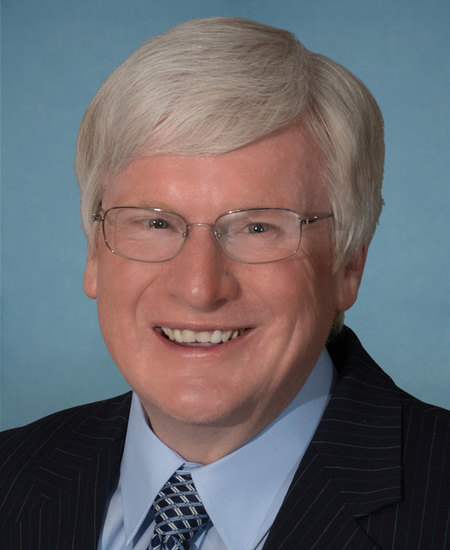
Rep. Glenn Grothman
Sponsored bills
Maddy summaryThis bill modifies federal rules to allow adults with disabilities aged 18 and older to work for employers at wages below the standard minimum rate, whereas the previous law restricted this option to individuals under 24. It requires these employers to make documented efforts to find suitable jobs for their employees at regular intervals and permits the use of subminimum wages only if state agencies fail to provide necessary job counseling and referrals. Additionally, the bill mandates that employers must provide copies of these job search records to the individuals they employ. These changes aim to expand employment opportunities for adults with disabilities while maintaining specific oversight to ensure they are not denied access to regular competitive employment.
Maddy summaryThis bill simplifies filing requirements for employer-sponsored retirement plans. It extends the deadline for submitting Form 5500 (the annual report for retirement plans) from 210 days or 6 months after the plan year end to 15 days after the end of the 9th calendar month following the plan year. It also allows electronic signatures for these filings and requires agencies to update regulations to reflect these changes. The bill directly affects employers and plan administrators who manage retirement plans under federal law, reducing administrative burdens and modernizing the filing process.
Maddy summaryThis bill directs the Department of Defense to connect military recruits who cannot enlist with the Job Corps program for training in skilled industrial jobs within the defense industry. It expands specific workforce incentives to include Job Corps centers and gives local operators more flexibility to hire staff, partner with educational institutions, and manage their programs without waiting for federal approval. The legislation also updates rules to allow Job Corps centers to accept cash donations and grants more easily while streamlining enrollment for veterans and active-duty service members. Overall, the act aims to reduce shortages of skilled workers in defense manufacturing by aligning Job Corps training with the needs of the defense industrial base.
Maddy summaryThe Upward Mobility Act of 2026 would establish a 5-year pilot program allowing up to 5 states to consolidate multiple antipoverty programs - including SNAP, TANF, child care assistance, housing benefits, and energy assistance - into a single grant. States would design new benefit structures that reduce "benefit cliffs" (where increased earnings lead to loss of benefits) to improve employment outcomes and reduce reliance on direct assistance. The bill requires states to measure outcomes like employment rates, earnings, and reduced dependence on benefits using third-party evaluations, with participants not receiving additional benefits outside the pilot. States would receive grants based on previous funding from these programs, while maintaining emergency contingency funds for crisis periods.
Nationwide Consumer and Fuel Retailer Choice Act of 2025 This bill amends the Clean Air Act to address the limitations on Reid Vapor Pressure (a measure of gasoline's volatility) that are placed on gasoline during the summer ozone season. Specifically, the bill applies the waiver for Reid Vapor Pressure requirements that is applicable to gasoline blended with 10% ethanol (E10) to gasoline blended with up to 15% ethanol (E15). This change allows gasoline that is blended with 10% to 15% ethanol to be sold year-round. Currently, states may be excluded from the waiver for Reid Vapor Pressure requirements by submitting documentation supporting that the waiver would increase air pollution. The bill nullifies existing state exclusions, but states may submit documentation after enactment of the bill to be excluded going forward. The bill also modifies the Renewable Fuel Standard Program, which requires transportation fuel sold or introduced into commerce in the United States to contain minimum volumes of renewable fuel. Under the existing program, obligated parties, such as small refineries, must satisfy the volume obligations by either blending renewable fuels into their gasoline or diesel fuel products or by acquiring credits that represent the required renewable fuel volume. The bill directs the Environmental Protection Agency to return compliance credits to small refineries under certain circumstances.
Maddy summaryThis bill would amend federal law to strengthen penalties for organized retail crime by expanding definitions of theft to include digital goods, gift cards, and setting a $5,000 aggregate value threshold for charges over a 12-month period. It would establish a new "Organized Retail and Supply Chain Crime Coordination Center" under Homeland Security to coordinate Federal, State, local, and Tribal law enforcement efforts against cross-jurisdictional theft groups. The Center would share information with retailers, transportation companies, and law enforcement agencies, track crime trends, and produce annual reports on organized retail crime. This legislation directly affects retailers, supply chain businesses, and law enforcement agencies, while targeting organized crime groups responsible for a 93% increase in larceny incidents and rising safety concerns for retail employees. The bill aims to address significant financial losses and supply chain disruptions noted in the National Retail Federation's 2023 data.
Maddy summaryThe PICTURE Act requires the Bureau of Prisons to maintain a photographic directory for all federal prisoners. This directory must include a clear, unobstructed photo of each prisoner's face. The bill amends existing federal law to establish this requirement for record-keeping purposes.
Maddy summaryThis bill fundamentally restructures the U.S. immigration system by replacing the current employment-based visa categories with a new points-based program that prioritizes applicants with high salaries, advanced degrees, English proficiency, and U.S. military service. Under this new system, employers must attest that they have attempted to hire qualified American workers first and guarantee that hiring an immigrant will not result in layoffs of existing U.S. employees. Additionally, the bill eliminates the Diversity Lottery program, restricts certain family sponsorship categories for citizens, and imposes conditional permanent resident status on new immigrants who must prove they are not receiving public benefits and remain employed within two years. The legislation also mandates that undocumented students pay out-of-state tuition rates at colleges and requires immigrants to sign statements affirming their loyalty to U.S. constitutional principles and opposition to specific forms of persecution.
New Source Review Permitting Improvement Act This bill modifies terminology for purposes of the New Source Review (NSR) permitting program of the Environmental Protection Agency (EPA). In order for a change to a stationary source to be a modification (a change to a stationary source that increases the air pollutant emissions or results in new pollutants) for purposes of the NSR permitting program, the maximum hourly emission rate achievable by such source must be higher than the maximum hourly rate achievable by such source during any hour in the 10-year period preceding the change. A change at a stationary source is not considered to be a modification under the bill if it is designed to (1) reduce the amount of any air pollutant emitted; or (2) restore, maintain, or improve the reliability of operations at, or safety of, the source. However, such changes are not excepted if the EPA determines the increase in the maximum achievable hourly emission rate from such change would cause an adverse effect on human health or the environment. Construction , in connection with a major emitting facility (a type of stationary source), does not include a change at such a facility that does not result in a significant emissions increase or a significant net emissions increase. In relation to major emitting facilities in nonattainment areas, the terms modifications and modified do not include changes at such facilities that do not result in a significant emissions increase or a significant net emissions increase.