Maddy summaryThis bill requires five federal agencies (Housing and Urban Development, Agriculture, Veterans Affairs, Treasury, and the Federal Housing Finance Agency) to coordinate housing data sharing and jointly propose policy solutions. Within one year of enactment, the agencies must establish a shared agreement and submit a report to Congress addressing mortgage costs, housing construction barriers, local regulations, insurance availability, down payment assistance, and disaster resilience. The report will outline specific proposals to improve housing affordability and market efficiency. This is a procedural bill focused on interagency coordination, not direct policy changes or benefits for homeowners.
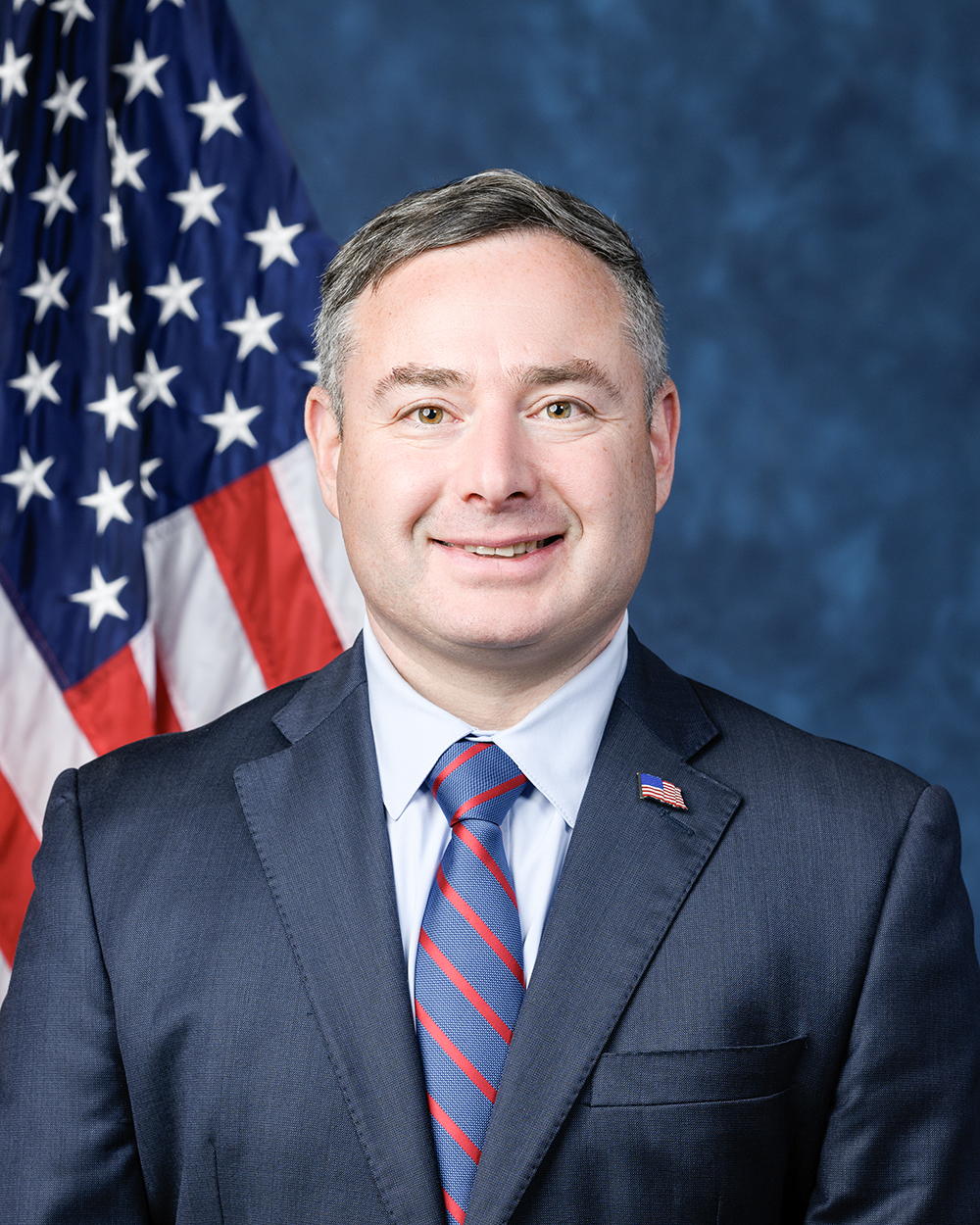
Rep. Eugene Simon Vindman
Sponsored bills
Fair Pay for Federal Contractors Act of 2025 This bill provides back pay to employees of federal contractors who lost pay due to a lapse in appropriations (i.e., government shutdown) in FY2026. Specifically, the bill provides appropriations for federal agencies that are subject to a lapse in appropriations in FY2026 to adjust the price of contracts to compensate federal contractors for providing back pay to employees who were affected by the lapse in appropriations. The agencies must adjust the price of any contract for which the contractor stopped, suspended, delayed, or interrupted all or part of the work under the contract due to the lapse in appropriations. The price adjustment must compensate the contractor for reasonable costs incurred to (1) compensate employees who were furloughed or laid off, were not working, or experienced a reduction of hours or compensation due to the lapse in appropriations; or (2) restore paid leave taken by employees during the lapse in appropriations if the contractor required or permitted employees to use paid leave as a result of the lapse in appropriations. The maximum amount of weekly compensation of an employee for which an adjustment may be made under this bill may not exceed the lesser of (1) the employee's actual weekly compensation, or (2) $1,442 (or a lesser amount pro-rated for an employee who works less than 40 hours per week). The bill also requires the Office of Federal Procurement Policy to submit a report to Congress on the adjustments made under this bill.
Physical Therapist Workforce and Patient Access Act of 2025 This bill expands certain health professional programs and Medicare covered services to include physical therapists. Specifically, the bill expands the National Health Service Corps to include physical therapists and provides for the designation of specific health professional target areas for physical therapists under the program. The bill also expands covered services of rural health clinics and federally qualified health centers under Medicare to include physical therapy services. The bill increases funds for FY2025 for the corps and requires a certain amount of funds to be used for student loan repayments for participating physical therapists in the National Health Service Corps Loan Repayment Program.
Maddy summaryThis bill requires NASA and NOAA to establish civilian space cooperation with Taiwan within 90 days of enactment, focusing on satellite programs, weather technology, and personnel exchanges. It mandates that these efforts comply with the Taiwan Relations Act and U.S. export rules while protecting U.S. intellectual property and economic interests. The agencies must submit annual reports to Congress detailing cooperation activities, challenges, and progress for five years after enactment. The bill directly affects U.S. space agencies and Taiwan’s space agency, facilitating non-military space collaboration. It does not alter existing U.S. policy toward Taiwan but creates a formal mechanism for expanded technical engagement.
Maddy summaryThe Patients Deserve Price Tags Act (HR 5582) requires hospitals, clinical diagnostic laboratories, imaging services providers, and ambulatory surgical centers to publicly disclose detailed pricing information for healthcare services. This includes standard charges, discounted cash prices, and payer-specific negotiated rates for each item or service, presented in machine-readable formats and consumer-friendly displays. Implementation deadlines are set for 2026 for hospitals and 2027 for other providers, with civil monetary penalties for non-compliance ranging from $300 per day for smaller facilities to up to $10,000,000 annually for health plans. The legislation aims to increase price transparency so consumers can better understand and compare healthcare costs before receiving services.
Maddy summaryHR 5613, the "It’s About Time Act," changes the federal government's fiscal year from starting October 1 and ending September 30 to beginning January 1 and ending December 31, effective January 1, 2027. This directly affects all federal agencies, departments, and the budget process by aligning government fiscal cycles with the calendar year. Key provisions include amending budget code to reflect the new start/end dates, requiring a transition budget for October 2026-December 2026, and updating how authorizations of appropriations are interpreted for fiscal years after 2026. The bill makes no substantive policy changes but standardizes the fiscal year framework for federal budgeting.
Maddy summaryHR 5572, the Help FEDS Act, ensures federal employees who must work during government shutdowns (but aren't paid due to the shutdown) can access unemployment benefits through their state's program. The bill requires states to allow these "excepted" employees to apply for and receive unemployment compensation during fiscal years 2026-2027, while also mandating repayment if they later receive pay under a separate federal provision. The federal government will reimburse states 100% of the unemployment benefits paid to these employees plus related administrative costs, funded from the Unemployment Trust Fund. This directly affects federal workers performing emergency work during shutdowns and state unemployment systems managing these claims.
Maddy summaryThis bill prevents federal agencies from terminating employees during a government shutdown caused by a lapse in discretionary funding. It prohibits removals of civil service employees at any agency affected by a funding gap, and if an employee is wrongfully removed, they can return to their job with back pay once funding resumes. The law directly protects all federal employees covered by the civil service system during shutdowns. It applies automatically to any funding lapse, requiring automatic reinstatement without needing separate legal action.
Maddy summaryHR 5573, the Combatting Fentanyl Poisonings Act of 2025, creates three federal grant programs to address fentanyl-related harms. It funds state/local law enforcement to target illegal social media sales of controlled substances (including fentanyl-laced counterfeit pills) and provides education for schools and parents about fentanyl risks. Nonprofits receive grants up to $50,000 to run public awareness campaigns, produce educational materials, and offer counseling for families affected by fentanyl deaths - though funds cannot cover most harm reduction supplies (only naloxone is permitted). The bill allocates $10 million for law enforcement programs, $3 million for awareness grants, and $2 million for officer safety equipment like fentanyl test strips and naloxone training.
Maddy summaryThe SPEED and Reliability Act of 2025 streamlines federal permitting for new or modified electric transmission lines by requiring the Federal Energy Regulatory Commission (FERC) to issue permits within 18 months if projects meet specific criteria. It directly affects utilities building transmission infrastructure, landowners (like farmers and ranchers) along proposed routes, and state agencies through new consultation requirements. Key provisions include prioritizing projects that improve grid reliability (e.g., reducing outages), mandating landowner input during planning, and ensuring costs are allocated only to customers who benefit from the new infrastructure. The bill also clarifies FERC’s role versus state authorities and modifies cost allocation rules to align with benefits like reduced congestion and lower power losses.