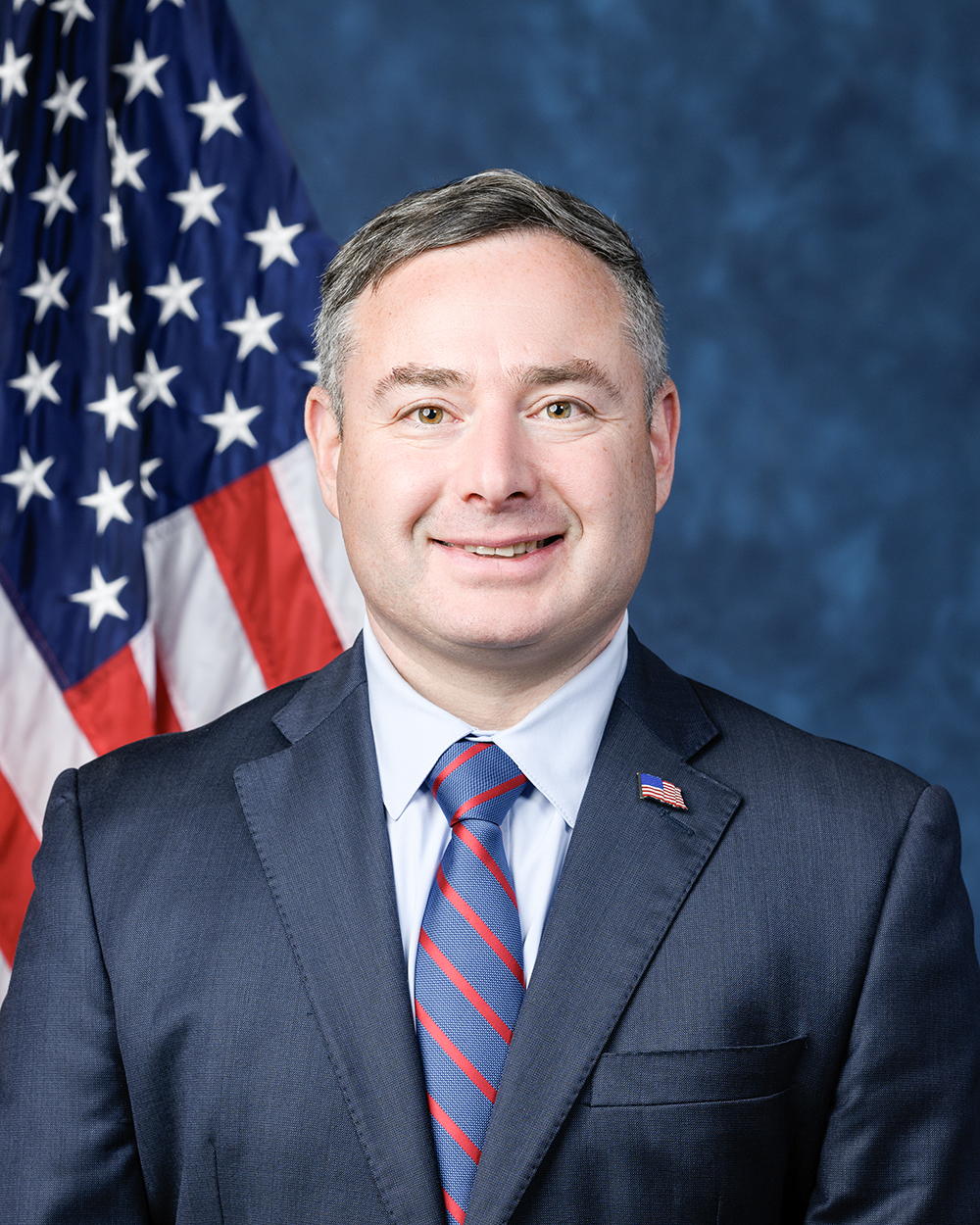
Photo of Eugene Simon Vindman
D United States House · District 7 · Virginia On the 2026 ballot

Rep. Eugene Simon Vindman

Compare
Total votes
669
all sessions
Attendance
99%
5 missed
Higher than 78% of chamber peers
With party
91%
of cast votes
Lower than 92% of chamber peers
Bipartisan score
5%
crosses aisle rarely
Higher than 91% of chamber peers
Sponsored
1,103
bills & resolutions
Higher than 98% of chamber peers
Committees
6
assignments
1,103 bills and resolutions

Sponsored bills

Total
1,103
Primary
72
Co-sponsor
1,031
This page
1,103
matching current filters
Co-sponsor HR 6934
In committee · Oregon House · Co-sponsor
National Flood Insurance Program Affordability Act

Maddy summaryThis bill creates a FEMA program providing income-based discounts to make flood insurance more affordable for qualifying policyholders. It caps annual premiums at 1% of a household's area median income for primary residences, small businesses (under 100 employees), and non-profits meeting hardship criteria. The program is funded by $250 million annually (with 95% required spending), and requires FEMA to implement monthly premium payments within 180 days. It directly affects millions of flood insurance policyholders in high-risk areas who struggle with current costs.

In committee Dec 30, 2025 1 co-sponsor
Co-sponsor HR 6915
In committee · Oregon House · Co-sponsor
To prohibit the use of funds to use military force in or against Venezuela, and for other purposes.

Maddy summaryThis bill prohibits the use of federal funds for any military action against Venezuela from its enactment date through December 31, 2026, unless Congress either declares war or passes new specific authorization meeting War Powers Resolution standards. It directly affects all federal agencies and military operations that would require funding for actions targeting Venezuela. The key mechanism blocks funding for military force unless Congress explicitly authorizes it through one of two specific pathways. A narrow exception allows actions already compliant with existing War Powers Resolution rules. This is a funding restriction, not a ban on military action itself.

In committee Dec 19, 2025 1 co-sponsor
Primary HR 6907
In committee · Oregon House · Lead sponsor
Enhancing Southbound Inspections to Combat Cartels Act

Maddy summaryThis bill authorizes U.S. Customs and Border Protection to purchase up to 50 non-intrusive imaging systems and deploy them along the southern border for inspecting vehicles and people traveling from the U.S. to Mexico. It also requires hiring 100+ Homeland Security Investigations agents to focus on smuggling investigations involving currency, firearms, drugs, and human trafficking. The bill mandates that by March 2027, at least 10% of southbound vehicles must be inspected, with reports tracking seizure data on currency and firearms every 90 days. These provisions directly affect border enforcement operations, CBP equipment deployment, and HSI staffing at the U.S.-Mexico border.

In committee Dec 19, 2025 0 co-sponsors
Co-sponsor HR 4663
In committee · Oregon House · Co-sponsor
Saving Vet Halls Act of 2025

Maddy summaryHR 4663, the Saving Vet Halls Act of 2025, authorizes the Department of Veterans Affairs to provide grants to eligible veterans service organizations for repairing existing facilities or upgrading technology at their locations. Organizations must submit detailed improvement plans, and grants are limited to $75,000 per year per organization, with recipients ineligible for another grant for five years. The bill explicitly prohibits using funds for new construction or facility acquisition and requires the VA to prioritize organizations based on need, plan quality, and capacity. This program, funded by $10 million annually, directly supports chartered veterans service organizations under 36 U.S.C. § 3621.

In committee Dec 19, 2025 1 co-sponsor
Co-sponsor HR 4611
In committee · Oregon House · Co-sponsor
EACH Act of 2025

Maddy summaryHR 4611 (EACH Act of 2025) requires all federally funded health programs - including Medicaid, Medicare, military health plans, and the Indian Health Service - to cover abortion services without restrictions, repealing the Hyde Amendment's long-standing ban on federal funding for most abortions. This directly affects millions of people enrolled in these programs, particularly low-income women, women of color (including 25% of Black women and 22% of Hispanic women on Medicaid), and young people. The bill mandates coverage in all federally administered health plans and prohibits state or private insurers from restricting abortion coverage in health insurance. It aims to eliminate current federal and state barriers that deny abortion access to people who rely on government health programs.

In committee Dec 19, 2025 1 co-sponsor
Primary HR 4540
In committee · Oregon House · Lead sponsor
Military Family GI Bill Promise Act

Maddy summaryHR 4540, the Military Family GI Bill Promise Act, amends Section 3319 of Title 38 to expand eligibility for transferring Post-9/11 education benefits to dependents. It removes the requirement that service members must be actively serving to transfer benefits, allowing transfers "at any time" (previously restricted to "only while serving"). The bill adds a new 10-year service requirement (including at least six years in the Armed Forces) for members seeking to transfer benefits. This directly affects military members with qualifying service who wish to provide education benefits to spouses or children, regardless of their current active duty status.

In committee Dec 19, 2025 0 co-sponsors
Co-sponsor HR 4488
In committee · Oregon House · Co-sponsor
Veterans Health Care Stamp Act

Maddy summaryHR 4488, the Veterans Health Care Stamp Act, creates a special postage stamp sold by the U.S. Postal Service to allow the public to donate directly to veterans' medical care. The stamp must be issued annually by Veterans Day, with all sales revenue transferred to the Department of Veterans Affairs for medical services. The bill specifies that the stamp design is determined by the Postal Service and that there is no limit on how many can be sold, ensuring broad public participation in funding veterans' health care.

In committee Dec 19, 2025 1 co-sponsor
Co-sponsor HR 1404
In committee · Oregon House · Co-sponsor
CHAMPVA Children’s Care Protection Act of 2025

Maddy summaryHR 1404, the CHAMPVA Children’s Care Protection Act of 2025, expands healthcare eligibility under the CHAMPVA program for children of veterans. It increases the maximum age for children to receive medical benefits from 21 to 26 years old, regardless of marital status. This change directly affects dependent children of veterans who were previously eligible until age 21, extending coverage through their mid-twenties. The policy amendment applies to medical care provided on or after the bill’s enactment date.

In committee Dec 19, 2025 1 co-sponsor
Co-sponsor HR 6900
In committee · Oregon House · Co-sponsor
American Affordability Act of 2025

Maddy summary# Summary of Proposed Tax Code Amendment This document is a comprehensive proposal for tax code amendments, primarily focused on extending, modifying, and creating new tax credits related to clean energy, energy efficiency, and environmental initiatives. The key components include: ## Housing and Residential Credits - **First-Time Homebuyer Tax Credit**: A refundable credit for first-time homebuyers (Section 13001) - **Renter Tax Credit**: A refundable credit for renters paying more than 30% of their adjusted gross income in rent (Section 13002) ## Clean Energy Credits (Sections 21001-21007) - Extended clean energy production credit with a new phase-out date (2032 or when greenhouse gas emissions reach 25% of 2022 levels) - Extended clean electricity investment credit for wind and solar facilities - Restored credit for wind and solar leasing arrangements - Extended clean hydrogen production credit (construction date reverted to 2033) - Extended residential clean energy credit (termination date moved to 2034) - Reinstated special rate for sustainable aviation fuel (35 cents/ gallon for certain facilities) ## Energy Efficiency Credits (Sections 22001-22004) - Restored product identification number requirement for energy-efficient home improvements - Extended new energy efficient home credit (acquisition date moved to 2032) - Repealed termination of new energy efficient commercial buildings deduction - Restored cost recovery for energy property ## Electric Vehicle and Charging Infrastructure Credits (Sections 23001-23005) - Extended previously-owned vehicle credit (acquisition date moved to 2032) - Extended clean vehicle credit (placement in service date moved to 2032) - Extended commercial clean vehicles credit (termination date moved to 2032) - Extended alternative fuel vehicle refueling property credit (termination date moved to 2032) - Created a new credit for electric bicycles (30% of cost, up to $5,000 per bicycle) ## Clean Infrastructure and Resiliency Credits (Sections 24001-24007) - Created qualifying water reuse project credit (30% of qualified investment) - Created recycling property investment credit (30% of qualified investment with phase-out) - Excluded amounts received from State-based catastrophe loss mitigation programs from gross income - Expanded exclusion for certain emergency agricultural assistance - Created credit for disaster mitigation expenditures (30% of qualifying mitigation activities) - Created qualifying electric power transmission line credit (30% of qualified investment) - Created qualifying advanced battery project credit (30% of qualified investment with $3 billion cap) The proposed amendments generally extend existing credits through 2032-2037, with some credits having phase-out schedules and others having specific termination dates. The document also includes numerous conforming amendments to other sections of the tax code to accommodate these changes.

In committee Dec 18, 2025 1 co-sponsor
Primary HR 6908
In committee · Oregon House · Lead sponsor
Blue Envelope Awareness Act

Maddy summaryHR 6908, the Blue Envelope Awareness Act, creates a new program to help people with speech, hearing, or developmental disabilities communicate more effectively with police during traffic stops. The bill directs federal Byrne grant funds to support "blue envelope programs," which provide individuals with blue envelopes containing disability documentation to show officers and train law enforcement on interacting with these individuals. It amends existing law to define "blue envelope program" and add this funding authorization to the Omnibus Crime Control and Safe Streets Act. The bill directly affects people with disabilities who interact with police and law enforcement agencies receiving Byrne grants.

In committee Dec 18, 2025 0 co-sponsors
Showing 321 to 330 of 1,103 bills
Previous 1 32 33 34 111 Next