Maddy summaryThis bill removes legal immunity for vaccine manufacturers by allowing individuals injured by vaccines to sue them directly in court after filing a claim with the federal vaccine injury compensation program (VICP). It eliminates time limits for filing VICP claims (previously 24-36 months) and explicitly excludes COVID-19 vaccines from the program's coverage. The changes affect people seeking compensation for vaccine injuries and vaccine manufacturers, who will no longer automatically avoid lawsuits. The bill also repeals provisions that previously restricted legal action after VICP claims.
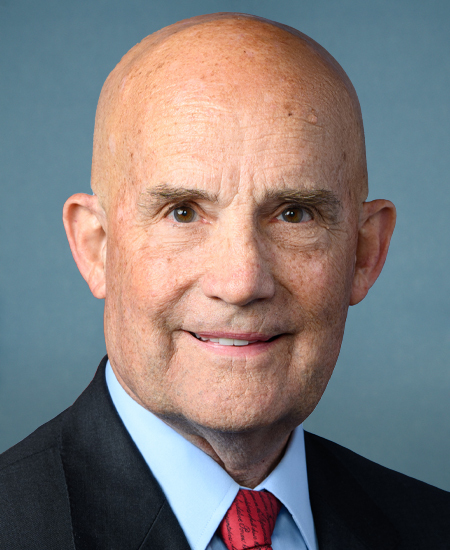
Rep. Keith Self
Sponsored bills
Maddy summaryHRES 1348 is a non-binding resolution urging Nigeria to immediately release Tigran Gambaryan, a U.S. citizen and former IRS agent detained since February 2024. The resolution cites his unlawful detention after legal deadlines expired, deteriorating health (including malaria), and poor conditions at Kuje Prison, where he was transferred despite a court order for hospital care. It calls for Nigeria to grant him medical access, consular support, and due process, while urging the U.S. government to use all resources to secure his release. The resolution highlights concerns that his detention appears linked to pressure on his employer, Binance, rather than legitimate legal grounds.
Maddy summaryHJRES 136 is a resolution seeking to block an Environmental Protection Agency (EPA) rule that would have set new emissions standards for light and medium-duty vehicles sold in 2027 and later model years. The EPA rule, published in April 2024, aimed to require vehicle manufacturers to meet stricter pollution limits for these vehicles. If passed, this resolution would cancel the rule, preventing the EPA from enforcing the new standards. It uses a congressional process that allows Congress to reject agency rules with a simple majority vote.
Maddy summaryHJRES 207 is a congressional disapproval resolution targeting an Equal Employment Opportunity Commission (EEOC) rule implementing the Pregnant Workers Fairness Act. It seeks to block the EEOC's specific guidance (published April 19, 2024) that outlines how employers must provide reasonable accommodations for pregnant workers. If passed, the resolution would make this EEOC rule "have no force or effect," preventing its enforcement. The measure directly affects employers subject to the Pregnant Workers Fairness Act by halting the implementation of the EEOC's regulatory guidance.
Maddy summaryThe Royalty Resiliency Act (HR 7377) requires the federal government to make decisions on how oil and gas royalties are allocated among shared production leases within 120 days of a request. Until a decision is issued, companies must pay royalties based on their proposed allocation, and the government will waive interest on underpayments if payments are made on time. This applies to most federal oil and gas leases but excludes agreements involving tribal lands. The law aims to reduce delays and financial uncertainty for oil and gas companies operating on federal land.
Maddy summaryHJRES 144 is a congressional disapproval resolution targeting a specific rule issued by the Bureau of Alcohol, Tobacco, Firearms, and Explosives (ATF) on April 19, 2024. The resolution seeks to block the ATF's rule that redefined the term "engaged in the business" for firearm dealers, which would have affected how federal licensing requirements apply to certain sellers. If enacted, this resolution would nullify the rule, preventing it from taking effect under procedures in Title 5 of the U.S. Code. The bill directly impacts firearm dealers operating under the current regulatory framework and the ATF's enforcement authority.
Maddy summaryThis bill (HJRES 163) is a congressional disapproval resolution targeting an Environmental Protection Agency (EPA) rule finalized on May 9, 2024. The EPA rule established new emissions standards for greenhouse gases from fossil fuel power plants (both new and existing) and repealed a previous rule called the Affordable Clean Energy Rule. The resolution would block this EPA rule from taking effect by invoking the Congressional Review Act (Chapter 8 of Title 5, U.S. Code). If passed, it would prevent the EPA rule from being enforced, directly affecting fossil fuel power plant operators and the EPA’s regulatory authority over emissions.
Maddy summaryH.J. Res. 117 is a joint resolution that would disapprove an Environmental Protection Agency (EPA) rule concerning the reconsideration of National Ambient Air Quality Standards for particulate matter. The EPA rule, published on March 6, 2024, was part of the agency’s process to review these standards, which set limits for harmful air pollutants. This resolution invokes a congressional disapproval procedure under federal law to block the rule from taking effect. If enacted, the rule would have no force or effect, preserving the existing air quality standards for particulate matter.
Maddy summaryHRES 1457 is a symbolic House resolution (introduced September 17, 2024) that condemns Vice President Kamala Harris for her past statements and policy positions related to law enforcement and criminal justice. The resolution cites specific past remarks by Harris (as a U.S. Senator) regarding policing, immigration, and criminal justice reform - including supporting decriminalizing immigration, opposing ICE, and endorsing bail reform groups - and claims these policies "encouraged lawlessness." It does not create new laws or affect anyone legally, as it is purely a non-binding expression of disapproval. The resolution has no policy impact or enforcement mechanism.
Maddy summaryThis bill allows Veterans Affairs (VA) chaplains to voluntarily share a veteran's contact information with a faith-based organization of the veteran's choice, **only if the veteran consents**. It directly affects veterans receiving VA medical care, VA chaplains, and eligible religious or faith-based organizations. The key mechanism requires a veteran's explicit permission after a chaplain conducts a "spiritual assessment" (evaluating spiritual needs to inform medical care). This change modifies VA healthcare procedures to enable veterans to connect with faith-based support services they select, while ensuring privacy through voluntary participation.