

Maddy summaryThis bill reauthorizes federal funding for graduate medical education (GME) programs at children's hospitals through fiscal year 2028. It prohibits payments to any children's hospital that provided gender-affirming care to minors during the previous fiscal year (with a special rule for 2024 payments covering July-September 2023). The bill defines "gender-affirming care" as specific medical treatments like surgeries or puberty-blocking medications for gender transition, but excludes care for certain medical conditions or gender dysphoria treatment not classified as such. This directly affects hospitals receiving GME funding that serve minors, potentially impacting their federal support if they provided the specified care. The policy change modifies existing funding rules without altering broader healthcare access for minors.
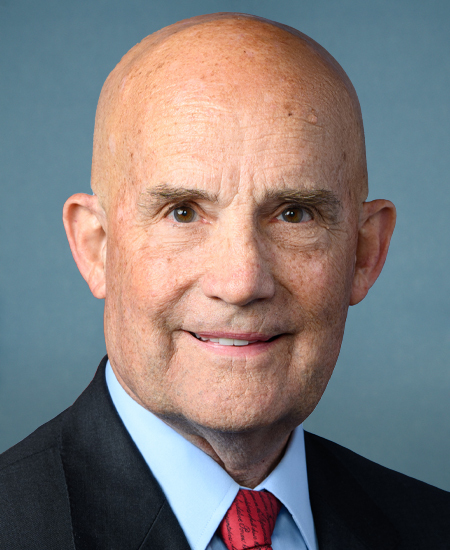
Rep. Keith Self
Sponsored bills
Maddy summaryHR 825, the BOLIVAR Act, prohibits U.S. federal agencies from entering into contracts for goods or services with entities knowingly conducting significant business dealings with Venezuela's government under Nicolás Maduro, which the U.S. does not recognize as legitimate. The law directly affects U.S. government contractors and businesses operating in Venezuela, banning contracts with those engaging in commerce with the Maduro regime. Key exceptions include contracts for humanitarian aid, disaster relief, national security needs, U.S. diplomatic operations in Venezuela, and contracts with international organizations. The prohibition applies to contracts entered into within three years of the bill's enactment, with the Secretary of State required to notify Congress about exceptions used.
Maddy summary# Summary of Proposed Higher Education Act Amendments This document outlines significant proposed amendments to the Higher Education Act of 1965, primarily as part of the "College Cost Reduction Act." The key elements include: ## Accreditation Reform - Major overhaul of accreditation standards, requiring accrediting agencies to demonstrate independence from trade associations - New requirements for accrediting agencies to assess student achievement outcomes, including median value-added earnings relative to median total price charged - Introduction of an "Alternative Quality Assurance Experimental Site Initiative" to test non-accredited institutions - Protections for religious institutions, including a new process for appealing accreditation decisions related to religious mission - Removal of "litmus tests" that would require institutions to support specific political viewpoints ## Student Success Initiatives - Establishment of "Postsecondary Student Success Grants" to increase participation, retention, and completion rates for high-need students - Focus on evidence-based practices, with tiered requirements (tier 1, 2, and 3 reforms) - Mandatory inclusion of high-need student populations (low-income, first-generation, military-connected, etc.) - Requirements for institutions to report on completion rates, retention rates, and student demographics ## Regulatory Changes - Repeal of numerous existing regulations including: * Closed school discharges * Borrower defense to repayment * Pre-dispute arbitration * False certification requirements * Ability-to-benefit rules * Financial responsibility regulations - New restrictions on incentive compensation for recruiters - Changes to third-party servicer definitions and regulations ## Transfer and Credit Policies - New requirement that institutions cannot deny transfer credit based solely on the source of accreditation - Requirements for transparent transfer policies - Changes to reverse transfer policies ## Other Key Provisions - Modifications to the National Advisory Committee on Institutional Quality and Integrity (NACIQI) - New definitions for "total price" and "value-added earnings" - Changes to the process for institutions to change accrediting agencies - New requirements for institutions to report on student outcomes The overall focus of these proposed amendments is to reduce regulatory burden on institutions, promote transparency, improve student outcomes (particularly for high-need students), modernize accreditation processes, and protect religious institutions' rights in accreditation decisions.
Maddy summaryHRES 1561 is a symbolic House resolution introduced by 11 Republican representatives on November 1, 2024, condemning President Biden's October 29, 2024, remark calling Trump supporters "garbage." The resolution states the House "condemns" this specific comment but does not create any new laws or affect any individuals or policies. It serves solely as a formal expression of disapproval from the House members who signed it. As a procedural resolution, it has no legal effect or practical impact on government operations or constituents.
Maddy summaryHR 4551 (Protecting Investors’ Personally Identifiable Information Act) prevents the Securities and Exchange Commission (SEC) from requiring securities exchanges or associations to share investors' personal details - such as names, addresses, or Social Security numbers - for routine reporting. The SEC may only request such information during investigations into securities law violations, and exchanges must provide it within 24 hours. The SEC must destroy this data within one day after the investigation concludes. This law directly protects investors' privacy by limiting when their personally identifiable information can be collected and retained.
Maddy summaryThis bill requires federal agencies to automatically exclude individuals convicted of specific fraud-related felonies - such as embezzlement, identity theft, or contract fraud - from receiving federal contracts, grants, loans, or other financial assistance for three years. It applies to people convicted under listed federal statutes (including Title 18 offenses like 1001, 1014, and 1344) in cases tied to federal funding. The Attorney General must notify the System for Award Management (SAM) within a timely manner, triggering the exclusion, though agency heads may grant exceptions in writing and must report these to Congress immediately. The bill mandates federal agencies to issue implementation guidance within one year of enactment.
Maddy summaryThis bill terminates all federal funding for FEMA's Shelter and Services Program effective upon enactment. It prohibits new appropriations for this program or any similar successor program. Any remaining funds from the program as of the enactment date will be transferred to support disaster relief efforts under the Robert T. Stafford Disaster Relief Act. The change directly affects FEMA's budget operations but redirects existing resources to broader disaster assistance.
Maddy summaryThe BARRIER Act of 2024 restricts federal financial assistance to organizations that aid or facilitate illegal immigration. It makes entities - including nonprofits, corporations, and others - ineligible for federal funds starting in the first fiscal year after enactment if they provide transportation, shelter, financial support, or legal assistance to individuals entering or remaining in the U.S. without lawful status under immigration law. The law directly affects organizations offering services to people attempting unauthorized entry or living in the country without authorization. It does not change immigration laws but cuts off federal funding for those who assist violations of existing immigration statutes.
Maddy summaryHRES 1509 is a symbolic resolution designating the week beginning November 11, 2024, as "National Pregnancy Center Week." It recognizes community-supported pregnancy centers across the U.S. for providing services like pregnancy testing, counseling, ultrasounds, parenting education, and material support to individuals facing pregnancy decisions. The resolution highlights that these centers, which serve approximately 2 million people annually through volunteer and staff efforts, operate as local, nonprofit organizations. It does not create new laws or funding but formally acknowledges their role in offering support to women and men.
Maddy summaryHRES 1469 is a formal House resolution condemning 15 specific officials in the Biden-Harris administration for their roles in the 2021 Afghanistan withdrawal. It alleges failures including inadequate planning for evacuations, disregarding warnings about Taliban actions, and misleading the public - leading to the Abbey Gate terrorist attack that killed 13 U.S. service members. The resolution does not create new legal requirements but formally condemns these individuals for "decisionmaking and execution failures" during the withdrawal. It directly addresses President Biden, Vice President Harris, National Security Advisor Jake Sullivan, Secretary of State Antony Blinken, and other senior officials named in the resolution. This is a symbolic statement of congressional disapproval, not a binding policy change.