

Student Compensation and Opportunity through Rights and Endorsements Act or the SCORE Act This bill provides a framework for the compensation of student athletes for the use of their name, image, or likeness (NIL). This includes addressing certain elements of the court approved agreement to settle the In re College Athlete NIL Litigation (i.e., House settlement ). Specifically, the bill statutorily prohibits institutions, conferences, or interstate intercollegiate athletic associations (e.g., the National Collegiate Athletic Association (NCAA)) from restricting the ability of a student athlete to enter an NIL agreement. The bill also requires institutions of higher education that generate $20 million or more in annual revenue from the institution's intercollegiate athletics activities to (1) provide counseling and medical benefits to student athletes, and (2) establish and maintain at least 16 varsity sports teams. Further, the bill authorizes interstate intercollegiate athletic associations to establish rules with respect to athletic eligibility, transfers, recruitment, and the disclosure of NIL agreements. Under the bill, student athletes may not be considered employees of an institution, conference, or interstate intercollegiate athletic association. The bill also preempts state laws with respect to compensation, payments, benefits, employment status, eligibility, and academic standards applicable to student athletes. Compliance with the provisions of this bill is considered lawful under federal and state antitrust laws.
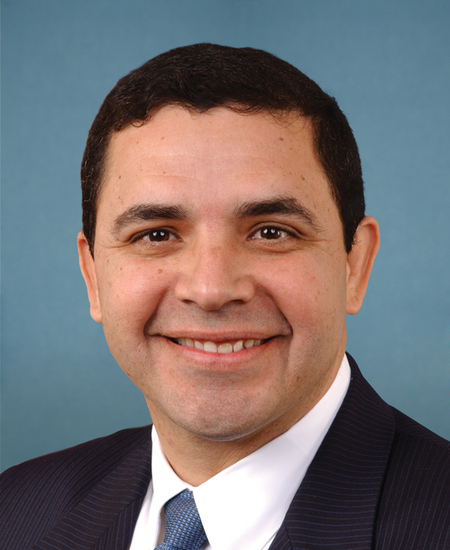
Rep. Henry Cuellar
Sponsored bills
Maddy summaryHRES 906 would change House rules to require a 60% vote of members present and voting to censure, disapprove, or remove any House member, delegate, or resident commissioner from committee assignments. Currently, a simple majority (50%+1) could trigger these actions, but this bill raises the threshold to a supermajority. The change applies directly to all voting members of the House and affects disciplinary procedures for members. This is a procedural rule change that makes it harder to take formal disciplinary actions against House members.
Maddy summaryThe HOPE Act extends enhanced premium tax credits through 2027, providing income-based subsidies for individuals with household incomes up to 935% of poverty level who purchase health insurance through ACA marketplaces. It imposes civil penalties of $10,000-$50,000 (and criminal penalties) for agents or brokers who provide false enrollment information. The bill requires new verification processes for agent-assisted enrollments, including documentation of consent and delayed commission payments, and mandates quarterly checks to remove deceased individuals from health insurance plans. These changes directly affect subsidy recipients and insurance agents/brokers operating in healthcare marketplaces.
Maddy summaryHR 5107, the Common-Sense Law Enforcement and Accountability Now in DC Act (CLEAN DC Act), repeals D.C. Law 24-345 (the 2022 Comprehensive Policing and Justice Reform Amendment Act). This bill directly affects Washington, D.C.'s policing and justice systems by reversing all changes made under that 2022 law. The key mechanism is a straightforward repeal, restoring all prior District laws as if the 2022 reform had never been enacted. The bill does not introduce new provisions but undoes existing reforms to the District’s law enforcement framework.
Maddy summaryThis bill amends Section 2119 of Title 18 (carjacking statute) to clarify the legal definition of the offense. It removes the phrase "with the intent to cause death or serious bodily harm" from the main definition, replacing it with "knowingly," and refines the death penalty provision to specify that death must result from a carjacking taken with the intent to cause death or serious bodily harm. The change streamlines the statute by focusing on the act of taking a vehicle "knowingly" rather than requiring proof of intent to cause harm as a core element. This technical amendment affects how federal prosecutors define and prosecute carjacking cases under existing law.
Maddy summaryHRES 782 is a non-binding House resolution expressing condolences to victims of the July 4, 2025, catastrophic floods in Texas, which caused at least 135 deaths (including 37 children) and widespread destruction. It honors first responders who rescued over 850 people and community heroes like camp staff who saved children, while committing the House to stand with affected Texans. The resolution does not create new laws or allocate funds - it formally mourns the loss of life, recognizes acts of courage, and urges prioritization of rebuilding infrastructure and support for vulnerable residents. This symbolic gesture was introduced by multiple Texas representatives and referred to the Transportation Committee.
Maddy summaryHR 5926, the Mexican Energy Trade Enforcement Act, requires the U.S. Trade Representative to take specific actions to enforce Mexico's obligations under the USMCA regarding energy trade. It mandates either requesting a dispute resolution panel with Mexico under USMCA rules or demanding Mexico provide non-discriminatory market access for U.S. energy companies during the first USMCA review. The bill directly affects U.S. energy companies operating in Mexico and exporting energy to Mexico, which faced alleged preferential treatment of Mexico's state-owned energy firms (CFE and Pemex). The USTR must report to Congress within 90 days on actions taken under the law.
Maddy summaryHRES 795 is a non-binding resolution condemning Hamas for the October 7, 2023, attacks that killed over 1,200 people, took 251 hostages (including Americans), and involved sexual violence. It demands Hamas immediately surrender and release all remaining hostages - specifically noting 48 people still held, including two U.S. citizens. The resolution also affirms Israel’s right to self-defense, calls for humanitarian aid to reach Palestinians, and condemns global antisemitism following the attacks. As a symbolic congressional statement, it does not create new laws or alter policies.
Maddy summaryHR 5715, the October 7 Gold Medal Act, authorizes Congress to award a gold medal to American hostages and victims of the October 7, 2023 Hamas attack in Israel. The medal, designed by the Treasury Secretary, will be presented to recognize their suffering and sacrifice, with the medal displayed at the Weitzman National Museum of American Jewish History in Philadelphia. The bill also permits the sale of bronze duplicates to cover costs, but does not create new legal obligations or policy changes. This is a ceremonial recognition, not a substantive legislative measure.
Maddy summaryHR 5714, the October 7 Remembrance Education Act, directs the U.S. Holocaust Memorial Museum to create a curriculum for secondary schools within 180 days of enactment. The curriculum will cover Hamas’ October 7, 2023 attacks on Israel, the history of antisemitism, the spread of anti-Israel rhetoric on campuses and social media following the attacks, and how denial or distortion of antisemitism occurs. It specifically requires schools to address the attacks' brutality, historical context of antisemitism, and contemporary manifestations of hate speech. The Museum must submit a report on the curriculum to Congress within 180 days of completion or by 3 years after the bill’s enactment. This bill affects secondary schools using the curriculum and focuses on educational content about the attacks and related antisemitism.