

Maddy summaryThis bill prohibits Members of Congress, their spouses, and dependent children from owning or trading certain investments, including stocks, commodities, and derivatives (referred to as "covered investments"). It requires affected individuals to divest these investments within 90-180 days, with specific exemptions for Treasury bonds, diversified mutual funds, small business interests, and family trusts meeting strict conditions. Violations incur penalties of 10% of the investment's value plus disgorgement of profits, paid directly to the U.S. Treasury. The law applies to all covered individuals during federal service, with exceptions for investments acquired through inheritance or occupational trading (e.g., a spouse’s finance job).
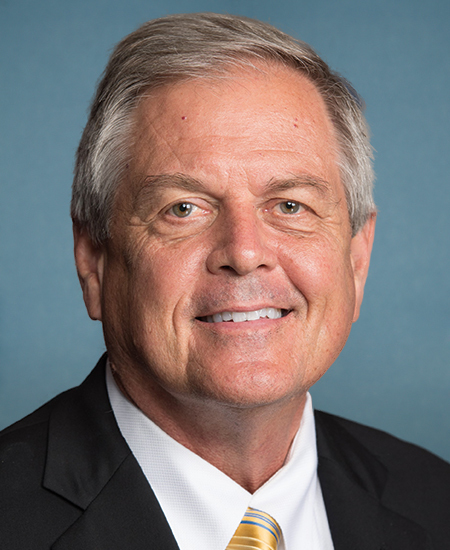
Rep. Ralph Norman
Sponsored bills
Maddy summaryHR 5121, the Fairness in Higher Education Accreditation Act, prohibits accrediting agencies from considering race, color, sex, or national origin when evaluating institutions or their leadership composition. It directly affects colleges and universities by requiring accrediting bodies to cease imposing or considering such factors in accreditation decisions. The bill adds new provisions to the Higher Education Act, banning agencies from setting standards related to student/faculty diversity metrics or leadership demographics, and mandates that institutions retain the right to adopt lawful policies on these matters. Institutions harmed by accreditation decisions violating these rules may pursue civil action under the amended law.
Maddy summaryHR 5076, the Protection of College Sports Act, codifies Executive Order 14322 into law, making its provisions about college sports revenue and athlete compensation legally binding. The bill does not alter the existing rules in the executive order but ensures they have the force of law, preventing future changes through executive action alone. This directly affects college athletic programs, universities, and student-athletes by establishing permanent legal standards for revenue sharing and compensation. The key mechanism is converting an executive order into statutory law, requiring congressional action for any future modifications.
Maddy summaryThis bill creates a federal database identifying state or local governments that conflict with immigration enforcement laws. It prohibits federal funding for any jurisdiction listed in this database, which includes entities that block cooperation with immigration detainers, restrict arrests of certain immigrants, or prevent officials from interviewing incarcerated individuals about immigration status. The database must be updated quarterly and made public within 90 days of the bill's enactment. This directly affects local governments that have policies limiting collaboration with federal immigration authorities.
Maddy summaryHR 4783, the COP Act of 2025, prohibits federal funding for any law enforcement agency that employs a non-citizen as a law enforcement officer. This directly affects state and local police departments or agencies that receive federal grants, requiring them to ensure all sworn officers are U.S. citizens to maintain funding eligibility. The key mechanism is a strict funding cutoff: agencies violating this rule would lose access to federal financial support. The bill focuses solely on altering federal funding eligibility based on officer citizenship status, with no additional provisions or exceptions described.
Maddy summaryHR 4788 would amend a 1932 District of Columbia law to allow Members of Congress (Senators and Representatives) to carry concealed firearms in Washington, D.C., if they hold a valid concealed carry license from a state where they are permitted to carry, or are otherwise legally allowed to carry concealed in their home state. The bill requires these members to not be federally prohibited from possessing firearms, to carry a valid state-issued license or proof of residency rights, and to present photo identification. This exception applies only to Members of Congress and does not alter D.C.'s general concealed carry laws for other individuals. The provision would take effect upon the bill's enactment.
Maddy summaryThe End the Vaccine Carveout Act changes the National Vaccine Injury Compensation Program (NVICP) to allow individuals to sue vaccine manufacturers or administrators directly in court for vaccine-related injuries or deaths, without first needing to file a claim under the NVICP. It removes time limits for filing NVICP claims and repeals rules that previously let people choose between the program and a lawsuit for the same injury. The bill also specifically excludes COVID-19 vaccines from the definition of "covered countermeasure," meaning they are no longer protected by the same emergency liability shield that applied to other pandemic vaccines. This affects vaccine manufacturers, providers, and individuals who experience vaccine-related harm, shifting liability from the NVICP to the court system for most cases.
Maddy summaryHR 4706 prohibits Chinese government-linked entities (including Chinese corporations, CCP-affiliated organizations, and entities controlled by China) from acquiring, leasing, or owning U.S. agricultural land or residential real estate. The bill requires such entities to sell all existing U.S. agricultural land holdings within one year (with a 180-day letter of intent deadline) and residential real estate holdings within one year, imposing daily fines of $100 per acre for agricultural land violations and $1,000 per residential unit. It also voids noncompete agreements between these entities and their employees. The law applies to all 50 states and territories, with enforcement by the Agriculture and Commerce Departments, and includes a 2-year temporary residential purchase ban ending in 2026 (extendable by the President).
Maddy summaryHR 4620 amends federal law to include rioting as a form of racketeering activity under Title 18, United States Code. This change would allow prosecutors to charge individuals who organize or participate in riots as part of a larger criminal enterprise under federal racketeering laws. The bill specifically targets coordinated riot activities linked to organized crime, not isolated or spontaneous protests.
Maddy summaryHRES 589 requires the U.S. Attorney General to publicly release, within 30 days of enactment, searchable and downloadable documents related to the Jeffrey Epstein investigation - including DOJ communications, case files (like *United States v. Maxwell*), and materials about Epstein’s detention or death. It mandates the release of all such records unless specific, limited exceptions apply (e.g., to protect victims’ privacy, prevent child exploitation, or safeguard ongoing investigations). The resolution prohibits withholding documents solely due to embarrassment, reputational harm, or political sensitivity to officials or public figures. It also requires a detailed report to Congress within 15 days, listing all released materials, redactions, and unclassified summaries for any withheld classified information.