Maddy summaryHR 4719, the Freedom to Move Act, would create $5 billion in federal grants to help cities, counties, and transit agencies make public transportation free and improve service quality. Local governments applying for these grants must demonstrate how they will redesign bus routes to prioritize low-income and minority neighborhoods, eliminate criminal penalties for fare evasion, and address transit gaps in underserved communities. The grants cover lost fare revenue and fund specific improvements like safer bus stops, dedicated bus lanes, and better service frequency. This directly affects transit agencies and riders in communities currently lacking reliable, affordable transportation options.
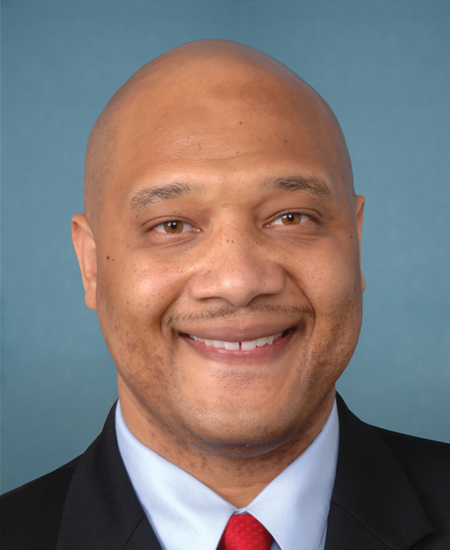
Rep. André Carson
Sponsored bills
Maddy summaryHJRES 111 is a joint resolution seeking congressional disapproval of a U.S. Fish and Wildlife Service rule on barred owl management. The rule, published in September 2024, outlined strategies to reduce barred owl populations to protect the endangered spotted owl. Under the Congressional Review Act, this resolution would nullify the rule, preventing its implementation. If enacted, the rule would have no legal effect, and the agency could not enforce the barred owl management strategy.
Maddy summaryThis bill would prohibit the detention of pregnant women, lactating women, and postpartum mothers (within one year of childbirth) in immigration custody, requiring their immediate release except in rare circumstances involving public safety threats. It bans the use of physical restraints on these individuals during pregnancy, labor, delivery, and postpartum recovery, with only extremely limited exceptions. The bill mandates that facilities provide comprehensive reproductive health care including prenatal care, labor and delivery services, postpartum care, and access to abortion services. It requires facilities to maintain medical records, obtain informed consent for medical procedures, and conduct weekly reviews of any detained individuals under exceptional circumstances. The bill also establishes reporting requirements for facilities and creates transparency through public reporting of detention practices.
Maddy summaryHR 4627 amends the Foreign Assistance Act of 1961 to update U.S. foreign aid programs combating HIV/AIDS. It specifically adds funding for HIV pre-exposure prophylaxis (PrEP) medications as a covered activity and designates all HIV prevention efforts - including those targeting at-risk populations identified by the World Health Organization - as "core life-saving humanitarian assistance." This change ensures such prevention activities receive priority funding under U.S. foreign aid programs. The bill directly affects how U.S. government agencies allocate resources for global HIV/AIDS prevention initiatives.
Maddy summaryHR 4752, the Reducing Hereditary Cancer Act, requires Medicare to cover genetic testing for germline mutations in individuals with a family history of hereditary cancer or suspicious personal/family history. It mandates coverage for risk-reducing surgeries (like mastectomies or hysterectomies) when guided by evidence-based clinical guidelines, and increases the frequency of cancer screenings (such as mammograms, colonoscopies, and breast MRI) for Medicare beneficiaries confirmed to have hereditary cancer gene mutations - ensuring screenings occur at least annually. The bill applies to Medicare beneficiaries with specific high-risk profiles, aligning coverage with guidelines from recognized oncology organizations like the National Comprehensive Cancer Network. It does not change eligibility but modifies Medicare’s existing coverage rules to expand access to these preventive services.
Maddy summaryThis bill prohibits companies from using automated systems to set prices or wages based on surveillance data about consumers or workers. It bans "surveillance-based price setting" (personalized pricing based on consumer tracking) and "surveillance-based wage setting" (using personal data to determine worker pay), with limited exceptions for standard discounts like student or senior citizen rates when properly disclosed. Companies must publish clear procedures about how their automated systems work, including how data is used and how consumers/workers can challenge inaccuracies. The Federal Trade Commission and Equal Employment Opportunity Commission will enforce the law, and individuals can file lawsuits to challenge violations. The bill also prohibits pre-dispute arbitration agreements that would prevent class action lawsuits.
Maddy summaryHR 4698, the PAAW Act, prohibits the National Institutes of Health (NIH) from conducting or funding research that causes significant pain or distress to dogs or cats. This directly affects NIH-funded studies involving these animals, specifically banning research assigned to USDA-defined severe pain categories (D or E). The law takes effect 90 days after enactment and relies on existing USDA pain classification standards under the Animal Welfare Act. It creates a clear policy change limiting NIH research involving dogs and cats when severe pain is anticipated.
Maddy summaryThis bill adds "spotted lanternfly control" as a priority research area under federal agricultural funding, authorizing grants to develop and share tools for combating the invasive spotted lanternfly pest (Lycorma delicatula). It directly affects farmers, agricultural communities, and state departments of agriculture in states like Pennsylvania where the pest causes significant crop damage. The key provision amends existing law to allow research grants focused on creating effective treatments and management strategies for the pest. The bill also extends the funding period for all high-priority research initiatives through 2030.
Maddy summaryThe RAP Act of 2025 amends federal evidence rules to generally prohibit the use of a defendant's creative or artistic expression (such as music, poetry, or visual art) as evidence in criminal or civil trials. It directly affects defendants whose artistic works might otherwise be presented against them, making such evidence inadmissible unless the government proves specific conditions by "clear and convincing evidence." These conditions require showing the expression was intended literally, directly relates to the specific facts of the case, is uniquely relevant, and has distinct probative value not available through other admissible evidence. If admitted under the exception, courts must redact the evidence and provide special jury instructions. The law aims to protect artistic expression from being misused in legal proceedings.
Maddy summaryHR 4725, the TRUTH in Labeling Act, requires new front-of-package labels on most packaged foods to highlight high levels of added sugars, sodium, and saturated fat using "High in" labels with an exclamation point icon. The labels must also disclose if a product contains non-nutritive sweeteners (like artificial sweeteners) and include a statement that these are not recommended for children, placed adjacent to the nutrient labels. The rule applies specifically to foods marketed for infants under 12 months and children aged 1-4 years, in addition to general consumer foods. The law mandates the Department of Health and Human Services to finalize this labeling rule within 180 days of enactment, aligning with current dietary guidelines.