Maddy summaryThe Healthy MOM Act (HR 6242) would require health insurance plans to provide a special enrollment period for pregnant individuals beginning when pregnancy is reported to the insurer. It mandates that group health plans and health insurance issuers cover maternity care, including childbirth and postpartum care, for all dependents regardless of age. The bill would extend Medicaid coverage for pregnant individuals and infants to 12 months postpartum (instead of ending at 60 days postpartum) and make this 12-month coverage permanent. These provisions would directly affect pregnant individuals, women with dependent children who are pregnant, and health insurance plans and Medicaid programs.
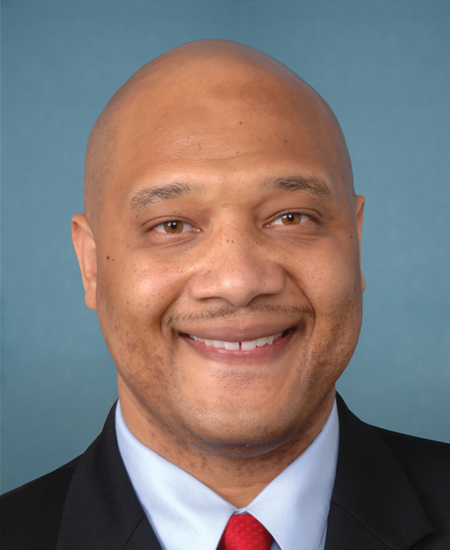
Rep. André Carson
Sponsored bills
Maddy summaryThis bill expands Medicare's drug price negotiation program to cover 50 drugs (up from 20) and requires health insurers to apply negotiated prices to cost-sharing for beneficiaries. It establishes annual out-of-pocket cost-sharing limits for prescription drugs under group health plans and insurance coverage, with specific limits of $2,000 for self-only coverage in 2027 that will increase annually. The bill also sets specific cost-sharing limits for insulin products, requiring coverage with no deductible and cost-sharing of no more than $35 per 30-day supply or 25% of the negotiated price. These provisions affect Medicare beneficiaries, people with group health plans, and health insurers across the country. The bill applies to plan years beginning on or after January 1, 2027.
Maddy summaryThe Grid Research and Development Act (HR 6177) requires transmission utilities and grid operators to report standardized data to the Federal Energy Regulatory Commission (FERC) on transmission projects, including costs, project timelines, system performance, and interconnection expenses. FERC must create a public, searchable data repository and an Interconnection Data Dashboard displaying real-time queue data, project statuses, and system costs to improve transparency. The Department of Energy will use this data to research transmission cost drivers, efficiency, and affordability, publishing annual reports on grid investment impacts. These requirements directly affect transmission utilities, grid operators, and ratepayers by standardizing reporting and enabling public analysis of grid investments.
Maddy summaryHR 6181, the John Lewis Every Child Deserves a Family Act, prohibits child welfare agencies receiving federal funds from discriminating against children, youth, or prospective foster/adoptive parents based on religion, sex (including sexual orientation and gender identity), or marital status. It directly affects LGBTQ youth in foster care - overrepresented at 30% of the system - who face higher risks of trauma, group home placements, and suicide attempts compared to non-LGBTQ peers. Key provisions require agencies to collect data on sexual orientation and gender identity, establish a National Resource Center for LGBTQ youth support, provide cultural competency training, and eliminate discriminatory practices. The law aims to improve safety, permanency, and placement stability by expanding access to family-based care and ensuring equitable services for all children in the system.
Maddy summaryHR 6172, the Ending Forced Arbitration of Race Discrimination Act of 2025, prevents companies from requiring employees or consumers to use private arbitration to resolve race discrimination claims. It makes any pre-dispute arbitration agreement unenforceable for disputes involving alleged race, color, or national origin discrimination under federal, tribal, state, or local law. The bill ensures courts - not arbitrators - determine if this law applies to a case, giving people the choice to pursue claims in court instead of forced arbitration. It directly affects individuals alleging race discrimination who would otherwise be barred from court by such agreements. The law applies to claims arising on or after its enactment date.
Maddy summaryThis bill (HR 6015) ensures existing labor agreements between the Department of Veterans Affairs (VA) and employee unions remain in full effect through their scheduled terms. It also cancels two executive orders (14251 and 14343) that previously excluded VA from standard federal labor-management programs. The bill directly affects VA employees and their unions by preserving current collective bargaining rights and requiring VA to follow standard federal labor rules. It does not change veterans' benefits or healthcare access; it only modifies VA's internal labor relations procedures. This is a procedural bill focused on labor-management processes, not direct policy changes for veterans.
Maddy summaryThis bill allows Inspector General (IG) offices to continue operating during government funding gaps. It permits IGs to spend funds at the previous year's funding rate to cover basic operations and oversee programs that remain active when Congress hasn't passed new appropriations. The law directly affects federal IGs and the agencies they monitor, ensuring oversight continues without interruption during shutdowns. It amends existing law to provide this authority without requiring new appropriations.
Maddy summaryThis bill establishes fairer pay and retirement benefits for federal firefighters. It requires that overtime hours worked during a firefighter's regular schedule be included in retirement calculations, improving retirement payouts. The bill also sets a maximum 60-hour regular workweek for federal firefighters, to be defined by the Office of Personnel Management within one year. These changes directly affect federal firefighters by addressing pay disparities with municipal firefighters and enhancing recruitment and retention.
Maddy summaryThe Housing Financial Literacy Act of 2025 modifies mortgage insurance premiums for first-time homebuyers who complete approved financial literacy counseling programs. It requires that such counseling be completed before signing a mortgage application or sales agreement. The bill reduces the mortgage insurance premium by 25 basis points (0.25%) below the standard rate established by the Secretary of Housing and Urban Development. This change directly affects first-time homebuyers who participate in qualifying housing counseling programs.
Maddy summaryThis bill establishes a pilot program requiring the Secretary of Defense to partner with certified nonprofit diaper banks to provide free diapers and diapering supplies to military families in need. Covered diaper banks must be nonprofit members of the National Diaper Bank Network with at least five years of experience distributing diapers at no cost. The program will connect these banks directly with military installations to address diaper access gaps, with the National Diaper Bank Network providing technical support and evaluating the pilot's effectiveness. It directly affects military families facing financial barriers to basic necessities like diapers, creating a new federal partnership mechanism for support.