

Maddy summaryHR 6718, the Professional Student Degree Act, amends the Higher Education Act to clarify the definition of a "professional degree" for federal education purposes. It replaces the previous definition with a new section listing specific degrees that meet the criteria, including Pharmacy (Pharm.D.), Law (J.D.), Medicine (M.D.), Dentistry (D.D.S.), Veterinary Medicine (D.V.M.), and others like Nursing (D.N.P.) and Business Administration (M.B.A.). This definition requires degrees to signify both completion of academic requirements for professional practice (often requiring licensure) and skills beyond a bachelor's level. The bill directly affects students pursuing these designated degrees by formally recognizing them under federal education law, without creating new programs or changing funding.
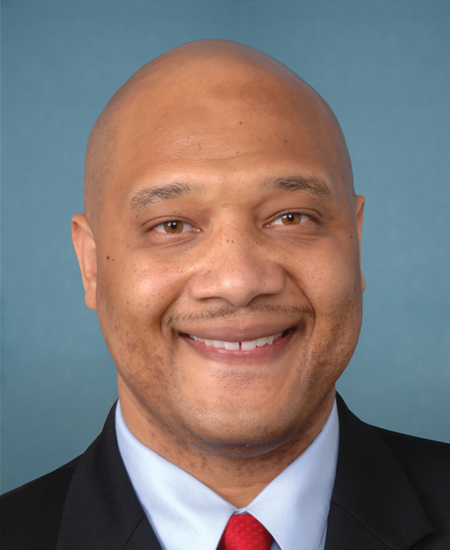
Rep. André Carson
Sponsored bills
Maddy summaryThe EFFECTIVE Food Procurement Act would require the U.S. Department of Agriculture to change how it buys food for programs like school meals and food banks. The bill directs USDA to prioritize purchasing foods that support beginning farmers, socially disadvantaged producers, and environmentally sustainable practices, while emphasizing worker well-being and climate-friendly food production. USDA would need to report annually on how much it spends on these priority food categories and track greenhouse gas emissions from its food purchases. The bill also creates a pilot program for "best value" procurement that considers more than just cost, and provides grants to help small and minority farmers meet USDA vendor requirements. These changes aim to make USDA's $20 billion+ annual food procurement more equitable and environmentally sustainable.
Maddy summaryThe Protect America's Workforce Act cancels an executive order issued on March 27, 2025, that excluded certain groups from federal labor-management relations programs, making it legally unenforceable. It also ensures that all collective bargaining agreements between federal agencies and labor unions, which were active as of March 26, 2025, remain fully effective until their agreed terms expire. This directly affects federal agencies, labor unions, and the employees covered by these agreements. The bill prevents federal funds from being used to implement the canceled executive order while preserving existing labor agreements.
Maddy summaryThis bill creates grants to help colleges adopt free digital textbooks (open educational resources) in science, technology, engineering, and math courses. It directly affects institutions of higher education, requiring them to collaborate with librarians and STEM faculty to implement these courses. Key provisions include prioritizing schools with many low-income or minority students, mandating plans for faculty collaboration, and requiring annual reports on cost savings for students compared to traditional textbooks. The law defines "open educational reading materials" as free, downloadable digital texts and tracks how many STEM courses transition to using them.
Miracle on Ice Congressional Gold Medal Act This act provides for the award of Congressional Gold Medals to the members of the 1980 U.S. Olympic men's ice hockey team in recognition of the team's achievement at the 1980 Winter Olympic Games.
Maddy summaryHRES 939 is a resolution impeaching former President Donald Trump for "high crimes and misdemeanors," citing two specific articles. Article I alleges Trump threatened to execute six Democratic lawmakers (who are military/intelligence veterans) after they urged military personnel to refuse illegal orders, calling their remarks "seditious" and demanding their "execution." Article II alleges Trump repeatedly threatened federal judges with impeachment and violence, including calling a judge "a Radical Left Lunatic" and posting "HANG THEM," which the resolution states undermines judicial independence. The resolution asserts these actions violate Trump's constitutional oath and threaten democratic institutions.
Maddy summaryThe Keeping All Students Safe Act prohibits the use of unlawful seclusion and restraint in schools receiving federal funding, including physical restraint that restricts breathing or blood flow, chemical restraint not prescribed for medical treatment, and mechanical restraint. The bill requires schools to use less restrictive interventions first, mandates that staff using physical restraint be trained and certified through State-approved programs, and requires immediate parent notification after any restraint incident. States must develop plans to monitor compliance, collect and report data on restraint incidents (disaggregated by race, disability status, and school type), and implement positive behavioral interventions. The bill provides $40 million annually for five years to support states in implementing these requirements and improving school climate through evidence-based approaches.
Maddy summaryThe BASIC Act prohibits certain non-regular government employees (called "special Government employees") from receiving or arranging for federal contracts, grants, or other awards exceeding $1 million annually if they or their family, household, or affiliated organizations would benefit. Exceptions apply to employees serving only on advisory committees, holding GS-10 or lower positions, or working in student-specific roles. The bill requires agencies to update regulations to enforce this ban, mandates public disclosure of financial reports for affected employees (with exceptions), and creates a searchable online database tracking these employees' service details. These changes aim to prevent conflicts of interest in federal contracting.
Maddy summaryThis concurrent resolution (HCONRES 65) is a symbolic congressional commendment of state and local governments that have affirmed reproductive rights as human rights. It recognizes efforts by jurisdictions like Carrboro, North Carolina; Austin, Texas; and Fulton County, Georgia, which passed resolutions or proclamations declaring abortion access a human right and condemning criminalization of pregnancy outcomes. The resolution urges states to repeal restrictive abortion laws and protect access to reproductive care, but it does not create new legal requirements or fund programs. As a procedural resolution, it has no binding effect on federal or state law.
Maddy summaryHR 6594 requires medical device manufacturers and importers to submit recall notifications electronically to the FDA using a standardized format. The format must include specific data like device identifiers, recall reasons, and risk information for both healthcare providers and patients. For certain high-risk recalls (e.g., implanted, life-sustaining devices), manufacturers must also ensure patients receive direct notification about risks and recommended actions. This bill directly affects device manufacturers, the FDA (which reviews notifications within 2 business days), and healthcare facilities that treat patients using recalled devices.