Maddy summaryThis resolution expresses support for designating the week of March 22 through March 28, 2026, as National Cleaning Week. It directly affects the cleaning industry, frontline workers, and the general public by formally recognizing the importance of routine cleaning for public health and safety. The bill highlights findings that proper cleaning reduces virus transmission and acknowledges the essential services provided by cleaning professionals in schools, hospitals, and workplaces. It does not create new laws or funding but serves as a symbolic gesture to promote awareness of hygiene practices.
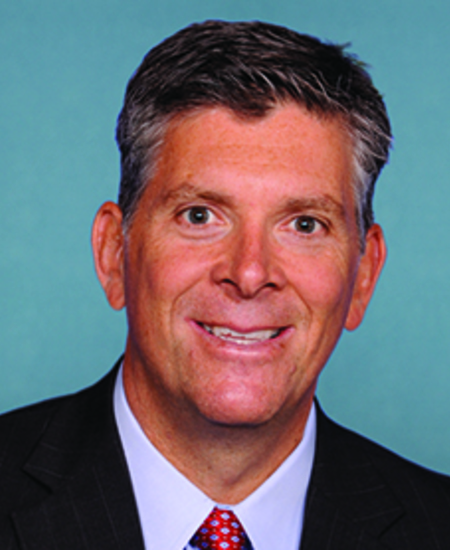
Rep. Darin LaHood
Sponsored bills
Maddy summaryThis bill directs the U.S. Trade Representative to investigate whether Canada's Online Streaming Act unfairly targets American streaming companies by imposing discriminatory taxes and content requirements. It authorizes the Trade Representative to consult with affected U.S. businesses and trade partners, then potentially take retaliatory trade actions if Canada does not amend the measures. The legislation also requires regular reporting to Congress on Canada's implementation of these policies and extends similar investigative powers to other countries with comparable digital trade restrictions.
Maddy summaryThis bill proposes to add 7-hydroxymitragynine to Schedule I of the Controlled Substances Act, classifying it as a controlled substance. The legislation specifically excludes naturally occurring 7-hydroxymitragynine found in kratom plants from this classification while including synthetic versions. This change would require federal regulation of synthetic forms of the compound but would not affect kratom products containing the substance in its natural state. The bill directly impacts pharmaceutical manufacturers and synthetic drug producers who would need to comply with new federal scheduling requirements.
Maddy summaryHR 5688, the Non-Domiciled CDL Integrity Act, changes rules for issuing commercial driver's licenses (CDLs) to people who don't live in the state where the license is issued. It allows states to issue CDLs to foreign nationals with lawful U.S. immigration status and work-related visas (valid for up to one year or until their stay ends), requiring states to verify status before issuing and keep records for two years. For residents of U.S. territories like Puerto Rico, it requires proof of U.S. citizenship or permanent residency before issuing CDLs, with similar verification and record-keeping rules. The bill directly affects commercial drivers from foreign countries and U.S. territories seeking CDLs in states where they are not residents.
Enhanced Iran Sanctions Act of 2025 This bill imposes sanctions on certain foreign persons (individuals and entities) that are involved in Iran's petroleum sector as well as certain associated persons. The bill also requires or authorizes actions to facilitate the enforcement of sanctions on Iran. Specifically, the bill requires the President to impose visa- and property-blocking sanctions on any foreign person that, after the bill's enactment, knowingly engages in any transaction related to the processing, export, or sale of oil, condensates, gas, liquefied natural gas, or other petrochemical products in whole or in part from Iran. The President must also impose sanctions on certain foreign persons associated with a sanctioned individual or entity. For example, the President must sanction the subsidiaries and corporate officers of a sanctioned business. The bill provides certain exceptions to these sanctions, including specifying that sanctions do not apply to the importation of goods or to conducting or facilitating transactions for humanitarian assistance. The Department of State must establish an interagency working group that shall seek to establish a multilateral contact group to coordinate international efforts to enforce sanctions on Iran. The bill expands the State Department rewards program to authorize a reward payment to any individual who furnishes information leading to the identification of a person (1) subject to sanctions under this bill, or (2) that has attempted or is attempting to evade sanctions under this bill.
Maddy summaryThe MINT Act modifies rules for federal home loan banks backing tax-exempt bonds used in community development projects. It removes a 2010 deadline for certain bond issuances and shifts safety requirements to be set by the Federal Housing Finance Agency Director, rather than fixed standards. This directly affects community development organizations and local governments using tax-exempt bonds for housing or neighborhood revitalization. The changes apply to guarantees issued after the bill's enactment, streamlining how these bonds are secured.
Maddy summaryThis bill directs the Secretary of Health and Human Services to create a program focused on researching how environmental factors, such as air pollution, chemicals, and heavy metals, may contribute to neurodegenerative diseases like Alzheimer's and Parkinson's. The legislation would establish collaborative research centers at universities and medical institutions to study these environmental links, train scientists, and share findings with the public and healthcare professionals. The program includes provisions for creating a national data system and information clearinghouse to track disease patterns and environmental exposures across different communities. Funding of up to $50 million annually through 2031 is authorized to support these research efforts, with biennial reports required to Congress on progress and outcomes.
Maddy summaryThis bill changes tax depreciation rules for specific equipment used in restaurants and bars. It classifies "qualified energy-efficient draft alcohol property" (like stainless steel/aluminum containers and tap systems for serving alcohol) as 15-year property for tax purposes, allowing faster depreciation deductions. The change applies to equipment installed after December 31, 2025, and directly affects restaurant, bar, and entertainment venue owners who purchase this equipment. The bill does not alter tax rates or create new programs, only modifying how eligible equipment is treated under existing tax code provisions.
Maddy summaryThis bill changes tax rules for specific education loan repayments. It allows graduates to exclude from taxable income amounts received through "post-graduation scholarship grants" that repay part of their student loans. These grants must be provided by qualified nonprofits (like private foundations or community trusts) to individuals who agree to live and work in communities with below-average bachelor's degree attainment rates. The grants require direct payments to loan holders, exclude employees of the granting organization, and include reporting requirements for the Treasury Department on program effectiveness within three years.
Maddy summaryThis bill directs the Secretary of Transportation to update the federal definition of "motorcycle" in transportation regulations within 120 days of enactment. The new definition specifies that a motorcycle must be a three-wheeled vehicle designed to be ridden while sitting astride, steered by handlebars, and capable of exceeding 30 mph. It directly affects motorcycle manufacturers, regulators, and riders by aligning federal safety standards with this updated definition in the Code of Federal Regulations. The change ensures regulatory consistency for vehicles meeting these specific design and performance criteria.