This resolution expresses support for Israel's efforts of self-determination and collective security against external forces, recognizes Jerusalem as the legitimate capital city of Israel, and condemns actions by Hamas against the people of Israel.
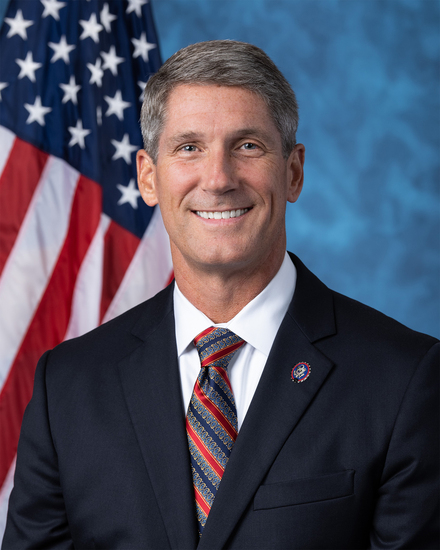
Rep. Scott Franklin
Sponsored bills
This resolution condemns the rocket attacks by Hamas against Israel beginning the week of May 9, 2021. It also states that the United States must continue to invest in and support Israel's security and sovereignty.
United States Army Rangers Veterans of World War II Congressional Gold Medal Act This bill provides for the award of a single Congressional Gold Medal to the U.S. Army Rangers Veterans of World War II in recognition of their dedicated service during World War II.
Veteran Education Empowerment Act This bill reauthorizes through FY2029 and otherwise revises a Department of Education (ED) grant program for student veteran centers. Specifically, ED must make grants to institutions of higher education (IHEs) or consortia of IHEs to establish, maintain, improve, or operate a student veteran center. A student veteran center is a dedicated space on a campus that provides students who are veterans or members of the Armed Forces with (1) a lounge or meeting space for themselves, their spouses or partners, their children, and veterans in the community; and (2) a centralized office for student veteran services that serves as a single point of contact to coordinate comprehensive support services for student veterans.
Recognizing Military Service in PSLF Act This bill requires the Department of Education to count each month for which a borrower's federal student loan payment was in deferment or forbearance during a period of active duty, including certain National Guard duty, as a qualifying payment for the purpose of the Public Service Loan Forgiveness (PSLF) program. Under current law, a borrower who is a service member is eligible to receive student loan forgiveness under the PSLF program; however, if the borrower places their loan into deferment or forbearance while they are on active duty, that period of time does not count as a qualifying payment for the PSLF program.
Gold Star Children Act This bill broadens the categories of individuals eligible for veterans' preference in the civil service. Specifically, it makes children of certain permanently disabled or deceased veterans eligible for veterans' preference treatment in the federal civil service.
Iran China Accountability Act This bill prohibits the use of funds to enter into any negotiation with Iran regarding an Iran nuclear agreement until the President makes specified certifications concerning the actions of China and Iran. Specifically, the President must certify that China has ceased incarcerating Uighur individuals in the Xinjiang region. Additionally, the President must certify that, among other actions, Iran has terminated all agreements involving the receipt of funds from China and all ties and transfer of cash to Iranian proxy forces, including Hamas. Further, any Iran nuclear agreement that the United States enters into must certify the destruction of any and all Iranian nuclear and missile capabilities, weapons, infrastructure, chemical weapons, and offensive cyber activity. Such agreement shall be deemed a treaty requiring advice and consent of the Senate.
Gigabit Opportunity Act This bill authorizes the designation of qualified gigabit opportunity zones in low-income communities and provides tax incentives for investments in such zones. Governors may submit nominations for a limited number of qualified gigabit opportunity zones in low-income communities to the Department of the Treasury for certification and designation and must give particular consideration to areas that are facing obstacles to economic development due to a lack of geographic broadband coverage or speed; are the focus of mutually reinforcing state, local, or private economic development initiatives; are poised for economic growth that requires access to high speed broadband for commercial purposes; and represent the areas of a state where such service would result in the highest return on investment. For eligible taxpayers who sell certain broadband services, the bill allows (1) deferrals, reductions, or exemptions from taxes on capital gains invested in certain property used to provide broadband services in a zone; and (2) immediate expensing of the costs of the property. The bill also allows tax-exempt private activity bonds to be used for certain broadband projects in the zones. Within one year of enactment of this bill, the Federal Communications Commission must publish a Uniform Model Broadband Deployment Act containing laws for the state regulation of the deployment of broadband services. Qualified zones must either adopt the Act or laws comparable to the Act.
Saving Gig Economy Taxpayers Act This bill modifies requirements for third party settlement organizations to eliminate their reporting requirement with respect to the transactions of their participating payees unless they have earned more than $20,000 on more than 200 separate transactions in an applicable tax period. A third party settlement organization is the central organization that has the contractual obligation to make payments to participating payees (generally, a merchant or business) in a third party payment network. This reverses a provision in the American Rescue Plan Act of 2021 that lowered the reporting threshold to $600 with no minimum on the number of transactions.
Purple Heart Freedom to Work Act This bill increases the monthly income limit that is used to determine whether certain Purple Heart recipients are eligible for Social Security Disability Insurance (SSDI) benefits. Specifically, when making such determinations with respect to Purple Heart recipients who are entitled to SSDI benefits based on combat-related injuries, the Social Security Administration must use the limit that applies to individuals who are blind rather than the lower limit that applies to other SSDI recipients. In addition, the bill phases out SSDI benefits for these Purple Heart recipients, with benefits reduced by $1 for every $4 of earnings in excess of the limit.