

Maddy summaryThis bill directs the National Oceanic and Atmospheric Administration (NOAA) to develop and improve artificial intelligence (AI) weather models and wildfire prediction systems. It requires NOAA to create comprehensive training datasets for AI forecasting, integrate AI with existing weather models to enhance forecasts, and build wildfire prediction tools using observational and synthetic data to warn communities and responders. The bill mandates technical assistance for forecasters and emergency managers, establishes partnerships with private and academic entities, and ensures public access to non-sensitive data and tools developed under the program. It directly affects NOAA, federal weather agencies, and their partners in improving forecasting accuracy for extreme weather and wildfires, without imposing new regulations on the public.
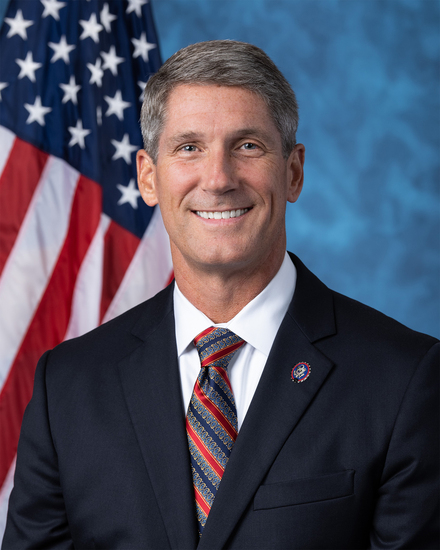
Rep. Scott Franklin
Sponsored bills
Maddy summaryHR 2767, the BRAIN Act, aims to advance brain tumor research and improve patient care by requiring the NIH to create a public database of tumor samples collected with federal funding. It authorizes $50 million annually for a Glioblastoma Therapeutics Network to accelerate treatment development and $10 million for cellular immunotherapy research (including CAR-T therapies) targeting brain tumors. The bill also mandates a national awareness campaign to increase understanding of cancer clinical trials and biomarker testing, plus $5 million yearly for pilot programs studying survivor care coordination and follow-up services. Additionally, it directs the FDA to issue guidance ensuring brain tumor patients can access clinical trials. These provisions directly affect patients, researchers, and healthcare providers focused on brain tumors and rare cancers.
Maddy summaryHR 2806 prohibits the Secretary of Energy from selling petroleum products from the Strategic Petroleum Reserve to entities under Chinese Communist Party control or if the products could be exported to China. It directly affects U.S. energy sales to Chinese-linked companies and the Department of Energy’s management of the reserve. Key provisions require the Secretary to block such sales and mandate that any sale not result in exports to China. This policy change restricts access to U.S. strategic oil reserves for China-related entities.
Maddy summaryThis bill makes it a federal crime to intentionally cause or arrange collisions involving commercial motor vehicles (like trucks) for insurance fraud. It imposes fines and prison sentences of up to 20 years for basic staging, and at least 20 years if the collision causes serious injury or death. The law directly affects individuals who commit this type of fraud, which is often used to file false insurance claims. It also prevents federal prosecution if someone was already convicted or acquitted under state law for the same act.
Maddy summaryThe 10th Amendment Restoration Act of 2025 would establish a Constitutional Government Review Commission to examine federal agencies and determine if their powers are "definitively delegated" by the Constitution. The commission would review each agency's authorizing statute and recommend repealing those not constitutionally justified, with recommendations requiring a simple majority vote. It would also propose how to distribute any resulting federal budget savings to states. The bill includes expedited procedures for Congress to consider the commission's recommendations within 30 days. The commission would operate for 5 years, holding public meetings and publishing all information online.
Fair Access to Agriculture Disaster Programs Act This bill waives the adjusted gross income limitations for payments or benefits under specific Department of Agriculture (USDA) disaster assistance programs for a person or legal entity that derives a portion of their income from agriculture. Currently, a person or entity is not eligible to receive certain benefits during a crop, fiscal, or program year if their average gross income exceeds $900,000. Specifically, in the case of an excepted payment or benefit, the adjusted gross income limitation is waived if 75% or more of the average adjusted gross income for the person or entity is derived from farming, ranching, or silviculture activities. These activities include agritourism, direct-to-consumer marketing of agricultural products, and the sale of agricultural equipment owned by such person or entity. The bill applies to the USDA Livestock Indemnity Program; Livestock Forage Disaster Program; Emergency Assistance for Livestock, Honey Bees, and Farm-Raised Fish Program; Tree Assistance Program; and Noninsured Crop Disaster Assistance Program.
Maddy summaryThis bill, HR 2102 (Major Richard Star Act), allows veterans with combat-related disabilities to receive both full military retired pay and veterans' disability compensation simultaneously, without the previous offset that reduced retired pay. It directly affects veterans already eligible for both benefits due to combat-related injuries, removing the requirement that their retired pay be reduced by the disability compensation amount. The key provision amends Title 10 and Title 38 to eliminate the offset rule (sections 5304 and 5305 of Title 38) for these veterans. The change applies to payments starting after the bill’s enactment date, effective for all qualifying veterans. This is a policy change to increase financial support for affected veterans, not a new benefit.
Maddy summaryThis bill codifies a "maximum pressure" policy toward Iran, requiring the U.S. to maintain all sanctions until Iran meets specific conditions related to its nuclear program, missile development, support for terrorism, and human rights violations. It expands sanctions on Iran's Revolutionary Guard Corps (IRGC) and entities supporting Iran's ballistic missile program, while prohibiting waivers of sanctions on these entities. The bill mandates regular reports to Congress on Iran's nuclear activities, support for terrorist groups like Hamas and Hezbollah, and human rights abuses within Iran. It also directs the use of frozen Iranian assets to support victims of state-sponsored terrorism and prevents the release of funds that could benefit Iran's terrorist proxies. The bill aims to maintain economic and diplomatic pressure on Iran until it changes its behavior across multiple fronts.
Maddy summaryHR 2552, the RIFLE Act, repeals the federal tax on firearm transfers (Section 5811 of the Internal Revenue Code). This directly affects firearm sellers and purchasers by removing the tax paid when transferring firearms. The bill also updates related tax code references to reflect the repeal and specifies the tax removal applies to transfers after the law's enactment. It clarifies that the repeal does not change how firearms are regulated under the National Firearms Act or involve the Consumer Product Safety Commission.
Maddy summaryHR 2514, the Trucker Bathroom Access Act, requires businesses like warehouses, distribution centers, and shipping facilities (but not small restaurants under 800 sq ft) to allow commercial truck drivers access to their restrooms when delivering goods or waiting to load cargo. It also mandates that port terminals provide sufficient restrooms for drayage truck operators (drivers of large trucks moving cargo at ports) in safe, accessible areas, including parking spots for vehicle access. The bill does not require businesses to make physical restroom changes and exempts locations where access would create health, safety, or security risks. It defines "covered drivers" as those operating commercial vehicles regulated by the Department of Transportation and "covered restrooms" as those safely accessible to drivers. This law directly affects truck drivers and the businesses they interact with during deliveries or port operations.