

Maddy summaryHR 189, the "Action Versus No Action Act," requires federal agencies (like the Department of Agriculture or Interior) to limit environmental reviews for certain forest management projects to only two options: proceeding with the project or taking no action. It applies specifically to projects on lands suitable for timber production that meet one of four criteria, such as being developed through a collaborative process or covered by a community wildfire protection plan. The bill mandates that agencies analyze only these two alternatives, including detailed assessments of how "no action" would impact forest health, wildfire risk, habitat, and economic factors. This change streamlines environmental reviews but restricts consideration of other potential management approaches.
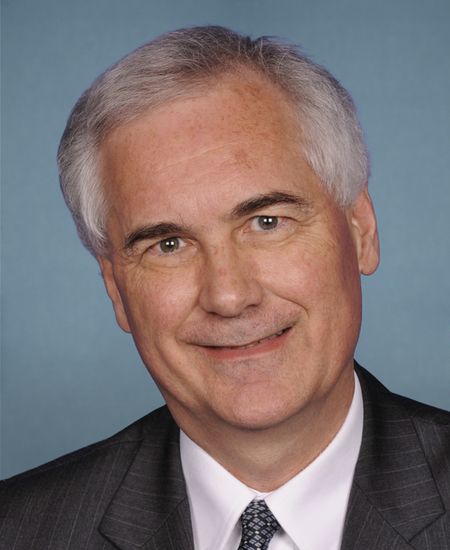
Rep. Tom McClintock
Sponsored bills
Water Supply Permitting Coordination Act This bill makes the Bureau of Reclamation the lead agency for the purpose of coordinating all permitting and related activities required to construct certain new surface-water storage projects. Specifically, Reclamation must identify, notify, and coordinate all Federal agencies that may have jurisdiction over a review, analysis, opinion, statement, permit, license, approval, or decision for a qualifying project. A state where a project is being considered may also choose to participate as a cooperating agency. Reclamation's coordination responsibilities include (1) preparing a unified environmental review document, and (2) maintaining a consolidated administrative record and project data records. Additionally, Reclamation is authorized to accept and expend funds contributed by a nonfederal public entity to expedite the evaluation of a permit for such a project.
Maddy summaryThe SAFE for America Act of 2023 eliminates the Diversity Immigrant Visa program, commonly known as the "visa lottery," which provided annual visas to individuals from countries with historically low U.S. immigration rates. This change directly affects applicants and participants in the diversity visa program, ending their eligibility for this specific immigration pathway. The bill amends key sections of immigration law (Sections 201, 203, and 204 of the Immigration and Nationality Act) to remove references to the diversity program and adjust visa allocation procedures. The changes take effect October 1, 2023, permanently ending this visa category.
Maddy summaryHR 1088, the Shirley Chisholm Congressional Gold Medal Act, authorizes a posthumous Congressional Gold Medal to honor Congresswoman Shirley Chisholm, the first African-American woman elected to Congress (1968) and the first Black candidate for a major party's presidential nomination (1972). The bill directs the Treasury Secretary to design and strike a gold medal featuring Chisholm's image, which will be presented by Congress and then permanently displayed at the Smithsonian Institution. Duplicate bronze medals may be sold to the public to cover production costs, with proceeds deposited into the U.S. Mint fund. This bill commemorates Chisholm's legacy and achievements without creating new laws or affecting any current policies.
Maddy summaryThis bill would require the U.S. to withhold funding for the UNRWA (United Nations refugee agency for Palestinians) unless the State Department certifies UNRWA staff, materials, and facilities comply with specific conditions. Key conditions include confirming no ties to terrorism or anti-Israel rhetoric (like denying Israel's right to exist or promoting BDS), no misuse of UNRWA resources for terrorist activities, and adherence to international financial audits. It also caps U.S. contributions to UNRWA at levels comparable to Arab League countries and mandates annual reports to Congress on phasing out UNRWA support. These changes directly affect U.S. foreign aid decisions for Palestinian refugees in Jordan, Lebanon, Syria, Gaza, and the West Bank.
Prohibiting IRS Financial Surveillance Act This bill prohibits the Department of the Treasury from requiring a financial institution to report the transfers into and out of a financial account. This prohibition does not apply to laws or regulations in effect on January 1, 2023.
Protect Farmers from the SEC Act This bill prohibits the Securities and Exchange Commission from requiring the disclosure of greenhouse gas emissions related to agricultural products.
Maddy summaryThis bill requires the Office of Management and Budget to audit unspent funds from major pandemic relief packages - including the CARES Act, American Rescue Plan, and related bills - within 30 days of enactment. It mandates a report listing all unobligated funds remaining under these laws. The unspent amounts would then be automatically returned to the Treasury’s general fund for deficit reduction, with no further congressional action needed. The bill directly affects how the federal government handles leftover pandemic relief funds, focusing on accounting and fiscal responsibility rather than new program benefits.
Maddy summaryHR 987 authorizes the U.S. Mint to produce commemorative coins honoring Golda Meir, Israel's first female Prime Minister, and the 75th anniversary of U.S.-Israel relations. It specifies three coin types: $5 gold coins (max 50,000), $1 silver coins (max 400,000), and half-dollar clad coins (max 750,000), with detailed weight and composition requirements. All coins will include Golda Meir's image, her name, and commemorative inscriptions, and will be sold during 2026. A surcharge ($35 for $5 coins, $10 for $1 coins, $5 for half-dollars) will be paid to the American Friends of Kiryat Sanz Laniado Hospital Inc. to support its hospital operations.
Maddy summaryHR 976, the TCJA Permanency Act, makes permanent many tax provisions from the 2017 Tax Cuts and Jobs Act (TCJA) that were scheduled to expire after 2025. The bill affects individual taxpayers by keeping lower tax rates, higher standard deductions, increased child tax credits, and other key changes permanently. Key provisions include permanent modifications to income tax brackets, repeal of personal exemptions, limits on state and local tax deductions, and increased estate and gift tax exemptions. These changes would prevent the tax code from reverting to pre-TCJA rates and rules for millions of taxpayers.