Maddy summaryHJRES 27 is a congressional resolution seeking to block a federal rule that redefined which waterways fall under the Clean Water Act's protections. It targets a rule submitted by the Army Corps of Engineers, Department of Defense, and Environmental Protection Agency (EPA) on January 18, 2023, which aimed to revise the "Waters of the United States" definition. The resolution would formally disapprove this rule under a specific federal procedure (Chapter 8 of Title 5), preventing it from taking effect. This would directly affect how federal agencies regulate pollution and development near water bodies, including wetlands and smaller streams.
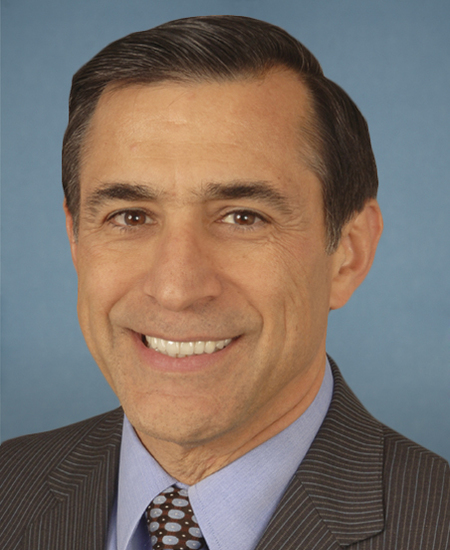
Rep. Darrell Issa
Sponsored bills
Maddy summaryHR 2620, the Federal Firearms Licensee Protection Act of 2023, increases penalties for crimes targeting firearms licensees. It amends Section 924 of Title 18 to impose mandatory minimum sentences of 3 years for burglaries or 5 years for robberies committed at the business premises of licensed firearms dealers, manufacturers, or importers. The bill specifically targets violations of Section 922(u), which prohibits unauthorized access to these premises, and adds "attempts to do so" to the penalties. This directly affects licensed firearms businesses by strengthening legal protections against theft or violence at their locations. The law creates clearer, harsher consequences for crimes committed during burglaries or robberies at these specific business sites.
Maddy summaryHR 872, the FISH Act, transfers federal responsibility for managing anadromous fish (like salmon that spawn in fresh water and migrate to the ocean) and catadromous fish (like eels that spawn in the ocean and migrate to fresh water) from the Department of Commerce to the Department of the Interior. It amends the Endangered Species Act to update definitions and ensure all references to the managing agency now point to the Secretary of the Interior. The bill includes provisions to maintain continuity for existing permits, ongoing legal cases, and agency actions related to these fish species after the transfer. This change affects conservation programs, permits, and regulatory processes for these specific fish populations under federal law.
Maddy summaryThis bill terminates the national emergency declared by the President on March 13, 2020, under the National Emergencies Act. It ends the executive branch's authority to use emergency powers related to that specific declaration. The resolution passed both chambers in early 2023 and took effect April 10, 2023, without creating new policies or affecting specific groups.
Maddy summaryHR 2380, the Cellphone Jamming Reform Act of 2023, allows state and federal correctional facilities (like prisons and jails) to operate cellphone jamming systems to block wireless signals from contraband devices or communications involving individuals held in the facility. The bill restricts the Federal Communications Commission (FCC) from blocking such jamming systems, but requires facilities to limit jamming only to housing areas, have state facilities cover all costs, and consult with local law enforcement before implementation. It defines "jamming systems" broadly to include all necessary equipment and installation details. This bill directly affects correctional facilities seeking to prevent cell phone use by inmates, particularly for security purposes related to contraband. The law does not create new restrictions on cellphone use but changes how facilities can deploy jamming technology.
Maddy summaryHRES 280 is a non-binding House resolution expressing support for designating November 22, 2023, as "Kimchi Day." It acknowledges kimchi's cultural significance as a traditional Korean dish with a 2,000-year history, its recognition by UNESCO as intangible cultural heritage, and its health benefits. The resolution highlights Korean American contributions to U.S. society and growing popularity of kimchi in American cuisine. This symbolic gesture does not create new law or policy but formally supports a cultural observance.
Visa Overstays Penalties Act This bill increases the civil penalties for unlawful entry into the United States and establishes criminal penalties for overstaying a visa. A non-U.S. national ( alien under federal law) apprehended while unlawfully entering the United States shall be subject to a fine of at least $500 and up to $1,000 (currently at least $50 and up to $250). If an individual overstays a visa (or otherwise fails to comply with the conditions of a visa) for 10 days or more, on first offense the individual shall be subject to fines or imprisonment for up to six months, or both. For subsequent violations, the individual shall be subject to fines or imprisonment of up to two years, or both.
Maddy summaryHR 1818, the Aviation Workforce Development Act, expands tax-advantaged savings plans (529 plans) to cover costs for specific aviation training programs. It allows funds from these plans to pay for tuition, fees, and required materials at FAA-certified aviation maintenance technician schools (Part 147) or commercial pilot training programs (Part 61 or 141). This directly affects students pursuing careers as aircraft maintenance technicians or commercial pilots by making these training costs more affordable through existing tax-advantaged savings. The bill amends the tax code to include these programs under "qualified higher education expenses" for 529 plan distributions.
Maddy summaryHR 1831 would award Billie Jean King a Congressional Gold Medal to honor her lifelong advocacy for equal rights in sports and society. The bill directs the Secretary of the Treasury to strike the medal and have it presented by congressional leaders, recognizing her pivotal role in advancing women's equality through tennis (including founding the Women’s Tennis Association and securing equal prize money) and her broader impact on society through initiatives like Title IX advocacy.
Maddy summaryHR 314, the FORCE Act, prohibits the President or Secretary of State from removing Cuba from the U.S. list of state sponsors of terrorism. It requires the President to first make a specific determination under the 1996 LIBERTAD Act before Cuba can be removed. The bill directly affects Cuba (by maintaining its current designation) and the executive branch (by restricting their authority to remove the designation). This is a procedural bill focused on preserving Cuba's current status on the terrorism list until the specified conditions are met.