Maddy summaryThis bill makes e-commerce platforms liable for counterfeit goods that pose health or safety risks (like fake medicine or unsafe toys) unless they implement specific safeguards. Platforms must verify seller identities, screen listings for fake marks, quickly remove confirmed counterfeits, terminate repeat offenders, and prevent banned sellers from returning under new identities. These requirements apply to platforms with over $500,000 in annual sales or after receiving 10 verified notices of health/safety-related counterfeits. The law targets dangerous counterfeits, not all fake goods, and focuses on concrete platform actions rather than outcomes.
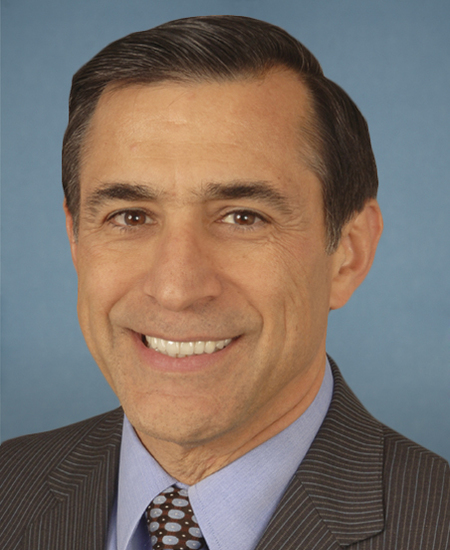
Rep. Darrell Issa
Sponsored bills
Maddy summaryHR 1687 names the United States Postal Service facility at 6444 San Fernando Road in Glendale, California, as the "Paul Ignatius Post Office." All official U.S. government references to this location - such as in laws, maps, or documents - will now use the new name. This is a procedural bill with no policy changes beyond the naming designation.
Maddy summaryThis resolution (HRES 1272) calls on the Biden Administration to seek symbolic censure of Iran at the International Atomic Energy Agency (IAEA) for violating nuclear nonproliferation agreements and to refer Iran's case to the United Nations Security Council. It urges diplomatic action to prevent Iran from acquiring nuclear weapons, citing Iran's enrichment of uranium to 60% purity, obstruction of IAEA inspections, and development of advanced centrifuges. The resolution does not create new law but formally requests specific international diplomatic steps from the U.S. government.
Maddy summaryHR 5403, the CBDC Anti-Surveillance State Act, prohibits the Federal Reserve from issuing or facilitating central bank digital currency (CBDC) directly or indirectly to individuals through financial institutions. It specifically bans Federal Reserve banks from offering digital products to individuals, maintaining individual accounts, or using CBDC for monetary policy implementation. The bill also clarifies that its restrictions do not apply to existing physical cash or private, permissionless digital payment systems. This bill directly affects the Federal Reserve's ability to develop or deploy a government-run digital dollar. The law aims to prevent the Federal Reserve from creating a digital currency that could enable transaction tracking or government oversight of personal financial activity.
Maddy summaryThis bill amends the 2022 Camp Lejeune Justice Act to clarify and correct technical details. It updates eligibility requirements for claimants (requiring 30 days at Camp Lejeune and defining "latent harm" instead of "latent disease"), clarifies court jurisdiction for cases, and specifies attorney fee structures (20% pre-litigation, 25% post-litigation). The changes directly affect individuals who developed health issues due to contaminated water at Camp Lejeune, streamlining their legal process under the existing 2022 law.
Maddy summaryHR 895, the Combating Organized Retail Crime Act of 2023, expands federal law to better prosecute organized retail theft by amending sections 2314 and 2315 of Title 18. It clarifies that crimes involving stolen goods valued at $5,000 or more over 12 months - including retail theft - can be prosecuted under existing federal statutes, and broadens definitions to include goods taken via "any facility of interstate or foreign commerce." The bill also creates a new Organized Retail Crime Coordination Center within Homeland Security, requiring it to coordinate federal, state, and local law enforcement efforts, share threat information with retailers, and produce annual public reports on trends. This directly affects law enforcement agencies, retailers, and criminal justice systems by standardizing prosecution thresholds and enhancing interagency collaboration.
Maddy summaryHRES 1246 is a non-binding House resolution passed on May 21, 2024, condemning the Department of State's May 20 statement expressing condolences for the deaths of Iranian President Ebrahim Raisi and Foreign Minister Amir-Abdollahian. The resolution does not change policy but formally disapproves of the State Department's communication, reflecting the House's position that Raisi's leadership involved overseeing executions and supporting Iran's nuclear program and attacks on Israel. As a procedural resolution, it has no legal effect but serves as a symbolic expression of congressional disapproval.
Maddy summaryHouse Joint Resolution 147 seeks to disapprove an Occupational Safety and Health Administration (OSHA) rule that would have established a process for workers to designate a representative to accompany OSHA inspectors during workplace safety inspections. The rule, published in the Federal Register on April 1, 2024, aimed to formalize this "walkaround" representative process during inspections. Under a federal disapproval procedure (Chapter 8 of Title 5, U.S. Code), this resolution would invalidate the rule if passed. As a result, the designated representative process would not take effect, meaning OSHA inspections would proceed without this specific worker representation mechanism.
Maddy summaryThis bill amends patent law (Title 35, U.S. Code) to create a "good faith exception" for certain fines. It directly affects entities (like companies or individuals) that face fines under Sections 41(j) and 123(f) for making patent-related assertions or certifications. The key provision states that fines won't apply if the entity can prove the assertion or certification was made in good faith. This changes the automatic imposition of fines to require a showing of good faith as a defense. The bill focuses on procedural adjustments to patent law, not substantive changes to patent rights.
Maddy summaryThis bill requires immigration authorities to detain and deport non-citizens who assault law enforcement officers while on duty or because of their officer status. It amends immigration law to mandate detention for individuals already inadmissible under certain immigration categories who commit assaults against officers during official duties. The Secretary of Homeland Security must issue a detainer and take custody if the person isn't already detained by authorities. The bill defines "assault" by local law and includes firefighters and first responders as protected "law enforcement officers."