

Maddy summaryThe No WAR Act prohibits Congress from using budget reconciliation procedures to fund military hostilities against Iran unless such actions are explicitly authorized by a formal declaration of war or a specific authorization for the use of military force. This legislation directly affects the legislative process by establishing a point of order that blocks any reconciliation bill attempting to provide budget authority for offensive military operations, strikes, or covert actions targeting Iranian military forces, territory, or government institutions. The bill also defines proxy forces as any foreign military or irregular groups operating with U.S. direction or material support, ensuring these entities are included in the restrictions on unauthorized funding. By amending the Congressional Budget and Impoundment Control Act, the measure aims to prevent the use of budgetary shortcuts to bypass the constitutional requirement for congressional approval before engaging in armed conflict with Iran.
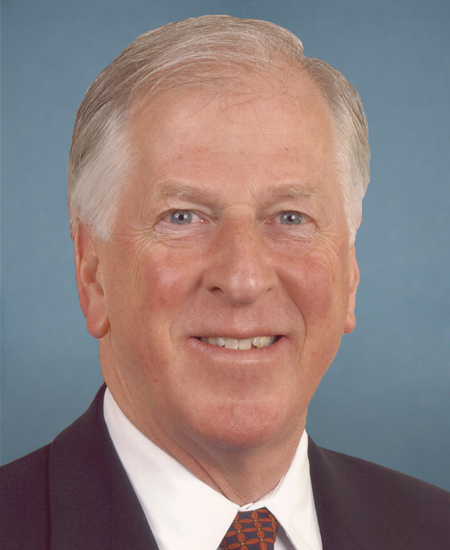
Rep. Mike Thompson
Sponsored bills
Maddy summaryHR 2488 designates the U.S. Postal Service facility at 3817 Marysville Boulevard in Sacramento, California, as the "Grantland Johnson Post Office." This bill updates all federal references in laws, maps, and documents to use the new name for that specific location. It directly affects the postal service facility and any federal records mentioning it. The bill is purely procedural, with no policy changes or financial impacts beyond the name designation.
Maddy summaryThis resolution expresses support for designating April as Sikh History Month to honor the history, culture, and contributions of the Sikh community. The measure highlights key Sikh principles such as equality, honest labor, and community service, noting that April often coincides with the significant festival of Vaisakhi. By encouraging schools and public institutions to host educational events, the bill aims to increase awareness of Sikh heritage and reduce misunderstandings about the faith. Ultimately, this non-binding resolution serves as a formal recognition of the Sikh community's role in American society rather than creating new legal requirements.
Maddy summaryThe Save America's Family Forests Act of 2026 provides tax incentives to encourage landowners to replant forests damaged by natural disasters. It increases the standard tax deduction for routine reforestation projects from $10,000 to $30,000 per property and adjusts these amounts annually for inflation. Additionally, the bill allows a special deduction of up to $1 million for expenses related to replanting trees destroyed by federally declared disasters, with specific rules to prevent double-dipping with other tax benefits. These financial benefits are designed to help taxpayers recover costs and promote forest regeneration without changing the underlying laws governing disaster relief or timber management.
Maddy summaryThis bill, the IRS Whistleblower Program Improvement Act, aims to strengthen protections and incentives for individuals who report tax violations to the Internal Revenue Service. It directly affects whistleblowers who submit information about tax evasion or avoidance schemes and the IRS officials who evaluate those reports. Key changes include requiring Tax Court reviews of whistleblower awards to be conducted de novo based on the original administrative record, granting whistleblowers anonymity before the Tax Court unless a societal interest outweighs potential harm, and adding interest to award amounts if the IRS delays providing preliminary recommendations. The legislation also modifies IRS annual reports to include descriptions of top tax avoidance schemes disclosed by whistleblowers and corrects a provision regarding attorney fee deductions for whistleblowers.
Clergy Act This bill establishes a two-year window for certain members of the clergy and Christian Science practitioners to revoke their exemption from Social Security and Medicare taxes on ministerial earnings. Under current law, such individuals who object to participation in public insurance programs on religious or conscientious grounds may apply to the Internal Revenue Service (IRS) for an irrevocable exemption and will not receive Social Security or Medicare benefits in retirement unless they have qualifying credits from other employment. The IRS must develop a plan to inform members of the clergy and Christian Science practitioners of their eligibility to revoke prior exemptions, pursuant to the bill's changes.
Maddy summaryThe Rehabilitation of Historic Schools Act of 2026 allows public school buildings to qualify for federal tax credits when they are rehabilitated, provided the buildings were used as public schools for five years before and after the renovation. This change removes a previous restriction that had excluded public educational facilities from receiving these financial incentives. The bill requires the Treasury Department to report data on the number of rehabilitated schools, student enrollment, and renovation costs to Congress within five years of enactment. These provisions apply to properties placed in service after the law is passed, aiming to encourage the preservation and repair of historic public school infrastructure.
Maddy summaryThe Neighborhood Tree Act of 2026 establishes a new federal "Neighborhood Tree Fund" to provide financial assistance for planting and maintaining urban trees. This fund will support states, Indian Tribes, and local governments or community groups in increasing tree canopy and improving urban forest health. The bill prioritizes projects in low-income areas, historically disadvantaged communities, and neighborhoods with less tree cover and higher summer temperatures to address environmental inequities. It authorizes substantial funding, starting at $100 million in fiscal year 2025, and also adjusts an existing advisory council's membership to include representatives from smaller and low-income communities.
Maddy summaryThe "Funding Early Childhood is the Right IDEA Act" proposes to increase authorized funding for specific programs under the Individuals with Disabilities Education Act (IDEA). This bill sets new appropriation levels for Part C of IDEA, which provides early intervention services for infants and toddlers with disabilities and their families. It also increases authorized funding for Section 619 of IDEA, which supports preschool special education for children aged three to five. These funding authorizations are scheduled for fiscal years 2027 through 2031, directly affecting children with disabilities and the state and local agencies that provide these services.
Maddy summaryThis resolution expresses the sense of the House of Representatives that establishing a "Veterans Appreciation Month" would be a powerful way for the nation to recognize veterans. It suggests this recognition should occur as the United States marks its 250th anniversary of independence.