

Elijah E. Cummings Lower Drug Costs Now Act This bill establishes several programs and requirements relating to the prices of prescription drugs. In particular, the bill requires the Department of Health and Human Services (HHS) to negotiate prices for certain drugs (current law prohibits HHS from doing so). Specifically, HHS must negotiate maximum prices for single-source, brand-name drugs that lack certain generics and that are among either the 125 drugs that account for the greatest national spending or the 125 drugs that account for the greatest Medicare spending. HHS must negotiate the prices of at least 25 such drugs for 2024 and of at least 50 such drugs thereafter and must also negotiate prices for certain newly approved drugs and for insulin products. The negotiated prices must be offered under Medicare and may also be offered under private health insurance unless the insurer opts out. The negotiated maximum price may not exceed (1) 120% of the average price in Australia, Canada, France, Germany, Japan, and the United Kingdom; or (2) if such information is not available, 85% of the U.S. average manufacturer price. Drug manufacturers that fail to comply with the bill's negotiation requirements are subject to civil and tax penalties. The bill also makes a series of additional changes to Medicare prescription drug coverage and pricing, including by (1) requiring drug manufacturers to issue rebates to the Centers for Medicare & Medicaid Services for covered drugs that cost $100 or more and for which the average manufacturer price increases faster than inflation, and (2) capping annual out-of-pocket spending under the Medicare prescription drug benefit. The bill also requires drug manufacturers to report specified information for certain high-cost drugs, and it provides funds for opioid epidemic initiatives and biomedical research.
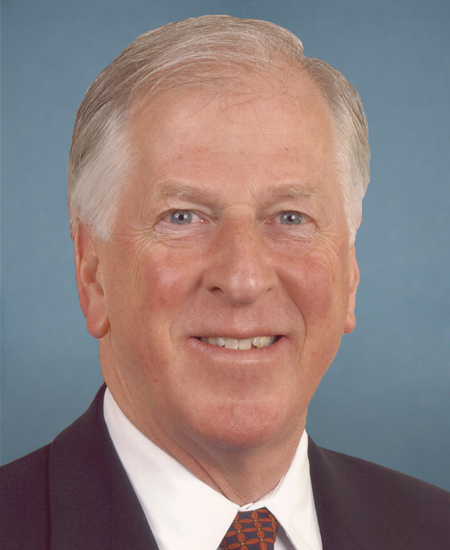
Rep. Mike Thompson
Sponsored bills
This resolution urges (1) the President to issue a proclamation recognizing Earth Day; and (2) governments and people to continue building upon the Paris Agreement and other efforts to ensure that future generations inherit a livable, sustainable, and ecologically rich planet. The resolution reaffirms that immediate action is needed to reduce greenhouse gas emissions and ameliorate environmental injustices in order to protect our planet, public health, and overall well-being of all people and wildlife. In addition, it encourages the American people to mark Earth Day by working to address environmental challenges, educate others about the need for year-round action, and honor the stewardship ethic for which Senator Gaylord Nelson stood.
Agriculture Resilience Act This bill establishes, expands, and revises multiple programs and activities of the Department of Agriculture (USDA) primarily to reduce carbon emissions from the agriculture sector. Specifically, USDA must finalize and implement a plan to achieve net-zero emissions from the sector by 2040. USDA must periodically review and revise the plan, as necessary, and annually report on its implementation. Additionally, the bill expands the scope of various USDA research, extension, and education programs; conservation programs; and livestock programs to incorporate climate change adaption and mitigation. Expanded activities include efforts to improve soil health and preserve farmland and grassland. Further, the bill changes programs that support renewable energy in rural areas to address carbon emissions in the agriculture sector. Among these changes, the bill provides statutory authority for a program for reducing methane emissions from livestock waste that is carried out by the Environmental Protection Agency and transitions the program to USDA. The bill also addresses food waste, for example, by (1) standardizing the voluntary labels used by food producers to indicate the date by which food should be used or discarded, and (2) making composting activities eligible for support through USDA conservation programs. Moreover, the bill establishes grants to reduce and prevent food waste in landfills and in schools.
Growing Climate Solutions Act of 2021 This bill authorizes the Department of Agriculture (USDA) to establish a voluntary Greenhouse Gas Technical Assistance Provider and Third-Party Verifier Certification Program to help reduce entry barriers into voluntary environmental credit markets for farmers, ranchers, and private forest landowners. A voluntary environmental credit market is a market through which agriculture and forestry credits may be bought or sold. Entities eligible to participate in the program are (1) providers of technical assistance to farmers, ranchers, or private forest landowners in carrying out sustainable land use management practices that prevent, reduce, or mitigate greenhouse gas emissions, or sequester carbon; or (2) third-party verifiers that conduct the verification of the processes described in the protocols for voluntary environmental credit markets. Among other requirements, USDA must publish (1) a list of protocols and qualifications for eligible entities; (2) information describing how entities may self-certify under the program; (3) information describing how entities may obtain the expertise to meet the protocols and qualifications; and (4) instructions and suggestions to assist farmers, ranchers, and private forest landowners in facilitating the development of agriculture or forestry credits and accessing voluntary environmental credit markets. USDA must also establish an advisory council to make recommendations regarding the list of protocols and qualifications, best practices, and voluntary environmental credit markets. The bill also rescinds certain funds provided in the American Rescue Plan Act of 2021 and makes the funds available for the certification program.
National Origin-Based Antidiscrimination for Nonimmigrants Act or the NO BAN Act This bill imposes limitations on the President's authority to suspend or restrict aliens from entering the United States. It also prohibits religious discrimination in various immigration-related decisions, such as whether to issue an immigrant or nonimmigrant visa, unless there is a statutory basis for such discrimination. The President may temporarily restrict the entry of any aliens or class of aliens after the Department of State determines that the restriction would address specific and credible facts that threaten U.S. interests such as security or public safety. The bill also imposes limitations on such restrictions, such as requiring the President, State Department, and the Department of Homeland Security (DHS) to (1) only issue a restriction when required to address a compelling government interest, and (2) narrowly tailor the suspension to use the least restrictive means to achieve such an interest. Before imposing a restriction, the State Department and DHS shall consult with Congress. The State Department and DHS shall report to Congress about the restriction within 48 hours of the restriction's imposition. If such a report is not made, the restriction shall immediately terminate. Individuals or entities present in the United States and unlawfully harmed by such a restriction may sue in federal court. DHS may suspend the entry of aliens traveling to the United States on a commercial airline that failed to comply with regulations related to detecting fraudulent travel documents.
Washington, D.C. Admission Act This bill provides for admission into the United States of the state of Washington, Douglass Commonwealth, composed of most of the territory of the District of Columbia. The commonwealth shall be admitted to the Union on an equal footing with the other states. The Mayor of the District of Columbia shall issue a proclamation for the first elections to Congress of two Senators and one Representative of the commonwealth. The bill applies current District laws to the commonwealth and continues pending judicial proceedings. The commonwealth (1) shall consist of all District territory, with specified exclusions for federal buildings and monuments, including the principal federal monuments, the White House, the Capitol Building, the U.S. Supreme Court Building, and the federal executive, legislative, and judicial office buildings located adjacent to the Mall and the Capitol Building; and (2) may not impose taxes on federal property except as Congress permits. District territory excluded from the commonwealth shall be known as the Capital and shall be the seat of the federal government. The bill maintains the federal government's authority over military lands and specified other property. The bill provides for expedited consideration of a joint resolution repealing the Twenty-third Amendment to the Constitution, which provides for the appointment of electors of the President and Vice President. The bill continues certain federal authorities and responsibilities, including regarding employee benefits, agencies, courts, and college tuition assistance, until the commonwealth certifies that it is prepared to take over the authorities and responsibilities. The bill establishes the Statehood Transition Commission to advise the President, Congress, and District and commonwealth leaders on the transition.
Chiropractic Medicare Coverage Modernization Act of 2021 This bill expands Medicare coverage of chiropractic services to include all services provided by chiropractors, rather than only subluxation corrections through manual manipulation of the spine.
No Oil Producing and Exporting Cartels Act of 2021 or NOPEC This bill prohibits a foreign state from engaging in collective action impacting the market, supply, price, or distribution of oil, natural gas, or any other petroleum product in the U.S. Specifically, a foreign state is prohibited from collective action that limits the production or distribution of such product, collective action to set or maintain the price of such product, or any other action that restrains trade of such product. Specified defenses such as sovereign immunity (i.e., a foreign state's immunity from the jurisdiction of U.S. courts) and the act of state doctrine (i.e., the prohibition of a court invalidating an official act of a foreign sovereign performed within its own territory) shall not apply to a foreign state's violation of this bill.
Secure and Fair Enforcement Banking Act of 2021 or the SAFE Banking Act of 2021 This bill generally prohibits a federal banking regulator from penalizing a depository institution for providing banking services to a legitimate cannabis-related business. Prohibited penalties include terminating or limiting the deposit insurance or share insurance of a depository institution solely because the institution provides financial services to a legitimate cannabis-related business and prohibiting or otherwise discouraging a depository institution from offering financial services to such a business. Additionally, proceeds from a transaction involving activities of a legitimate cannabis-related business are not considered proceeds from unlawful activity. Proceeds from unlawful activity are subject to anti-money laundering laws. Furthermore, a depository institution is not, under federal law, liable or subject to asset forfeiture for providing a loan or other financial services to a legitimate cannabis-related business. The bill also provides that a federal banking agency may not request or order a depository institution to terminate a customer account unless (1) the agency has a valid reason for doing so, and (2) that reason is not based solely on reputation risk. Valid reasons for terminating an account include threats to national security and involvement in terrorist financing, including state sponsorship of terrorism. Finally, the bill decreases the cap on the surplus funds of the Federal Reserve banks. (Amounts exceeding this cap are deposited in the general fund of the Treasury.)
Workplace Violence Prevention for Health Care and Social Service Workers Act This bill requires the Department of Labor to address workplace violence in health care, social service, and other sectors. Specifically, Labor must issue an interim occupational safety and health standard that requires certain employers to take actions to protect workers and other personnel from workplace violence. The standard applies to employers in the health care sector, in the social service sector, and in sectors that conduct activities similar to those in the health care and social service sectors. In addition, Labor must promulgate a final standard within a specified time line.