Stop Inflationary Spending Act This bill requires the Congressional Budget Office (CBO) to provide inflation projections for bills that Congress considers using the budget reconciliation process. Specifically, the CBO must estimate the impact on inflation that will occur from implementing each reconciliation bill, including the impact on inflation that will occur during each of the first five years after the enactment of the bill.
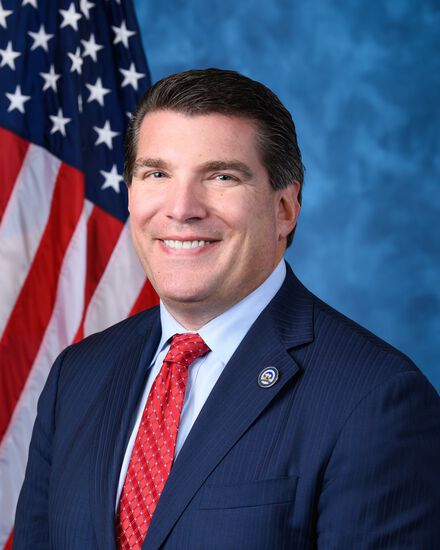
Rep. Jay Obernolte
Sponsored bills
Pandemic Unemployment Assistance Fraud Protection Act This bill creates several requirements for states to address fraudulent claims for Pandemic Unemployment Assistance (PUA), temporarily increases penalties for fraud related to PUA, and requires each state to establish a hotline for victims of unemployment fraud. Specifically, the bill requires states to cross reference PUA claims with federal and state prison records and E-Verify to ensure that claimants are eligible for PUA, submit to the Department of Labor plans to recover fraudulently obtained PUA, develop an anti-fraud task force to investigate and recover fraudulently obtained PUA, make restitution to Labor for the amount of any overpayment of PUA made by the state, and establish a hotline designed to encourage individuals who are victims of unemployment fraud and have received an incorrect statement of unemployment compensation to report that fraud. The bill also temporarily enhances the maximum penalty for fraud related to PUA through December 31, 2021, so that the offense is classified as fraud in relation to a presidentially declared major disaster or emergency and punishable by up to 30 years imprisonment, a fine of up to $1,000,000, or both.
Charitable Conservation Easement Program Integrity Act of 2021 This bill imposes a limitation on the tax deduction for qualified conservation contributions made by certain partnerships if the amount of the contribution exceeds 2.5% times the sum of each partner's relevant basis in the partnership. This limitation also applies to other pass-thru entities, such as S corporations.
Retain Skilled Veterans Act This bill modifies the restriction related to the appointment of retired members of the Armed Forces to certain civil service positions in the Department of Defense. Under the bill, the 180-day waiting period before a retired member may be appointed to a position only applies to those positions in the excepted or competitive service classified at or above GS-14 of the General Schedule (or equivalent).
Reopening to address Every COmplete Record request for Devoted Servicemembers Act of 2021 or the RECORDS Act of 2021 This bill directs the Office of the Archivist of the United States to take specified steps to address record request backlogs. Specifically, the office must take actions to ensure that (1) the number of individuals employed by the National Personnel Records Center is equal to or exceeds the number of such individuals employed on March 2, 2020, and (2) the percentage of such individuals regularly reporting to work in person is equal to or exceeds the percentage of such individuals regularly reporting to work in person on that date. The office shall submit to specified congressional committees a report that provides a comprehensive plan to address the record request backlog of the National Personnel Records Center and improve the efficiency and responsiveness of operations at the center, identifies measurable goals with respect to the comprehensive plan and metrics for tracking progress toward such goals, and describes strategies to prevent future record request backlogs.
Making Aid for Local Disasters Equal Now Act or the MALDEN Act This bill modifies requirements pertaining to the time frame for approval of major disaster or emergency declarations and the ability to make federal resources available to rural communities. Specifically, a major disaster or emergency declaration must be made not later than 30 days after a request by a governor or the chief executive of an affected Indian tribal government. Failure to meet the 30-day requirement shall result in an automatic approval of the request. Additionally, if a disaster or emergency occurs in a rural area, regardless of whether a declaration has been made, the Small State and Rural Advocate within the Federal Emergency Management Agency (FEMA) shall work in coordination with local agencies to provide guidance on developing a recovery team, including resources to help prevent flooding, mudslides, rockslides or any other natural disaster that could result after a wildfire and identifying available resources for both short-term and long-term recovery. If a request for individual assistance for residents in a rural area is made but denied, the Small State and Rural Advocate shall work in coordination with local agencies to make disaster case workers available to such residents.
Toxic Exposure in the American Military Act or the TEAM Act This bill requires the Department of Veterans Affairs (VA) to expand health care, benefits, and resources for veterans with conditions related to exposure to toxic substances. Specifically, the bill expands eligibility for VA hospital care, medical services, and nursing home care to include veterans who (1) were exposed to toxic substances, radiation, or other conditions, and were awarded certain medals (e.g., the Armed Forces Service Medal); (2) are eligible for inclusion in the Airborne Hazards and Open Burn Pit Registry; or (3) have been identified by the Department of Defense to have been possibly exposed during service to an open burn pit, toxic substance, or specified hazardous sites. (A burn pit is an area used for burning solid waste in open air without equipment.) The bill establishes a presumption of service-connection for diseases associated with exposure to certain toxic substances and that become manifest within a certain time period; the VA must specify such diseases and requirements through regulations. Under a presumption of service-connection, specific conditions diagnosed in certain veterans are presumed to have been caused by the circumstances of their military service. Health care benefits and disability compensation may then be awarded. The bill also requires the VA to take specified actions to (1) evaluate scientific evidence regarding associations between diseases and exposure to toxic substances; (2) train its health care personnel on identifying, treating, and assessing illnesses related to such exposure; and (3) provide resources to veterans exposed to toxic substances.
Trillion Trees Act This bills establishes a variety of requirements and incentives to plant trees and conduct other land management practices for the purposes of capturing and storing carbon in domestic and international trees and forests. Additionally, the bill provides incentives to research or develop other carbon sequestration tools. Specifically, the bill directs the Department of Agriculture (USDA) to set targets to increase forest carbon stock through January 1, 2100, for the purposes of sequestering and storing carbon in U.S. forests. It also establishes and provides funding for the Trillion Trees Challenge Fund to provide grants to nonfederal entities for activities related to reforestation efforts on public or private lands. In addition, it raises the cap on the Reforestation Trust Fund to enhance forest health in the National Forest System and requires the USDA to establish a Tree City USA Grant Program. The bill also allows the U.S. Agency for International Development to enter into an agreement with a nonprofit organization to establish an International Forest Foundation to promote reforestation and prevent deforestation. Additionally, it establishes requirements and incentives to address seedling shortages and support nurseries. Finally, the bill provides market incentives to research or develop other carbon sequestration tools relating to biochar, sustainable building practices, biochemical and bioplastic products, and biomass energy.
Fellowships and Traineeships for Early-Career AI Researchers Act This bill directs the National Science Foundation (NSF) to award grants and fellowships to support students and researchers in fields related to artificial intelligence. Specifically, the NSF must award grants to institutions of higher education to establish traineeship programs for graduate students who pursue artificial intelligence-related research leading to a masters or doctorate degree. Among other things, an institution of higher education shall use such grant funds to (1) provide traineeships to students who are pursuing research in artificial intelligence leading to a masters or doctorate degree; and (2) establish scientific internship programs for students receiving traineeships in artificial intelligence at for-profit institutions, nonprofit research institutions, or government laboratories. The NSF shall award fellowships to masters and doctoral students and postdoctoral researchers at institutions of higher education who are pursuing degrees or research in artificial intelligence and related fields, including in the field of technology ethics.
Surface Transportation Research and Development Act of 202 1 This bill addresses provisions related to surface transportation research, development, and deployment programs of the Department of Transportation (DOT). Among other provisions, the bill reauthorizes through FY2026 DOT highway research and development programs, including highway safety, technology and innovation deployment, training and education, and intelligent transportation systems; sets forth a program to provide awards to institutions of higher education or nonprofit research organizations to establish regional road weather research and development centers; reauthorizes through FY2026 the University Transportation Centers Program, the Bureau of Transportation Statistics, the public transportation research and development program, the National Cooperative Rail Research Program, the hazardous materials research and development program, and the National Cooperative Freight Transportation Research Program; establishes Centers of Excellence to advance research and development that improves the resilience of regions of the United States to natural disasters, extreme weather, and the effects of climate change on modal and multimodal transportation and infrastructure; directs DOT to carry out and publish the results of a study for the purpose of informing land use and transportation planning for accessible health, food, education, and other essential services and activities; and requires DOT to establish a multimodal national cooperative freight transportation research program, a Heavy Freight Automated Trucking Research Initiative, and an Advanced Transportation Research and Innovation Program.