

Maddy summaryThis bill adds Medicare coverage for multi-cancer early detection screening tests (blood or biological tests analyzing cell-free DNA) starting January 1, 2028. It directly affects Medicare beneficiaries aged 68 and older (starting in 2028, with the age limit increasing by 1 year annually), requiring tests to be FDA-cleared and deemed reasonable/necessary by the Secretary for early cancer detection across multiple organ sites. Payment will initially match current stool DNA test rates before 2031, then shift to a lower rate or new payment system after 2031, with limits preventing more than one test per year. The bill explicitly states it does not alter coverage for existing cancer screenings like breast, colorectal, or prostate cancer tests.
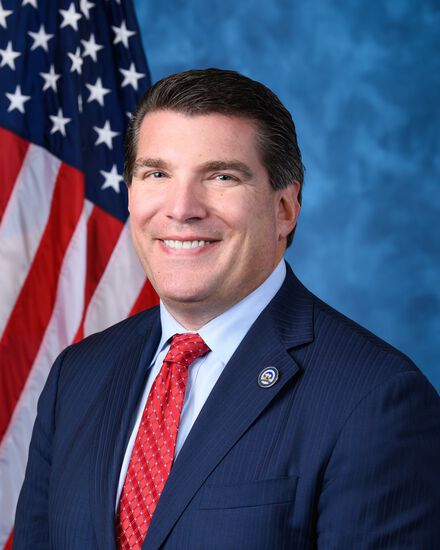
Rep. Jay Obernolte
Sponsored bills
Maddy summaryThis bill would require all states to recognize valid concealed carry permits issued by other states, allowing permit holders to carry concealed handguns (excluding machine guns) in any state that either issues such permits or doesn't prohibit concealed carry. It directly affects law-abiding gun owners with valid permits from their home state, ensuring they can carry in states with similar permit systems or no prohibitions. Key provisions include treating valid permit documents as proof of legal carry (reducing officer stops), shifting the burden of proof to prosecutors if challenged, and allowing civil lawsuits for violations with attorney's fee awards. The bill does not override state laws restricting firearms on private property or government land, nor does it affect federal gun restrictions like those in section 922(q).
Maddy summaryHRES 719 is a House resolution honoring Charles "Charlie" James Kirk, the founder of Turning Point USA who was assassinated on September 10, 2025. The resolution condemns his assassination and all political violence, extends condolences to his family, and calls on Americans to reject violence while promoting civil discourse. It specifically recognizes Kirk's legacy as a defender of constitutional principles and his role in inspiring youth through free speech and faith-based civic engagement. As a commemorative resolution, it does not enact policy changes but formally expresses the House's stance on honoring his life and legacy.
Maddy summaryThis bill authorizes the posthumous presentation of a Congressional Gold Medal to Welles Remy Crowther, a volunteer firefighter and equities trader who died saving others during the September 11, 2001, attacks. The medal, designed by the Treasury Secretary, will be given to Crowther’s mother, Alison Crowther, following a formal presentation by congressional leaders. The bill also permits the U.S. Mint to sell bronze duplicates of the medal at cost to cover production expenses. It is a purely commemorative measure with no legislative or regulatory impact.
Maddy summaryThe POJA Act of 2025 amends the Age Discrimination in Employment Act to explicitly prohibit age discrimination against job applicants, not just current employees. It directly affects job seekers aged 40 and older who face bias during hiring. The bill requires the Equal Employment Opportunity Commission to conduct a study within one year of enactment, counting age discrimination claims filed since 2015 (including closed cases), and issue a public report with prevention recommendations for employers. This study aims to address gaps in protecting applicants during the hiring process.
Maddy summaryThis bill creates a pathway to permanent residency for certain college graduates who entered the U.S. as children under specific nonimmigrant visa categories (excluding H-1B, L-1, etc.). To qualify, applicants must have been lawfully present for 10 years total (including 8 years as a dependent child), graduated from a U.S. college, and not be inadmissible. It also changes how "child status" is determined for immigration purposes - using specific dates instead of age to prevent "age-outs" for dependents of long-term visa holders - and preserves priority dates for family members. These changes apply to individuals who entered the U.S. before age 21 and maintained lawful status under qualifying visas.
Maddy summaryHRES 744 is a non-binding House resolution supporting the designation of September 21-27, 2025, as "Gold Star Families Remembrance Week." It honors families who lost members in military service (Gold Star Families) and families of veterans, recognizing their sacrifices. The resolution encourages Americans to observe the week through community service and by celebrating the lives of those who died defending the U.S. It does not create new laws or policies but formally recognizes these families annually. This is a commemorative measure, not a legislative change.
Maddy summaryThis bill reauthorizes the Special Diabetes Program for Indians (SDPI) through fiscal year 2030, extending annual funding of $160 million per year. It directly affects American Indian and Alaska Native communities, which face significantly higher rates of diabetes, by ensuring continued federal support for diabetes prevention and treatment programs. The key provision amends the Public Health Service Act to add $160 million in annual funding for fiscal years 2026 through 2030, with funds remaining available until expended. This reauthorization maintains existing program funding levels without altering eligibility or program structure.
Maddy summaryHR 5454, the Medicare Advantage Prompt Pay Act, requires Medicare Advantage plans to pay 95% of valid claims (with complete data) within 14 days for electronic claims or 30 days for paper claims, starting January 1, 2027. Plans that miss these deadlines must pay interest at standard government rates and face $25,000 civil penalties per violation. The bill also mandates annual reports showing payment rates for in-network versus out-of-network claims and interest paid. This directly affects Medicare Advantage insurers and healthcare providers (like doctors and hospitals) who bill these plans.
Maddy summaryHR 5441, the Fusion Advanced Manufacturing Parity Act, provides a 25% tax credit for manufacturers selling specialized fusion energy components. It directly affects companies producing items like high-temperature superconducting magnets, vacuum vessels, cooling systems, and fusion targets used in fusion energy machines. The credit phases out gradually - 75% in 2032, 50% in 2033, 25% in 2034, and ends after 2034 - and applies to components produced and sold after December 31, 2025. The bill defines these components through detailed technical specifications to clarify eligible products.