

Maddy summaryThis bill directs the Comptroller General of the United States to create and regularly update a "High Risk List" that identifies program areas where state and local governments face the greatest risks to the integrity of federally funded money. The list will analyze existing audit reports and public data to pinpoint specific administrative practices that lead to waste, fraud, or abuse, while also highlighting successful strategies that have improved fund management. Additionally, the report will outline available federal tools and resources to help address these vulnerabilities and offer recommendations to Congress on how to mitigate the identified risks. Ultimately, the legislation aims to enhance oversight of state-administered federal programs by providing a clear, evidence-based assessment of where the highest risks exist.
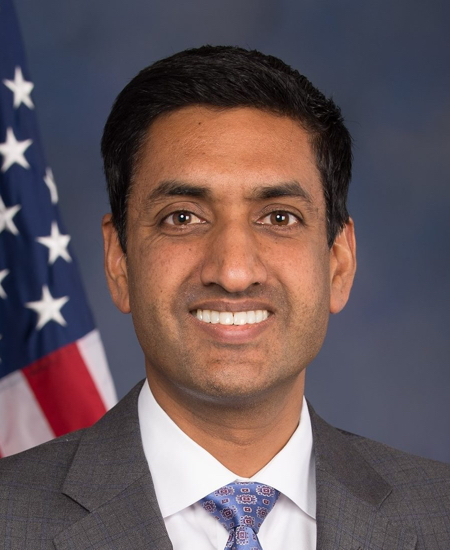
Rep. Ro Khanna
Sponsored bills
Maddy summaryThis resolution formally congratulates the James Lick Observatory on its 150th anniversary and recognizes its historical contributions to astronomy and science. It highlights the observatory's legacy, including its role in major scientific discoveries and its partnership with the University of California to train scientists and engage the public. The House of Representatives commends the University of California for managing the facility and encourages continued support from federal, state, and private sources. This non-binding measure serves as a symbolic acknowledgment of the observatory's achievements rather than establishing new laws or funding.
Maddy summaryThis concurrent resolution directs the President to withdraw all United States Armed Forces from Lebanon within seven days of the bill's adoption. It operates under section 5(c) of the War Powers Resolution, which allows Congress to mandate the removal of troops from foreign locations. The measure directly affects the executive branch by requiring immediate compliance with the specified timeline for troop withdrawal.
Maddy summaryThis bill proposes a constitutional amendment to explicitly allow Congress and state governments to regulate campaign contributions and spending for public office elections and ballot initiatives. The key provision grants authorities the power to distinguish between individual voters and artificial entities like corporations or unions, specifically permitting restrictions on the latter's ability to raise and spend money in these campaigns. By adding this authority to the Constitution, the bill aims to override previous legal interpretations that limited such regulations, ensuring that laws restricting corporate political spending are constitutionally valid.
Maddy summaryThe CREATOR Act establishes a new federal intellectual property right that allows visual artists to control the commercial use of their distinctive visual style. This right applies specifically to works created using artificial intelligence that are intentionally designed to imitate an artist's style and marketed in a way that could mislead viewers about the work's origin. The law protects this right for the artist's lifetime and for up to 50 years after their death, while explicitly excluding general artistic influence, parody, and the mere capability of AI systems to produce similar outputs. Online platforms are granted safe harbors from liability if they remove flagged content promptly upon receiving valid notices, and the Act includes provisions to prevent abuse through penalties for false claims.
Maddy summaryThis resolution commemorates the 120th anniversary of the 1906 arrival of Filipino plantation workers, known as Sakadas, in Hawai'i. It honors their historical contributions to the state's economy and culture while acknowledging the difficult working conditions they faced and their role in organizing labor movements. The text highlights how these immigrants and their descendants became a major part of Hawai'i's population and left a lasting impact on the islands' social and cultural fabric. By formally recognizing this milestone, the House of Representatives aims to preserve the legacy of these pioneering workers in the official record.
Maddy summaryThis resolution formally recognizes the 1885 Rock Springs Chinese Massacre, honoring the memory of the Chinese immigrant workers who were murdered and acknowledging the event as one of the deadliest acts of anti-Asian violence in U.S. history. The bill directs the House of Representatives to condemn the racist mob violence and the historical failure of authorities to protect the victims or hold perpetrators accountable. Additionally, it encourages the documentation and preservation of the massacre site through archaeological research and federal historic programs while promoting education about this event in schools to prevent future erasure of this history.
Maddy summaryThis bill directs the Secretary of Defense to study whether the military justice system needs a specific law against hazing. The Department must examine how to add a new section to the Uniform Code of Military Justice and create a clear definition for what counts as hazing. Within 180 days of passing, the Secretary must submit a report with their findings and recommendations to Congress. This action directly impacts the Department of Defense and the legislative committees overseeing military affairs.
Maddy summaryThe SCREEN for Type 1 Diabetes Act of 2026 directs the Centers for Disease Control and Prevention to launch a national public awareness campaign focused on type 1 diabetes detection, screening, and management. This initiative will provide written materials and public service announcements across various media platforms, including social media and television, while consulting with health organizations, schools, and community groups to ensure the content is culturally and linguistically appropriate. The bill authorizes $5 million annually from 2027 to 2031 to fund grants for nonprofit entities and state or local health departments to distribute these resources and increase screening access in communities with high incidence rates. Additionally, the law requires the Secretary of Health and Human Services to submit a report to Congress within one year detailing the campaign's activities and its impact on diabetes detection and management.
Maddy summaryThis bill creates a new federal tax credit to encourage owners of manufactured home communities to sell their land to residents or nonprofit organizations that agree to keep the community affordable. The credit allows sellers to claim 75% of their profit from the sale, provided the buyer agrees to a binding 50-year covenant that the land will remain used for manufactured housing. To qualify, the new owner must be a resident-owned cooperative or a nonprofit corporation with democratic governance where residents elect the board of directors. The legislation aims to prevent community closures and protect low-income homeowners from rising rents by promoting long-term resident ownership. This change takes effect for taxable years beginning after December 31, 2026.