Maddy summaryThis bill repeals Section 338 of the Tariff Act of 1930 (19 U.S.C. 1338), which granted the President unilateral authority to impose tariffs without Congressional approval. It directly affects the President's ability to use this specific provision for tariff actions. The key mechanism is the removal of this legal authority from U.S. trade law. The bill makes no other changes to tariff policy or procedures.
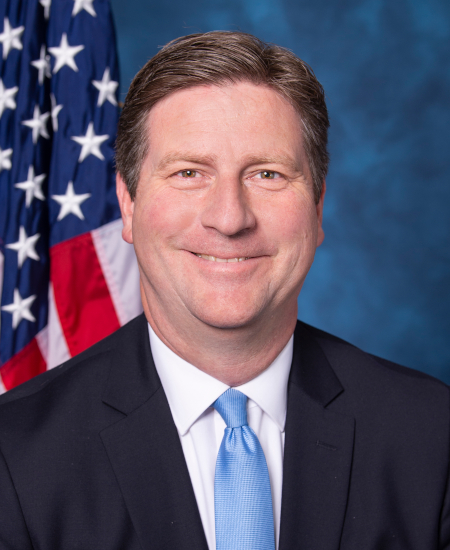
Rep. Greg Stanton
Sponsored bills
Maddy summaryThis bill establishes the Urban Waters Federal Partnership Program to improve coordination among federal agencies working on urban waterways. It designates specific urban areas (particularly overburdened or economically distressed communities) as "partnership locations," requiring each to have a local "Urban Waters ambassador" to coordinate projects. Key mechanisms include a federal steering committee (led by EPA) to guide priorities, a "Learning Network" for sharing best practices, and $10 million annually for program administration through fiscal years 2026-2030. The program aims to advance projects improving water quality, recreation, community engagement, and infrastructure in designated urban watersheds, while requiring annual congressional reports on progress.
Reclaim Trade Powers Act This bill repeals the statute that directs the President to take certain actions, such as imposing a tariff of up to 15% for up to 150 days on articles imported into the United States, when necessary to address large and serious U.S. balance-of-payments deficits or certain other situations that present fundamental international payments problems.
Maddy summaryThe SAVE Act requires the Department of Veterans Affairs (VA) to submit an annual report to Congress detailing its accreditation process for representatives who assist veterans with benefit claims. The report must cover training requirements, data collection methods, verification procedures, database accuracy, staffing, costs, and denial rates for accreditation applications. It also establishes a certification mark for accredited representatives and imposes civil penalties for fraudulent use of the mark, while mandating regular updates to the VA’s public database of accredited representatives. This directly affects VA administrators, veterans’ representatives, and the transparency of the accreditation system.
Maddy summaryThis resolution requests the President and Secretary of State to share specific documents with the House of Representatives by April 9, 2025. It seeks all records created after January 20, 2025, related to U.S. military strikes on Yemen's Houthis and the disclosure of classified information to journalist Jeffrey Goldberg via Signal. The documents include Signal chat transcripts, strike details, legal justifications, coordination with allies, and any new security reforms following the incident. This procedural request directly affects the executive branch and aims to obtain records about sensitive national security communications.
Maddy summaryThis bill would require federal firearms licensees to prohibit sales of specific high-capacity rifles and shotguns to people under 21. It targets semiautomatic centerfire rifles and shotguns capable of holding more than 5 rounds in their magazines, raising the age limit from 18 to 21 for these weapons. Exceptions apply for active military members and certain government employees authorized to carry firearms. The law directly affects gun retailers and individuals under 21 seeking to purchase these specific firearms. It modifies existing federal gun sale rules without changing age requirements for other firearms.
Maddy summaryHCONRES 21 is a symbolic House resolution recognizing the persistent gender wage gap in the U.S., where women earn significantly less than men for comparable work. It cites specific data showing women overall earn 75 cents and women of color earn even less (e.g., 58 cents for Latinas) per dollar earned by White, non-Hispanic men. The resolution does not create new laws or policies but formally acknowledges the economic impact of this disparity, including annual lost wages exceeding $994 million for full-time women workers. It also highlights designated Equal Pay Days for different demographic groups to underscore the varying timelines to close the gap.
Maddy summaryThe Paycheck Fairness Act strengthens equal pay protections by expanding the definition of "sex" to include pregnancy, childbirth, sexual orientation, gender identity, and sex characteristics. It modifies employer defenses for pay disparities to require proof that any pay difference is job-related, not based on sex, and accounts for the entire pay gap. The bill prohibits employers from asking about salary history, enhances penalties for violations, and requires employers with 100+ employees to collect and report detailed pay data by race, sex, and job category. It also establishes training programs for employers on eliminating pay bias and creates a National Equal Pay Enforcement Task Force to coordinate enforcement efforts. This legislation directly affects employers, particularly those with 100+ employees, and aims to address pay disparities impacting women, people of color, and other underrepresented groups.
Maddy summaryH.J. Res. 80 would declare the Equal Rights Amendment (ERA) part of the U.S. Constitution, asserting it has been ratified by 38 states (three-fourths of the states) despite the original 1972 deadline. If passed, this resolution would formally establish the ERA as a constitutional amendment, requiring all federal and state laws to align with its gender equality protections. The bill does not create new laws but confirms the ERA's status as part of the Constitution, affecting how laws are interpreted and enforced. It is a procedural step to resolve the legal dispute over the ERA's validity after decades of debate.
Maddy summaryHRES 240 is a ceremonial resolution expressing the House of Representatives' sorrow over the death of former Arizona Representative Raúl M. Grijalva. It directs the House Clerk to communicate the resolution to the Senate and send a copy to Grijalva's family. The resolution also specifies that the House will adjourn immediately as a mark of respect. This procedural resolution does not create new policies or affect any constituents, as it solely honors a deceased member of Congress.